
Blog ·
How long does commercial lock installation take?
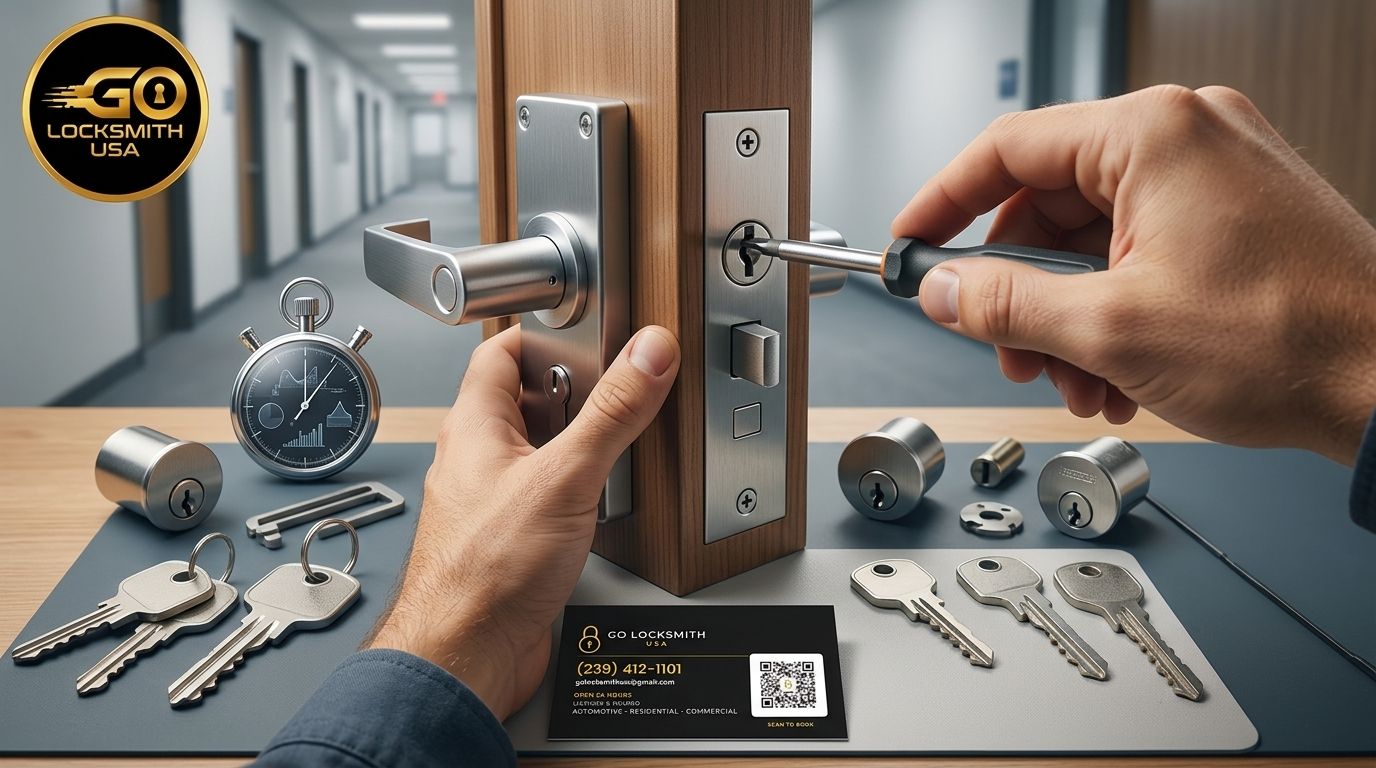
Commercial lock installation time depends on the existing hardware, the condition of the door and frame, and whether the job is a replacement or a fresh installation. Ask for a job-specific time estimate before scheduling, and confirm whether it covers on-site work only or also includes arrival and any additional hardware work. A lock that fits the existing door preparation is a different scheduling job from one that needs new preparation or changes to other door hardware.
TL;DR
- How long does commercial lock installation take? The answer depends on hardware fit, door condition, and the installation scope.
- Separate the technician’s arrival estimate from the time needed to complete and test the installation.
- GO Locksmith provides mobile commercial mechanical lock services; electronic access-control installation and repair are not offered.
- Describe every affected door before booking, including sticking, latching problems, and existing push bars or closers.
Why the installation schedule matters
You need to know when employees can use the entrance, who must be present, and how the business will stay secure during the work. A vague appointment window does not answer those questions.
GO Locksmith is a fit for businesses needing mobile mechanical lock installation in Southwest Florida. Its confirmed locksmith services include commercial lock repair, replacement, rekeying, fresh installation, push bars, and door closers; the specific job still needs assessment before you can plan around a completion estimate.
How long does commercial lock installation take?
There is no single installation time that applies to every commercial door. Get the estimate for your actual door and hardware, not just for the phrase “commercial lock installation.”
Start by identifying which kind of work you need. These scopes have different preparation requirements, and they should not share an assumed completion window.
| Work scope | Best suited to | What affects the schedule | Limitation to discuss |
|---|---|---|---|
| Like-for-like replacement | Replacing existing hardware with a compatible lock | Fit with existing openings, mounting points, and strike | Similar-looking hardware does not establish compatibility |
| Fresh installation | Adding a lock where the door is not already prepared for it | Door construction, placement, and required preparation | Suitability must be checked before modifying the door |
| Lock replacement with related hardware work | Addressing a lock problem alongside latching or closing trouble | The lock, strike, push bar, or closer work included | Replacing the lock alone does not resolve every door problem |
| Rekeying rather than installation | Changing which key operates a suitable existing lock | Cylinder suitability and the number of locks involved | Rekeying does not replace worn hardware or correct door alignment |
These are scope comparisons, not promises about your appointment. Ask which description matches your job and what still needs to be checked on-site.
Like-for-like replacement: confirm the fit first
A replacement that matches the existing preparation avoids the need to create an entirely new mounting arrangement. However, the replacement must suit the door, the existing openings, and the intended locking function.
Send clear photographs of the lock from both sides of the door and along the door edge if requested. If you already bought hardware, provide its exact identification rather than assuming the packaging description establishes that it will fit.
Fresh installation: include preparation in the estimate
A fresh installation adds a lock where the necessary preparation is not already present. The time estimate needs to account for assessing the door and making the required preparation, not just attaching the lock.
Tell the locksmith whether the door has a fire-rating label or serves an exit route. Do not assume that an additional lock or a new hole is appropriate simply because there appears to be space for it.
Related door-hardware work: define the whole job
A door that drags, needs lifting, or fails to latch presents a different problem from a lock that needs replacement on an otherwise functioning door. Describe those symptoms before requesting an installation estimate.
The same applies when the door has a push bar or closer. Ask whether the proposed work includes assessing that hardware, and confirm which repairs are within the agreed service scope.
Why commercial lock installation time varies
The main scheduling factors are visible in the job scope, but they are not always obvious from a photograph. Give the locksmith enough detail to distinguish a straightforward hardware change from a broader door problem.
- Existing preparation. Reusing compatible openings differs from preparing the door for a new lock arrangement.
- Hardware fit. The lock must match the door’s construction and the intended function; appearance alone is not enough.
- Door and frame condition. Sticking, rubbing, damage, or a misaligned strike adds issues that need assessment.
- Number of doors. Identify every affected opening rather than describing the project as a single business visit.
- Related hardware. Push bars and door closers can be part of the requested work and must be included in the scope.
- Access and approval. Someone needs to provide access and authorize the agreed work, including any changes identified during assessment.
Describe the symptoms as well as the service you think you need. Saying that the key turns but the door will not latch gives more useful information than requesting a new lock without explanation.
What should happen before the door returns to use?
Use the installation process as a planning checklist, not as a promise that every job follows an identical procedure. The hardware manufacturer’s instructions and the condition of the opening determine the actual work.
- Assess the door. Establish the existing hardware, door condition, intended use, and any relevant restrictions before modifications begin.
- Confirm the scope. Agree on what is being replaced or installed and whether strike, push-bar, or closer work is included.
- Install the hardware. Fit the agreed hardware according to the requirements of the specific door and lock.
- Test the operation. Check locking, unlocking, latching, and the intended operation from both sides before returning the door to use.
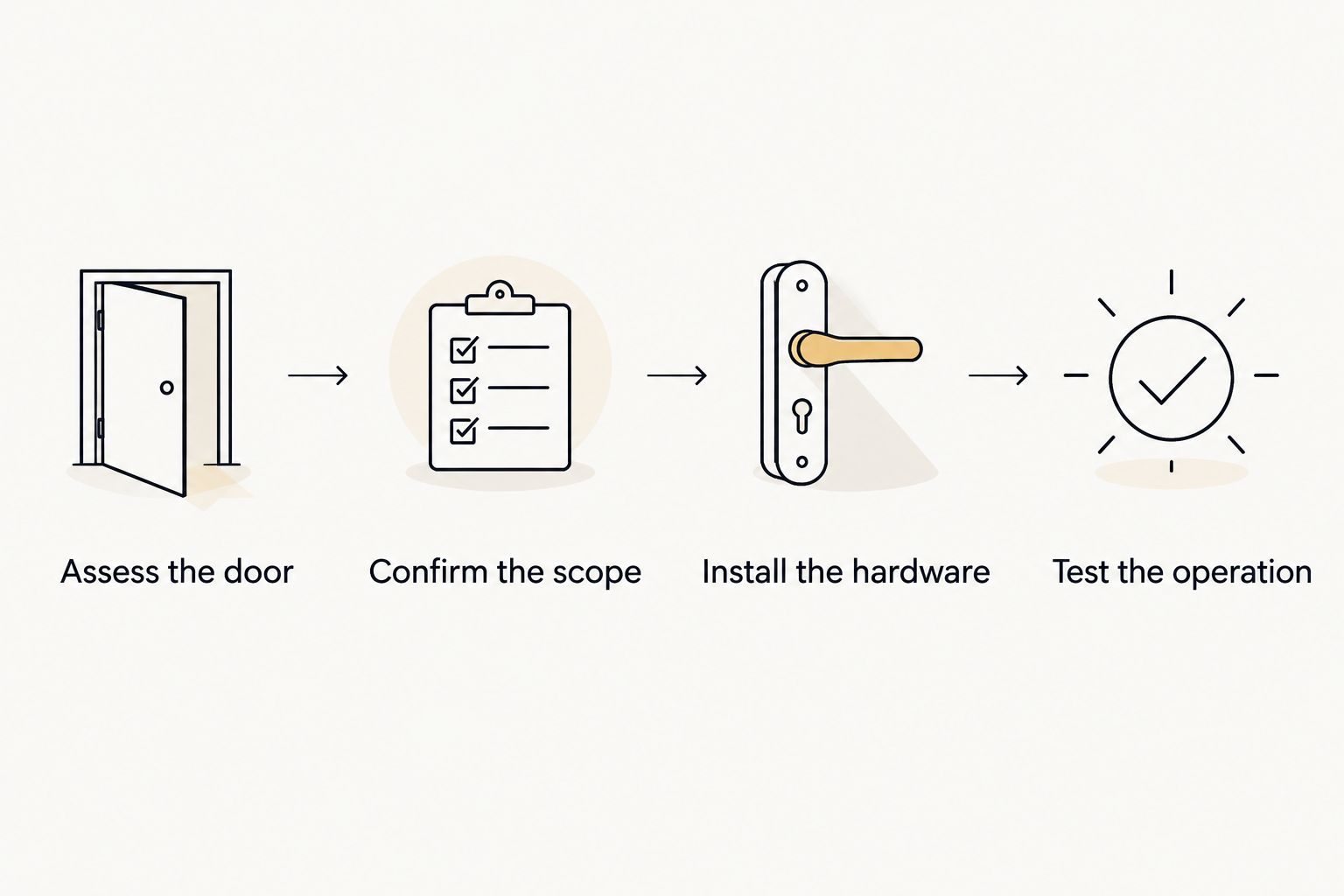
Plan for assessment and testing, not just the time spent fitting the lock.
Ask what happens if the assessment reveals work outside the original estimate. An agreed process for discussing changes prevents confusion about whether additional work is authorized.
Keep arrival time separate from installation time
An arrival estimate tells you when to expect the technician. An installation estimate concerns the work after assessment and access to the door.
Ask for both separately, then confirm any conditions attached to the completion estimate. Do not schedule employee access or building closure around an arrival window alone.
Include a handover with the responsible person
Arrange for someone authorized to accept the work to be available at completion. That person should understand how the lock operates and which keys they are receiving.
If a door must be pulled, lifted, or held in an unusual position to lock, raise that issue before treating the job as finished. The point of the installation is a functioning opening, not simply new hardware attached to the door.
How to prepare without doing the installation yourself
Your preparation should help the locksmith assess the work and reach the door safely. It should not involve dismantling unfamiliar hardware or modifying an exit door before the appointment.
Before you call, gather:
- The service address and the location of each affected door within the building.
- Photographs showing the existing lock, the door edge, and the surrounding frame, if requested.
- Any visible hardware identification or manufacturer information.
- A description of the problem, including whether it occurs with the door open, closed, or both.
- Details of existing push bars, closers, and any visible fire-rating labels.
- The name of the person who can provide access and approve the work.
Keep the work area clear without blocking another entrance or exit. If deliveries or customer traffic use the same doorway, discuss how access will be managed during the appointment rather than improvising once the work starts.
Do not remove an existing lock just to make the visit seem quicker. Leave the opening secure and let the agreed work scope determine what needs removal.
Will your business need to close during installation?
A lock installation does not automatically establish whether your business must close. That decision depends on the affected entrance, the work involved, and whether safe, authorized access remains available.
Tell the locksmith if the door is your only entrance or serves an exit route. Agree on how the opening will be managed while hardware is removed, and do not block an exit or improvise a temporary locking arrangement.
For an occupied business, discuss customer traffic, deliveries, staff access, and who will secure the building afterward. These operating details belong in the scheduling conversation even when the physical lock work is limited.
Is replacing the lock necessary, or would rekeying work?
Rekeying changes which key operates a suitable existing lock; replacement changes the hardware. If your concern is an old key rather than faulty hardware, ask whether rekeying meets the need before arranging an installation.
Rekeying is not a repair for a damaged lock, a dragging door, or an unsuitable locking function. The guide to repairing or replacing an exterior door lock explains the distinction between keeping existing hardware and replacing it.
Can you book commercial lock installation outside business hours?
Ask about current scheduling within the locksmith’s actual service hours. An after-hours preference does not establish technician availability or a completion time.
GO Locksmith’s hours are Sunday–Thursday, 7:00 AM–11:00 PM, and Friday, 7:00 AM–5:00 PM; Saturday is closed. The business is mobile, with confirmed Southwest Florida service areas including Fort Myers, Cape Coral, Lehigh Acres, Estero, Bonita Springs, and Naples.
FAQ
Can you tell me exactly how long my commercial lock installation will take over the phone?
An exact completion time requires details about the door, hardware, and work involved. Ask for a job-specific estimate and confirm what still needs on-site assessment.
Is replacing an existing commercial lock the same job as installing a new one?
Replacing an existing lock is not the same scope as a fresh installation. A compatible replacement uses existing preparation, while a fresh installation requires assessing and preparing the door for the new hardware.
Does the installation estimate include the locksmith’s travel time?
Confirm travel and on-site work separately rather than assuming both are included in a time estimate. Ask when the technician is expected and how the completion estimate is defined.
Should I buy the commercial lock before calling a locksmith?
Confirm the required hardware before buying a commercial lock. The lock must suit the door preparation, intended function, and any applicable requirements for that opening.
Will a new lock fix a door that does not latch properly?
A new lock does not necessarily fix a latching problem. Door alignment, the strike, or other hardware can be involved, so describe the symptoms before booking replacement.
Does GO Locksmith install electronic access-control systems?
GO Locksmith does not install or repair electronic access-control systems. Its confirmed commercial services include mechanical lock repair, replacement, rekeying, fresh installation, push bars, and door closers.
What should I ask when requesting an installation estimate?
Ask which doors and hardware the estimate covers, what needs assessment, and whether testing and related hardware work are included. Also confirm arrival scheduling separately from the estimated on-site work.
One last thing
A lock can operate with the door open yet fail to engage properly when the door is closed. Before the handover ends, ask to see normal operation with the door closed, including latching and the intended exit function.
For a job-specific installation estimate, call GO Locksmith at (239) 412-1101 during its listed hours. Describe the door, the existing hardware, and the problem you want solved so the scheduling conversation starts with the right scope.