
Blog ·
How long does it take to install a push bar on a commercial door?
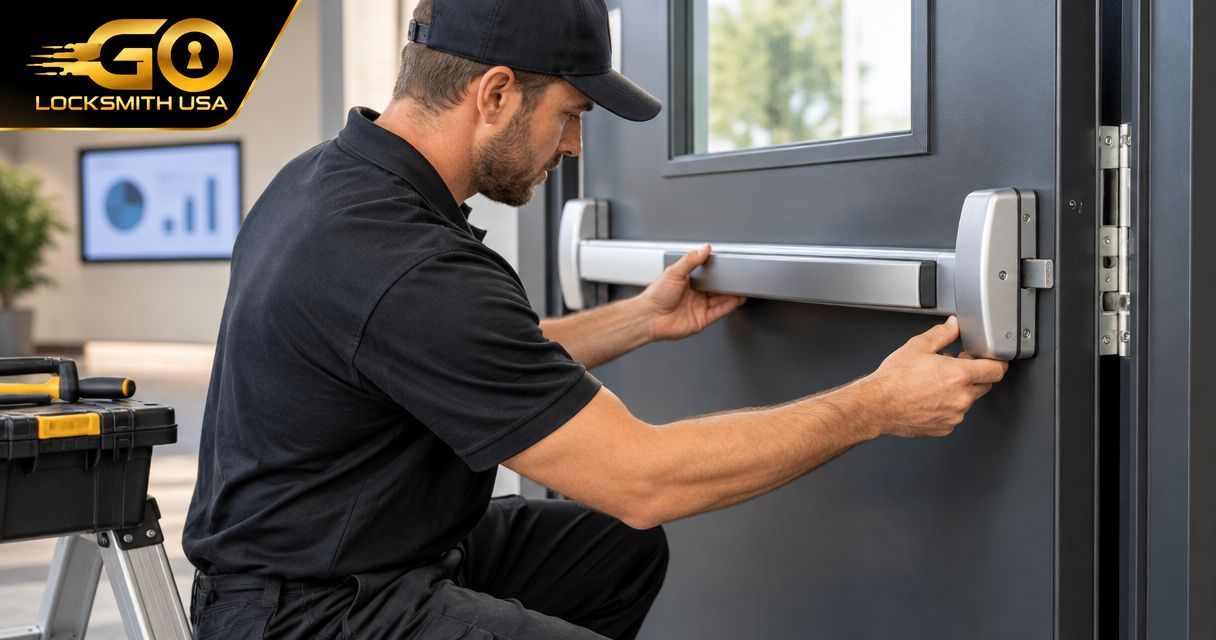
Push bar installation time depends on the door’s condition, the exit device, and whether the job is a compatible replacement or a fresh installation. Ask for a door-specific labor estimate that includes preparation, fitting, adjustment, and testing—not just attaching the bar.
TL;DR
- How long to install a push bar on a commercial door depends on hardware compatibility, door preparation, and final testing.
- A compatible replacement and a fresh installation require different preparation; neither supports a universal completion promise.
- GO Locksmith provides mobile commercial push bar services; call for a door-specific estimate and to check current availability.
- Keep installation labor, technician arrival, and any required inspection separate when planning your schedule.
How long does it take to install a push bar on a commercial door?
A useful installation estimate starts with the actual door and proposed hardware. Replacing an existing exit device with compatible hardware is a different job from adding a push bar to a door that has never had one.
The installation window should cover more than mounting screws. It should account for removing existing hardware where necessary, preparing approved mounting locations, fitting the device and strike, checking alignment, and verifying operation.
| Installation situation | What affects the work | Planning advantage | Limitation |
|---|---|---|---|
| Compatible replacement | Existing preparation, mounting compatibility, and hardware condition | Existing preparation can reduce new work | Similar-looking devices are not automatically interchangeable |
| Fresh installation | Door construction, hardware selection, and required preparation | Hardware can be selected for the opening’s requirements | Preparation must match the door and device instructions |
| Installation with door problems | Rubbing, sagging, damaged mounting areas, or poor latching | Identifies problems that affect the finished result | Attaching a new bar does not correct every door problem |
For help identifying the relevant service, review GO Locksmith’s confirmed locksmith services. Describe the door’s current condition when requesting an estimate rather than asking only how quickly someone can attach a bar.
Why the installation window matters
A commercial door serves people entering and leaving your business. Work on that opening needs coordination, especially when it forms part of an exit route.
The useful scheduling question is when the door will be fully operational, not when the bar will be mounted. A bar can be attached while the latch still needs adjustment or the door still fails to close correctly.
Separate these scheduling questions before agreeing to the work:
- When can the technician attend?
- What installation work does the estimate include?
- How will people use the building while the door is being worked on?
- Does the project require a separate approval or inspection?
An installation estimate does not establish an arrival time. Likewise, the end of hands-on work does not automatically establish that a separately required inspection has occurred.
Replacing an existing push bar
A compatible replacement can involve less preparation than a fresh installation. That advantage depends on the replacement device fitting the existing door preparation and meeting the opening’s requirements.
Do not assume that a new bar will fit because it has a similar shape or length. Mounting patterns, latch arrangements, strikes, door construction, and exterior trim all affect compatibility.
Before requesting a replacement estimate, gather:
- Clear photographs of the existing bar and its mounting points.
- A photograph of the latch and the part it engages.
- Any visible manufacturer or model information.
- A description of what is wrong: sticking, loose mounting, incomplete release, or failure to latch.
Best for a replacement assessment: an opening that already has exit hardware and needs its existing setup evaluated. The limitation is that the existing preparation or door condition can still require additional work.
Avoid removing the device before the assessment. Its installed position and operating symptoms help explain the problem, and removing exit hardware can leave the opening unusable.
Adding a push bar to a door without one
A fresh installation requires a hardware and door assessment before a dependable schedule can be set. The installer needs to establish how the chosen device mounts and whether the opening supports the proposed installation.
Door material matters because attachment methods and preparation must suit the construction. A hollow metal door, a wood door, and an aluminum-framed opening do not justify identical installation assumptions.
Fire-rated openings need particular care. Hardware selection and modifications must preserve the assembly’s applicable requirements; drilling or changing components without checking those requirements is not an acceptable shortcut.
Best for a fresh-installation assessment: a door being evaluated for new mechanical exit hardware. The limitation is that the existing door is not automatically suitable for every device.
Whether a push bar is required is a separate question from installation duration. Review whether a commercial building needs a push bar by fire code, and confirm the requirements for your opening with the local authority having jurisdiction.
Why push bar installation time varies
The main scheduling factors concern the whole opening, not just the bar. Use these points to explain your job when requesting an estimate.
- Existing preparation: Usable mounting locations can reduce new preparation, but only when they match the selected device and its instructions.
- Door and frame condition: Rubbing, sagging, damaged material, and misalignment affect whether the finished installation operates correctly.
- Device configuration: A device that latches at the side of the door has different fitting considerations from hardware using vertical rods.
- Exterior operation: An outside handle or keyed trim must work with the selected exit device when exterior access is part of the job.
- Opening requirements: Fire ratings and applicable exit requirements affect hardware selection and permitted modifications.
- Worksite access: Staff movement, deliveries, and the need to maintain usable exits affect how the work can be organized.
These factors do not produce a reliable universal duration. They explain why an estimate based on photographs and a clear description is more useful than a generic promise.
What should the installation appointment include?
Ask the installer to describe the scope in plain language. You need to know what will be assessed, what will be fitted, and what will be checked before the door returns to normal use.
- Assess the opening. Identify the door construction, existing hardware, operating problems, and any relevant labels or restrictions.
- Confirm hardware fit. Check the proposed device against the opening and the manufacturer’s installation requirements.
- Install and adjust. Complete the permitted preparation, secure the hardware, and address device alignment within the agreed scope.
- Test operation. Check release from inside, closing and latching, and any included exterior operation.
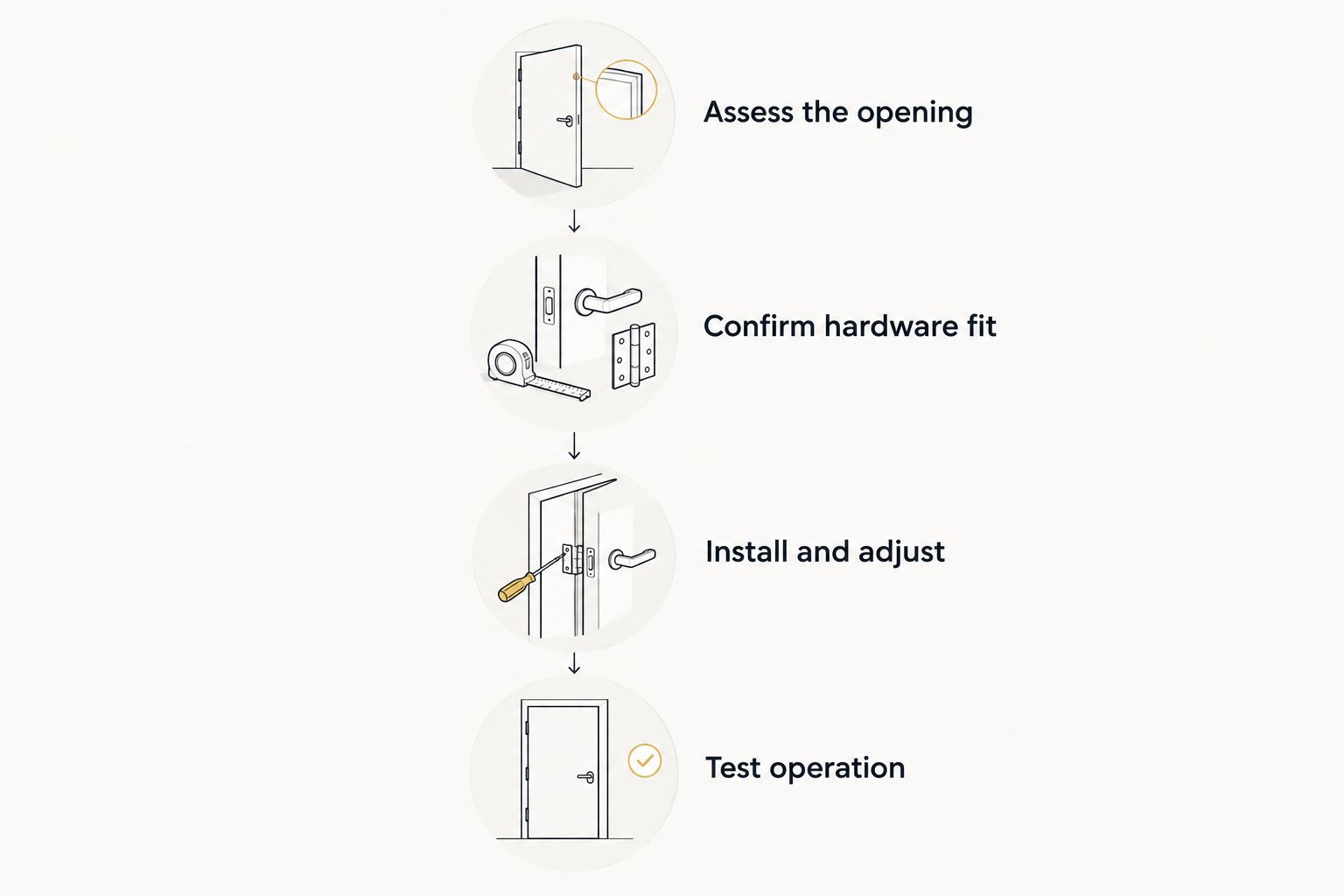
The appointment should include checking operation, not just mounting the push bar.
A written scope helps distinguish installation work from related issues. If the frame is damaged or the door needs work beyond the agreed service, ask how that changes the plan before authorizing additional work.
Do not treat this outline as a do-it-yourself drilling guide. Device instructions, door construction, and exit requirements determine the appropriate preparation.
What should you send before requesting a time estimate?
Send clear photographs of the inside and outside of the closed door, plus close-ups of the existing hardware. Include the latch area, frame, and any visible door or hardware labels without removing components.
Describe how the door behaves during ordinary use. “The bar moves, but the door catches at the frame” provides more useful information than “the lock is broken.”
Tell the service provider whether the opening is a single door or part of a pair. Explain whether you want to replace an existing device, add new hardware, or address a fault you have not yet identified.
Also identify who can authorize the work and provide access. If you lease the space, establish whether the property manager needs to approve changes before scheduling the installation.
Photographs help define the request, but they do not reveal every condition. Ask whether the estimate remains preliminary until the opening is inspected and what findings would change the scope.
Can my business stay open during installation?
Whether your business can remain open depends on maintaining safe access and required exit routes during the work. Do not assume that an entrance under repair can simply be blocked while customers remain inside.
Discuss the affected opening with the installer and building management before the appointment. Where exit-route arrangements are uncertain, obtain direction from the responsible authority rather than improvising an alternate route.
Choose a work period that reduces traffic through the opening without assuming after-hours service. Tell staff which door is affected, and keep deliveries from interfering with the work area.
Is a push bar installation finished when the door opens?
No. Opening from inside is essential, but the completed job also needs checks appropriate to the door and hardware, including closing and latching.
Ask for a demonstration of normal operation before handover. If the door rubs, the latch catches, or the bar fails to return properly, raise the issue before treating the installation as complete.
A door closer is a separate component from the push bar. A problem with closing behavior deserves assessment rather than an assumption that replacing the exit device will solve it.
Requesting commercial push bar service locally
GO Locksmith provides mobile push bar services for businesses in its confirmed service areas. Its primary market is Fort Myers, with Southwest Florida service areas including Cape Coral, Lehigh Acres, Estero, Bonita Springs, and Naples.
Ask about the mechanical push bar work your door needs. Electronic access-control installation or repair is not a service GO Locksmith provides.
Call (239) 412-1101 with the property location, photographs, and a description of the existing hardware. Request a job-specific estimate and ask what information is needed to establish the installation window.
Service hours are Sunday–Thursday, 7:00 AM–11:00 PM, and Friday, 7:00 AM–5:00 PM; Saturday is closed. Call to check current availability rather than assuming an immediate appointment.
FAQ
Can I get an exact installation time over the phone?
An exact installation time requires enough information about the door, hardware, and scope. Photographs help, but an on-site assessment can identify conditions that change the estimate.
Does replacing a push bar always take less time than installing a new one?
No, a replacement is not automatically a shorter job. Compatibility, damaged mounting areas, and door alignment determine whether existing preparation reduces the work.
Will a new push bar fix a door that will not latch?
A new push bar does not automatically fix a latching problem. The cause can involve the device, strike alignment, door position, or closing behavior, so the opening needs assessment.
Can the installer reuse the holes from my old exit device?
Existing holes are reusable only when they suit the selected device, door construction, and applicable installation requirements. Similar-looking hardware does not establish compatibility.
Do all commercial doors need push bars?
No, commercial use alone does not establish that every door requires a push bar. The building use, occupant load, door location, and applicable code requirements determine the answer.
Does GO Locksmith install electronic access control with a push bar?
GO Locksmith does not install or repair electronic access-control systems. Ask about its confirmed mechanical push bar and commercial door-hardware services instead.
One last thing
Before calling, check whether your complaint concerns releasing the door or closing it again. Those are different functions, and describing the wrong one can send the initial conversation in the wrong direction.
Request an installation window that ends with a working, tested opening—not merely an attached bar. Call (239) 412-1101 to discuss your door, request a job-specific estimate, and check current availability.