
Blog ·
Best rekeyable lock brands for landlords 2026
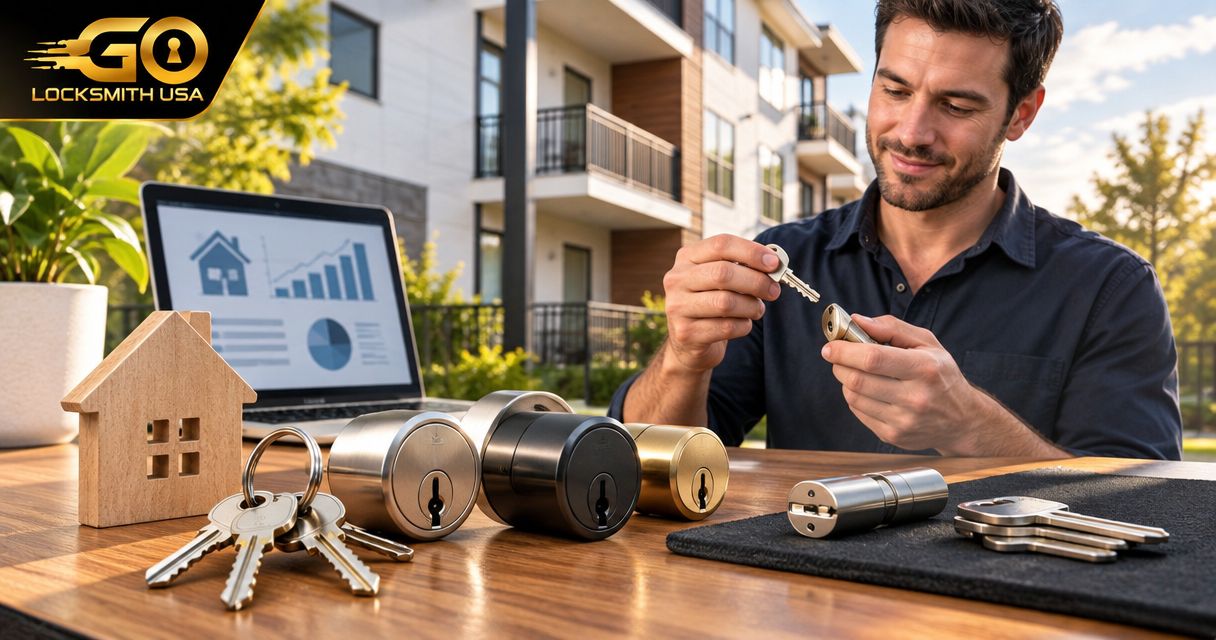
Schlage is the default choice for landlords keeping conventional residential locks; Kwikset suits owner-managed rekeying on compatible models; BEST suits properties already using interchangeable cores. The best rekeyable lock brands for landlords depend on the hardware already installed, who handles tenant turnover, and how you control keys—not the name on the package alone.
TL;DR
- Schlage is the default for conventional residential rekeying when the existing door hardware and keyway fit.
- Kwikset suits landlords who want owner-rekeyable models and can follow the exact manufacturer's instructions.
- BEST suits managed interchangeable-core systems, not an unplanned replacement for ordinary residential deadbolts.
- GO Locksmith provides residential and commercial lock rekey services; call to discuss your existing rental-property hardware.
Why the rekeying method matters more than the logo
Rekeying changes which key operates a lock without necessarily replacing the entire lock. It does not repair a damaged bolt, correct a dragging door, or strengthen a weak frame. Before choosing a brand, separate your key-control problem from any hardware problem.
A landlord with sound, matching locks needs a different solution from an owner inheriting mismatched or damaged hardware. GO Locksmith offers lock repair, replacement, and rekey services for residential and commercial properties. Describe the existing locks before deciding what to replace.
The useful distinction is between conventional cylinders, owner-rekeyable mechanisms, and interchangeable cores. Each changes the turnover workflow, but none eliminates the need to account for keys and check the door afterward.
What makes the best rekeyable lock brands for landlords?
Use these criteria before comparing brands:
- Existing hardware compatibility: Check the exact lock, cylinder, door preparation, and keyway. Matching brand names do not prove compatibility.
- Turnover workflow: Decide whether a locksmith will rekey the cylinder, an authorized owner will use a manufacturer-supported rekeying process, or maintenance staff will exchange a core.
- Key control: Decide who receives keys, who authorizes copies, and how you record changes between occupants.
- Door condition and suitability: A rekeyable cylinder is useful only when the surrounding lock and door operate correctly and suit the opening.
- Maintenance continuity: Keep model information and manufacturer instructions so the next repair does not depend on guesswork.
Choose the rekeying process you can manage consistently, then choose compatible hardware. A convenient rekey feature is not a substitute for a sound lock or a clear key policy.
Rekeyable lock brands at a glance
| Brand | Best for | Standout feature | Key limitation |
|---|---|---|---|
| Schlage | Conventional residential locks rekeyed by a locksmith | Conventional pin-tumbler options that support cylinder rekeying | Brand alone does not establish a common keyway or owner-rekeying capability |
| Kwikset | Landlords who want an owner-rekeyable option | SmartKey technology on designated models supports a manufacturer-defined rekeying process | The normal process requires the working key, compatible replacement key, and rekey tool |
| BEST | Properties already organized around interchangeable cores | Compatible cores can be exchanged using the appropriate control key | Requires a planned core system; not a universal residential-lock retrofit |
These are workflow recommendations, not a claim that every lock from one brand outperforms every lock from another. Confirm the exact model before ordering hardware or planning a turnover.
1. Schlage: best for conventional residential rekeying
Schlage is the starting point when your rental already has serviceable Schlage conventional keyed hardware and a locksmith handles rekeying. Conventional pin-tumbler cylinders can be rekeyed by changing their internal keying components, subject to the particular cylinder's construction and condition.
Keeping suitable existing hardware avoids changing the entire lock just because a tenant returns the keys. However, do not assume every Schlage lock shares the same keyway or that a conventional cylinder has an owner-operated reset function.
Schlage pros:
- Supports conventional cylinder rekeying on appropriate keyed models.
- Lets you retain sound existing hardware when the cylinder remains serviceable.
- Provides a practical starting point for standardizing compatible locks within a unit.
Schlage cons:
- Conventional rekeying requires cylinder work rather than a simple owner reset.
- Different product families and keyways require compatibility checks.
- Rekeying does not correct worn hardware or poor door alignment.
Best for: Landlords who want a conventional mechanical setup maintained through scheduled locksmith service.
Before replacing matching Schlage locks, have the existing hardware assessed. If the lock operates correctly and the concern is outstanding tenant keys, a rekey addresses that concern without requiring a different brand.
Verdict: Hold serviceable Schlage hardware; replace it only when condition, compatibility, or the opening's requirements justify the change.
2. Kwikset: best for owner-managed rekeying
Kwikset offers designated SmartKey models with a manufacturer-supported owner-rekeying process. On applicable models, the normal process uses the current working key, the appropriate rekey tool, and a compatible new key; follow the instructions for the exact lock.
That distinction matters at turnover. A landlord who retains the working key has a different task from an owner who has lost every working key, and the routine owner-rekeying procedure should not be treated as a solution for both situations.
Kwikset pros:
- Designated models let an authorized owner change the operating key using the manufacturer's process.
- Suitable existing hardware can remain installed through a key change.
- A documented rekeying routine gives an owner-manager a repeatable turnover task.
Kwikset cons:
- Not every Kwikset lock uses the same rekeying mechanism.
- A missing working key prevents use of the normal SmartKey rekeying procedure.
- Compatible keys and exact instructions remain necessary; appearance is not enough.
Best for: Hands-on landlords who want owner-rekeyable hardware and will retain the working key and instructions securely.
Do not buy solely because a package says rekeyable. Confirm that the specific model supports the owner-operated process you expect, then test every issued key after the change.
Verdict: Buy a compatible owner-rekeyable Kwikset model when owner-managed turnover is your priority; skip that workflow if working-key control is unreliable.
3. BEST: best for established interchangeable-core systems
BEST is relevant when your property uses, or is being deliberately planned around, compatible interchangeable-core hardware. In this arrangement, an authorized person uses the appropriate control key to remove a core and install a compatible replacement core.
A core exchange and rekeying are different tasks. Exchanging a prepared core changes the installed keying, while preparing or rekeying the removed core remains a separate part of the maintenance process.
BEST pros:
- Supports core exchange without replacing the complete compatible lock assembly.
- Separates the installed hardware from the removable keyed core.
- Fits a documented maintenance process with controlled replacement cores.
BEST cons:
- Requires compatible lock bodies, cores, and control keys.
- Ordinary residential deadbolts do not become interchangeable-core locks simply by changing brands.
- Poor control-key security undermines the system's management benefits.
Best for: Property managers maintaining an existing interchangeable-core installation with an established key-control procedure.
Do not convert a small rental portfolio merely to copy a commercial maintenance workflow. First establish who will prepare cores, secure control keys, and maintain records; a core system needs that organization to make sense.
Verdict: Hold a suitable existing BEST system; wait on conversion until the hardware requirements and management process are clearly defined.
Choose the workflow before buying locks
The practical choice starts with the door, not a shopping list. Use this sequence to narrow the decision before committing to a brand:
- Inspect hardware: Identify the lock and cylinder, and note binding, looseness, corrosion, or damage. Check operation with the door open and closed.
- Confirm compatibility: Establish whether the existing cylinders can accept the intended keying arrangement. Do not assume locks can share a key because the keys look similar.
- Choose workflow: Decide who will perform key changes and what tools, working keys, or controlled cores that process requires.
- Record key changes: Keep an access-controlled record of the unit, hardware, authorized keyholders, and completed turnover work. Do not attach identifying property details to loose keys.
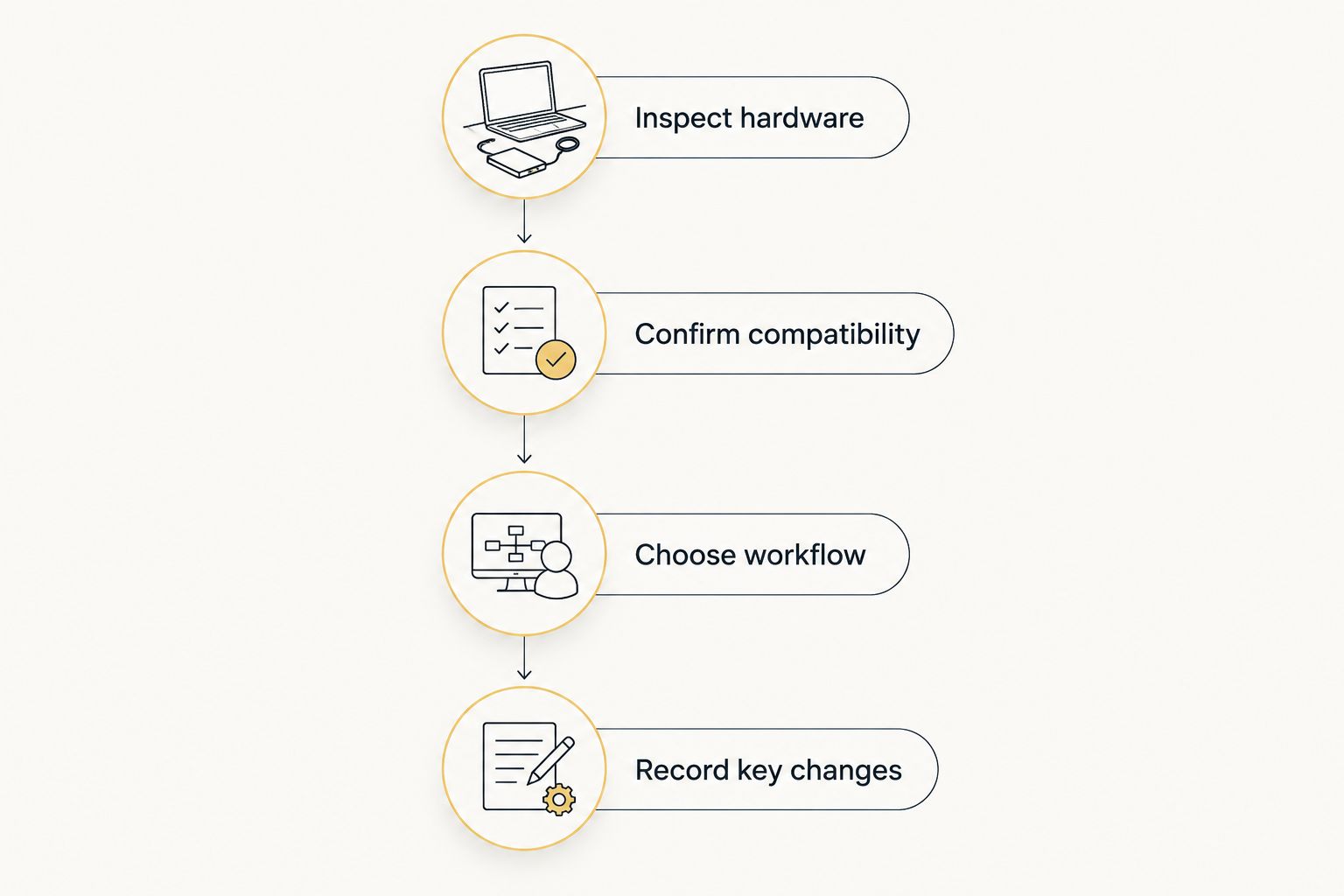
Confirm the existing hardware before choosing a brand or turnover method.
After a rekey or core change, check that the new keys operate correctly and the superseded tenant key no longer operates the affected lock. Test the door from both sides without creating a lockout, and confirm that it latches and locks without being forced.
For shared or specialized openings, establish the door's requirements before changing hardware. An apartment entry, common entrance, and detached-house deadbolt are not automatically interchangeable applications.
Rekeying does not mean every tenant shares a key
“Keyed alike” and “master keyed” describe different arrangements. Keyed-alike compatible locks operate with the same key; a master-key arrangement allows designated keys to operate selected locks according to a planned hierarchy.
For a rental home, you might want the tenant's key to operate the permitted exterior doors within that home. That does not mean unrelated tenants should receive keys that open each other's units.
Keep convenience separate from access boundaries. A portfolio-wide key decision affects more than the next turnover, so confirm the intended access arrangement before any cylinders are changed. Do not assume a rekey alone establishes restricted duplication or a master-key system.
How these recommendations are ranked
The ranking puts conventional residential continuity first, owner-managed rekeying second, and established interchangeable-core maintenance third. It follows the compatibility, workflow, key-control, condition, and maintenance criteria above—not unpublished testing or an unsupported durability score.
Manufacturer documentation is the reference for the exact mechanism: Schlage's cylinder and key-system documentation, Kwikset's SmartKey rekeying instructions, and BEST's interchangeable-core documentation. Check the instructions for the actual hardware rather than applying a brand-level recommendation to every model.
Which rekeyable lock brand should you choose?
Keep sound, compatible locks before switching brands. Choose Schlage conventional hardware when locksmith-managed rekeying fits your rental, designated Kwikset owner-rekeyable models when you want to manage that process yourself, and BEST when an interchangeable-core system already fits the property.
GO Locksmith rekey services suit landlords who need help assessing existing residential or commercial locks in Fort Myers, Cape Coral, Lehigh Acres, Estero, Bonita Springs, and Naples. Call (239) 412-1101 to discuss the hardware and request a job-specific estimate; describe the lock type, door condition, and whether a working key remains.
FAQ
What's the best rekeyable lock brand for a small landlord?
Schlage is the default starting point for conventional locksmith-managed rekeying, especially when suitable Schlage hardware is already installed. Designated Kwikset owner-rekeyable models fit landlords who want to perform the manufacturer's rekeying process themselves.
Is Kwikset easier to rekey than Schlage?
A designated Kwikset SmartKey model supports an owner-operated rekeying process, while a conventional Schlage cylinder requires cylinder work. Compare the exact mechanisms, not just the brand names, and follow the applicable manufacturer instructions.
Can I rekey a rental lock without the current key?
A missing key does not automatically mean the whole lock must be replaced. The available approach depends on the cylinder and condition, but the normal SmartKey owner-rekeying procedure requires the current working key.
Can all the locks in a rental house use the same key?
Compatible cylinders can be keyed alike, but not every combination of locks supports the same key. Have the keyways and cylinders checked before buying matching-looking hardware.
Should landlords rekey or replace locks between tenants?
Rekey serviceable locks when the goal is to stop the previous key from working. Repair or replace hardware when damage, wear, compatibility, or the opening's requirements make retaining it unsuitable.
Does rekeying stop tenants from making key copies?
Rekeying changes the operating key; it does not by itself restrict duplication. Key-copy control depends on the specific key system and its authorization arrangements.
Does GO Locksmith handle rental-property rekeys?
GO Locksmith provides residential and commercial lock rekey services. Call (239) 412-1101 to discuss your property's hardware and check availability during business hours: Sunday–Thursday 7:00 AM–11:00 PM and Friday 7:00 AM–5:00 PM; Saturday closed.
One last thing: check the door before blaming the key
A key that turns with the door open but binds when the door is closed points to a different problem from an unauthorized key still working. Record that symptom when requesting service; changing the keying alone does not correct door-to-frame misalignment.
Before your next turnover, make a hardware list rather than ordering a new brand for every door. That list gives you a useful starting point for deciding what to retain, rekey, repair, or replace.