
Blog ·
Can a locksmith make every lock in a house use one key?
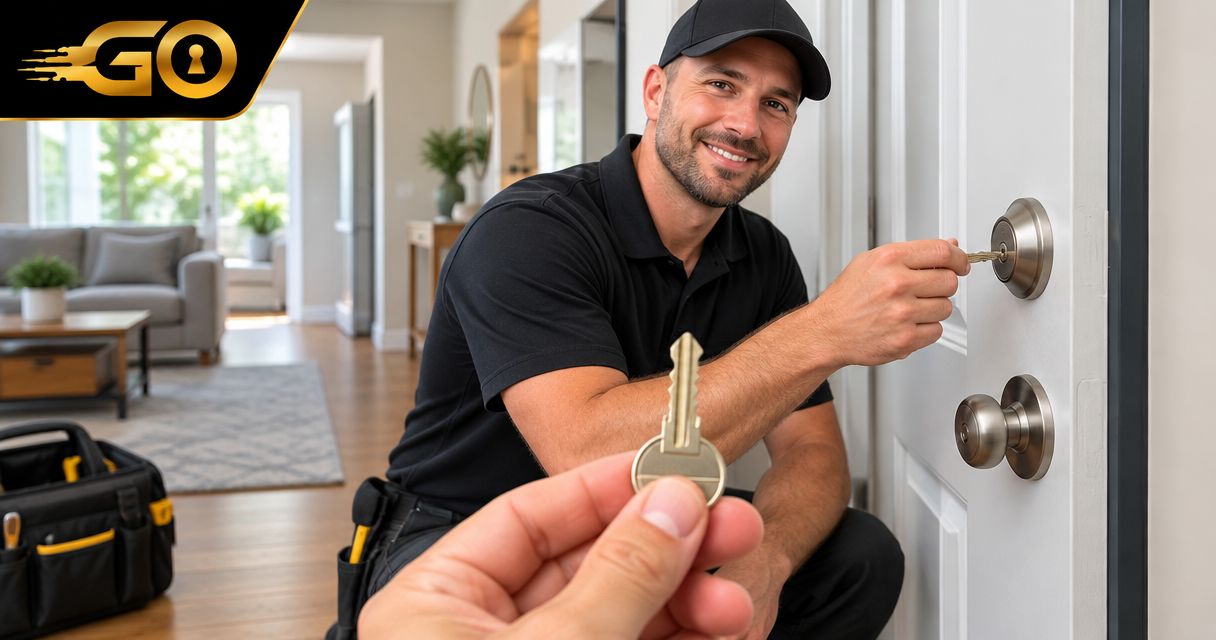
Yes—a locksmith can make compatible house locks use one key by rekeying them alike. If your locks use incompatible keyways or cannot be rekeyed, some cylinders or complete locks will need replacement. One key for every exterior door is a practical goal, but one key for every lock on the property is not always possible.
TL;DR
- Can a locksmith make every lock in a house use one key? Yes, when the locks are compatible or suitable replacements exist.
- Rekeying changes which key operates a lock; it does not fix worn hardware or make incompatible keyways match.
- Check the deadbolt and keyed handle separately, even when they are on the same door.
- GO Locksmith provides mobile residential rekey service in Fort Myers and confirmed Southwest Florida service areas.
Can a locksmith make every lock in a house use one key?
A locksmith can key compatible, rekeyable cylinders alike so the same key operates them. That can include the front door, back door, and garage-to-house door, depending on the installed hardware. Locks do not need to look identical, but their internal key systems must support the same key.
GO Locksmith offers residential lock repair, replacement, and rekeying through its locksmith services. Whether your existing locks can stay depends on their condition and compatibility—not simply the number of doors.
| Approach | Best for | Main benefit | Main limitation |
|---|---|---|---|
| Rekey compatible locks alike | Working locks that support the same key | Keeps usable existing hardware | Cannot make incompatible keyways accept the same key |
| Replace incompatible cylinders or locks | Homes with mixed or unsuitable hardware | Creates a compatible group of locks | Requires checking replacement fit and function |
| Keep selected locks separate | Spaces that need different access | Limits what a shared key opens | Leaves you carrying more than one key |
Ask for locks to be “keyed alike” if you want the same key to open each selected door. That wording distinguishes the request from making extra copies of your current keys.
Why this matters before you buy new locks
Buying matching-looking locks does not establish that they can share a key. Finish, handle shape, and door location do not tell you enough about the cylinder inside. A compatibility check helps you decide which hardware to keep and which hardware needs changing.
The goal also deserves a security check. A key that opens every selected door is convenient, but anyone holding a copy has access through all those doors. Decide which entrances should belong in the shared-key group before authorizing the work.
For example, you might want your main exterior doors keyed alike while keeping a home office separate. That is a deliberate access choice, not a failed attempt to simplify your keys.
When rekeying your existing locks makes sense
Rekeying is the appropriate starting point when your locks work properly and their cylinders are compatible. In a conventional pin-tumbler lock, rekeying changes the internal pin arrangement to match a selected key. The visible handle or deadbolt can remain in place.
If the locksmith changes a cylinder to a different key combination, the former operating key should no longer open that cylinder. Every included lock needs attention; changing the front deadbolt does not change the keyed handle below it or the lock at another entrance.
Rekeying does not restore worn parts, correct a dragging door, or strengthen unsuitable hardware. Tell the locksmith about sticking, loose handles, or a deadbolt that needs pressure on the door before it turns. Those symptoms need assessment alongside the keying request.
Does using the same brand guarantee compatibility?
No. The brand name alone does not establish that two locks use compatible keyways, cylinders, or rekeying arrangements. A manufacturer can offer different product families.
Different brands are not automatically incompatible, either. Some cylinders use compatible key systems, but that needs confirmation from the actual hardware rather than a brand-name comparison.
Can you keep using your favorite existing key?
Sometimes, provided the key is suitable and the cylinders support it. Ask whether the locksmith can key the selected locks to that key rather than assuming it will work.
If the key is worn, damaged, or has copies you cannot account for, discuss using a new key combination instead. Making every entrance accept an old key also preserves access for anyone who still holds a working copy.
When some cylinders or locks need replacement
Replacement becomes relevant when the existing hardware cannot support the shared key or is no longer suitable to keep. A locksmith needs to determine whether a compatible cylinder can fit the existing lock or whether the complete lock must change.
A cylinder swap is not universal. The replacement must suit the lock body, door preparation, and required function. Avoid buying a cylinder based only on a photograph or a similar-looking key opening.
Specialty door hardware deserves particular care. A sliding patio door, multipoint mechanism, or unusual entry set does not automatically accept the same cylinder arrangement as a standard deadbolt. Ask for a compatibility assessment before deciding that every lock must join the group.
If a lock operates badly, separate the questions: can it share the desired key, and should it remain on the door? A compatible but damaged lock is not a good candidate to keep merely to avoid replacement.
Why the ability to use one key varies
The answer depends on the hardware and the access you want—not on a universal whole-house rekey package. These factors determine the scope:
- Keyway compatibility: The key blade must fit the cylinder’s keyway. Changing the pin arrangement does not change the keyway’s shape.
- Rekeyable construction: Not every lock is designed to be rekeyed or serviced in the same way.
- Hardware condition: Wear, damage, and operating problems affect whether keeping a lock makes sense.
- Replacement fit: A compatible replacement cylinder must also fit and function in the existing hardware.
- Access boundaries: A tenant space, private office, or shared entrance might need a separate key.
- Specialty or restricted systems: Certain locks require specific components, authorization, or separate arrangements.
Two locks on the same door can require separate work. Count keyed cylinders rather than assuming each door represents a single rekeying task.
What should you check before requesting service?
You do not need to identify the internal components yourself. A clear inventory gives the locksmith useful information without taking hardware apart or guessing at compatibility.
- List the doors. Include the front entrance, back entrance, side entrance, and garage-to-house door if you want them on the shared key.
- Count keyed cylinders. Record the keyed handle and deadbolt separately. Mention a cylinder on the inside face if the lock has one.
- Gather current keys. Note which key operates each lock and whether any keys are missing.
- Note operating problems. Report sticking, loose hardware, or difficulty locking with the door closed.
- Choose access boundaries. Identify any room or entrance that should keep a separate key.
If you can provide photos, show the hardware and any visible manufacturer markings through the contact method agreed with the locksmith. Do not post close-up pictures of your key cuts publicly. Photos help describe the job, but they do not replace an assessment of the installed locks.
GO Locksmith is a mobile locksmith service for homeowners who need residential rekeying in Southwest Florida. Its confirmed service areas include Fort Myers, Cape Coral, Lehigh Acres, Estero, Bonita Springs, and Naples.
Is keying locks alike the same as a master key system?
No. Keying locks alike means the selected locks accept the same operating key. A master key system uses an access hierarchy: individual keys operate designated locks, while a master key operates a broader group.
For a homeowner who simply wants fewer keys, “keyed alike” describes the goal more accurately. You do not need to request a master key system just because you want your front and back doors to share a key.
Keep the access question separate from the convenience question. If someone should enter a detached room but not the main house, giving that person a key that opens both defeats the boundary.
Can mailbox, patio, and interior locks use the house key?
Not automatically. Mailbox locks, patio-door locks, and keyed interior locks can use different cylinder designs or keyways from your entry-door hardware. Include them in the inventory, but do not assume standard rekeying will bring them into the same group.
Some interior privacy locks do not use a conventional operating key at all. A bedroom or bathroom privacy release is not the same thing as a keyed entry cylinder, so it does not belong in a keyed-alike plan in the same way.
For a rental or a mailbox managed by another party, confirm who controls the hardware before requesting changes. Your permission to change a house lock does not automatically establish permission to change shared or separately managed equipment.
What should you verify when the work is finished?
Test the agreed key in every included cylinder before treating the job as complete. Start with the door open so you can check operation without accidentally locking yourself out. Then confirm normal operation with the door closed.
- Check each deadbolt and keyed handle separately.
- Confirm the key inserts, turns, and removes normally.
- Check that the door latches and locks without unusual force.
- Where applicable, confirm the former key no longer operates each changed cylinder.
- Record which locks remain separate and label spare keys accordingly.
A key that turns with the door open but binds when the door closes points to a different issue from key compatibility. Report the difference rather than forcing the key or assuming another copy will fix it.
FAQ
Can a locksmith make different brands of house locks use one key?
Sometimes, if the cylinders use compatible key systems or suitable replacement hardware is available. Different brands do not automatically rule it out, and matching brands do not guarantee it.
Do I have to replace every lock to use one house key?
No. Working, compatible, rekeyable locks can often stay in place. Incompatible or unsuitable hardware needs separate assessment for cylinder or complete-lock replacement.
Will my old keys still work after all the locks are rekeyed?
An old key should no longer operate a cylinder changed to a different key combination. That applies only to the cylinders included in the work, so check every agreed lock.
Can my deadbolt and front door handle use the same key?
Yes, if their cylinders are compatible or suitable replacements can be fitted. Treat the deadbolt and keyed handle as separate cylinders when describing the job.
How much does it cost to make all my house locks use one key?
The estimate depends on the cylinders involved, compatibility, hardware condition, and any necessary replacement. Call GO Locksmith at (239) 412-1101 for a job-specific estimate.
Is using one key for every door less secure?
Using one key does not itself upgrade or downgrade the physical strength of your locks. It does expand the access held by anyone with that key, so keep sensitive spaces separate when needed.
Can I rekey all the locks when I have just moved in?
Rekeying compatible locks to a new combination can remove access through old operating keys. Confirm ownership or authorization, identify every relevant cylinder, and assess the hardware before deciding what to retain.
One last thing: fewer keys can mean wider access
The useful question is not just “Can every lock share a key?” It is “Should everyone with this key open every one of these doors?” Make that decision before the keying work, especially if you share keys with visitors, tenants, or service providers.
To discuss residential rekeying, call GO Locksmith at (239) 412-1101 with your door list and any known lock problems. Request a job-specific estimate and check current availability. Hours are Sunday–Thursday 7:00 AM–11:00 PM and Friday 7:00 AM–5:00 PM; Saturday is closed.