
Blog ·
How much does it cost to rekey locks between rental tenants?
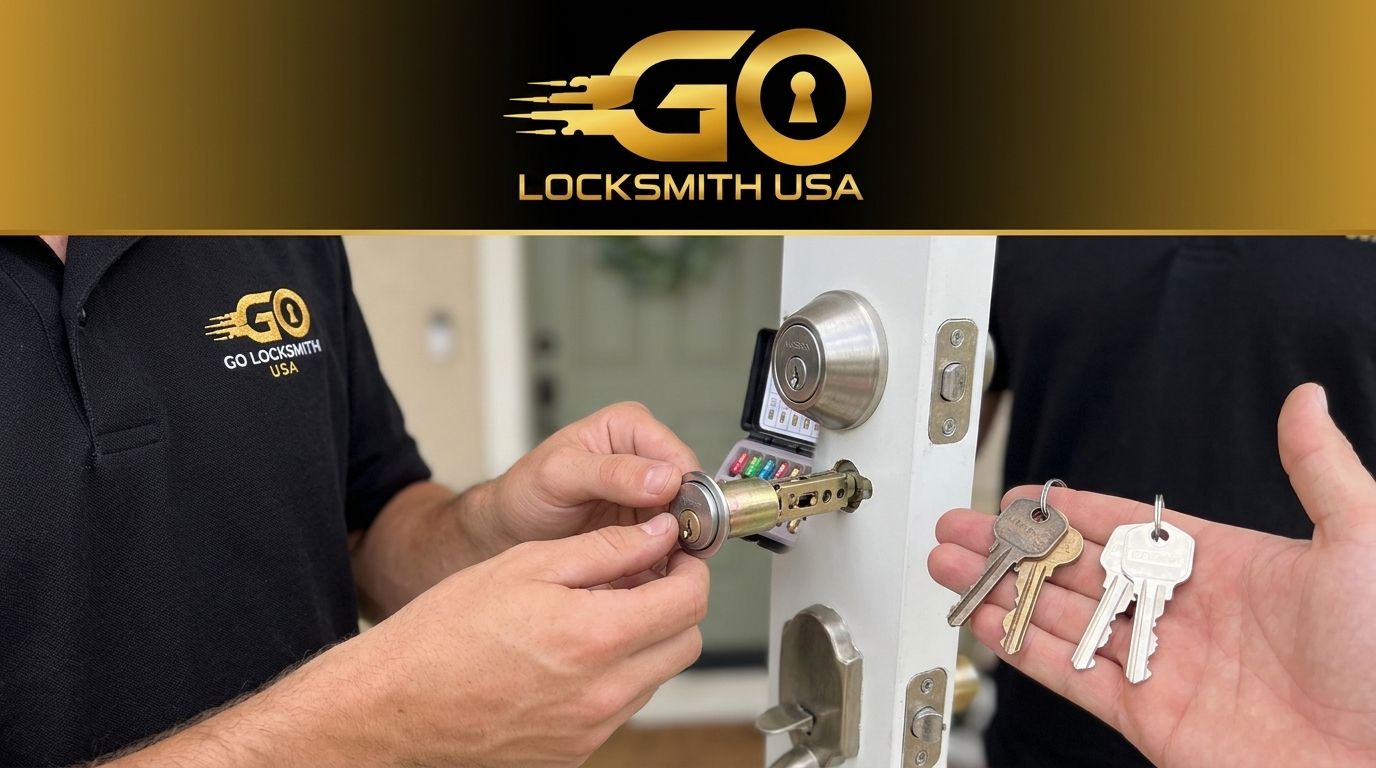
The cost to rekey locks between rental tenants depends on the keyed cylinders being changed, the condition of the hardware, and the work needed to establish the new key arrangement. Request a job-specific estimate rather than budgeting from the number of doors alone. Ask whether the estimate includes every agreed lock, the keys you need, and any separate work required for damaged or inaccessible locks.
TL;DR
- The cost to rekey locks between rental tenants depends on cylinders, hardware condition, access, and the requested key arrangement.
- Rekeying changes which key operates a compatible lock; it does not repair damaged hardware.
- Compare estimates for the same locks, key quantities, and work scope—not just the headline total.
- GO Locksmith provides mobile residential lock rekeying for rental owners in Fort Myers and confirmed Southwest Florida service areas.
How much does it cost to rekey locks between rental tenants?
Get an estimate based on the actual locks, not a generic rental-turnover price. A door can have more than one keyed cylinder, and different locks can require different work. Tell the locksmith which entrances need new keys and whether you have working keys now.
Use this breakdown when requesting an estimate. It identifies the scope to confirm, not a list of charges that every provider applies.
| Estimate component | What to describe | What to confirm |
|---|---|---|
| Locks being rekeyed | Each keyed lock on each included entrance | Which cylinders the estimate covers |
| Existing hardware | Brand markings, visible damage, sticking, or loose parts | Whether rekeying is suitable or repair is needed |
| Property access | Whether someone can provide authorized entry | Whether gaining entry is separate work |
| New key arrangement | Which doors should share a key or remain separate | Whether the existing locks support that arrangement |
| Handover keys | Keys needed for tenants and authorized management | Which keys are included in the estimate |
Before approving work, read how to assess whether a locksmith quote is legitimate. A useful estimate describes the job clearly enough that you can tell whether a later change adds work or simply changes the original quote.
Why this matters at tenant turnover
Collecting the outgoing tenant’s keys does not establish that no copies remain. Rekeying a compatible lock changes its keying so the previous operating key no longer opens that cylinder. That addresses key control without automatically replacing usable hardware.
The boundary matters: rekeying changes access; it does not fix the door. A sticking deadbolt, loose handle, or damaged cylinder needs assessment rather than an assumption that a new key will solve everything.
Treat turnover as both a key-control task and a condition check. You need to know which old keys should stop working, which doors the incoming tenant should access, and whether those doors lock correctly.
Why rental rekeying estimates vary
These details define the work a locksmith needs to assess:
- Cylinder count. List keyed cylinders rather than assuming each entrance equals a single rekeying task. Include separate keyed deadbolts and handles where present.
- Hardware type and compatibility. Different locks do not automatically accept the same key. Brand markings and clear photos help explain what is installed.
- Lock condition. A worn, damaged, or malfunctioning lock needs assessment before you approve rekeying alone.
- Access and working keys. Explain whether the property is accessible and whether keys are available for the locks being changed. A lockout is a different task from rekeying an accessible lock.
- Requested key arrangement. Keeping entrances separate differs from asking for compatible locks to share a key. State the intended result before requesting an estimate.
- Handover requirements. Specify the keys you need and identify any entrances excluded from the work. This keeps the estimate aligned with the actual turnover.
Provide the same information to every provider whose estimate you compare. A quote covering the front entrance alone is not directly comparable with one covering every exterior keyed lock.
Rekeying, repair, or replacement: which work fits?
Choose the work according to the problem you need to solve. Do not replace functioning hardware solely because the tenant changed, and do not retain defective hardware solely because you planned to rekey it.
| Option | Best for | What it addresses | Limitation |
|---|---|---|---|
| Rekeying | Changing key access on suitable, functioning locks | Changes the key that operates the cylinder | Does not repair wear, damage, or door alignment |
| Lock repair | Addressing a fault in hardware that can be repaired | Corrects the assessed mechanical problem | Does not automatically invalidate previous keys |
| Lock replacement | Changing hardware that is unsuitable or cannot reasonably be retained | Replaces the selected lock components | Requires assessment of fit and the desired key arrangement |
Rekey suitable locks when the problem is old-key access; assess repair or replacement when the problem is mechanical. These are separate decisions, even when they happen during the same visit.
For a closer look at hardware condition, see whether to repair or replace an exterior door lock. Tell the locksmith about symptoms before the visit rather than describing every problem as “needs rekeying.”
Rekeying functioning locks
Rekeying is the relevant option when you want to retain suitable hardware but stop the previous operating key from opening it. Ask the locksmith to confirm that the existing cylinders can support the requested change.
Do not assume that matching finishes mean matching key systems. Locks that look alike can differ internally, so the intended key arrangement still needs checking.
Repairing a problem discovered during turnover
Describe what happens when you use the lock: the key sticks, the cylinder moves, or the bolt resists movement. Those observations help separate a key-control request from a mechanical fault without requiring you to diagnose the cause.
Ask for an explanation before authorizing additional work. If repair is needed, confirm separately whether the old keys will also be invalidated.
Replacing unsuitable hardware
Replacement deserves consideration when the existing lock cannot support the required result or its condition makes retention inappropriate. Ask which components need replacement and why.
Avoid approving a whole-property replacement simply because one lock has a problem. Have each included lock assessed against its condition and the key arrangement you want.
Build a clear scope before calling
A short property walkthrough makes your estimate request more useful. You do not need to remove locks, open cylinders, or attempt adjustments yourself.
- List entrances. Record the doors included in the turnover, including any garage-to-house or rear entrance that needs a new key arrangement.
- Count cylinders. Note every keyed cylinder on those doors rather than counting handles or doors alone.
- Check condition. Record sticking, looseness, damage, and difficulty locking. Avoid forcing a key or bolt that resists movement.
- Choose access. Decide which entrances should share a key and which should remain separate, subject to hardware compatibility.
- Confirm scope. Give the locksmith your inventory, access details, and handover-key needs, then request an estimate for that work.
Take clear photos of the lock faces and any visible manufacturer markings if the locksmith asks for them. Photos help describe the hardware, but they do not replace an assessment of compatibility or condition.
Also identify who can authorize the work and provide entry. Ask what documentation the provider requires rather than assuming that possession of a key establishes authority to change the locks.
What should the estimate actually say?
Ask for a clear description of the agreed work. The goal is not a particular invoice format; it is knowing what the estimate covers before someone begins.
Confirm these points:
- The property and entrances included in the job.
- The locks to be rekeyed, with repair or replacement identified separately.
- The intended key arrangement, subject to confirmed compatibility.
- The keys included for handover and management.
- Whether any additional charges apply to the described job.
- How changes will be explained and approved before additional work proceeds.
Compare matching scopes, not isolated totals. If an estimate leaves out a rear entrance or assumes that every existing lock works properly, ask for clarification before treating it as the final turnover budget.
You can use a simple request: Please estimate rekeying the listed locks between tenants, confirm whether they can use the requested key arrangement, and identify any repair, replacement, or access work separately. Then supply the actual inventory rather than leaving “listed locks” undefined.
Can all the rental’s doors use the same key?
Compatible locks can sometimes be rekeyed to share a key, but different keyways or hardware types can prevent that result. Ask for compatibility to be checked before assuming a single-key arrangement is possible.
Decide the access boundaries first. A tenant entrance, an owner-controlled storage room, and a shared area do not necessarily need the same key just because they belong to the same property.
Do returned tenant keys make rekeying unnecessary?
Returned keys do not prove that no duplicates exist. If your turnover plan requires invalidating the outgoing tenant’s key access, collecting keys alone does not accomplish that result.
Keep the decision separate from tenant blame or deposit deductions. Questions about who must pay depend on the lease, circumstances, and applicable law, not simply on the fact that rekeying occurred.
When should you arrange rekeying during turnover?
Arrange rekeying when you have legal authority to change access and can coordinate the work with the handover. A vacancy, dispute, or overdue rent is not a reason to assume you can exclude an occupant.
Consider who still needs entry for cleaning or other authorized work. If you distribute the new keys during turnover, record who receives them so the incoming tenancy starts with a clear access record.
Close out the job before handing over keys
After the work, check every included lock with the new key and confirm that each door closes and locks correctly. Ask the locksmith how to test operation safely without locking yourself out.
Where an old operating key is available, confirm that it no longer operates the rekeyed cylinder. Do not treat one successful front-door test as confirmation that every included entrance was completed.
Record the completed scope, the handover keys, and any hardware concerns that remain. Keep key-identifying details out of public listings and give the incoming tenant only the access intended for that tenancy.
FAQ
How do I get an accurate cost to rekey locks between rental tenants?
Request an estimate based on the actual keyed cylinders, hardware condition, property access, and desired key arrangement. Confirm the keys included and whether any separate repair, replacement, or entry work is needed.
Is rekeying the same as changing the locks?
Rekeying changes which key operates a compatible cylinder while retaining the existing lock hardware. Replacing a lock changes the selected hardware, so ask which task the estimate covers.
Can I just collect all the keys from the outgoing tenant?
Collecting returned keys does not establish that no duplicates remain. Rekeying suitable locks addresses previous-key access by changing the key that operates those cylinders.
Does every lock need replacement between tenants?
A change of tenants does not by itself mean every lock needs replacement. Assess whether each lock functions properly and can support the required key change.
Can the landlord charge the tenant for rekeying?
Responsibility for rekeying charges depends on the lease, the circumstances, and applicable law. Check those requirements before charging a tenant or deducting from a deposit.
Can different locks be rekeyed to use one key?
Different locks can share a key only when their keyways and hardware support the arrangement. Ask the locksmith to confirm compatibility rather than assuming every lock can be matched.
Does GO Locksmith provide rental lock rekeying in Southwest Florida?
GO Locksmith provides mobile residential lock rekeying in Fort Myers, Cape Coral, Lehigh Acres, Estero, Bonita Springs, and Naples. Call (239) 412-1101 for a job-specific estimate and current availability; hours are Sunday–Thursday 7:00 AM–11:00 PM and Friday 7:00 AM–5:00 PM, with Saturday closed.
One last thing
Your turnover record should track access, not just returned keys. A receipt showing completed rekeying, a list of included entrances, and a record of who received the new keys give you a clearer handover than an envelope of old keys alone.
For a rental rekeying estimate, call GO Locksmith at (239) 412-1101 with the property location, lock inventory, and any existing problems. Ask about current availability before arranging the handover around a visit.