
Blog ·
Can a locksmith install a deadbolt on a door that lacks one?
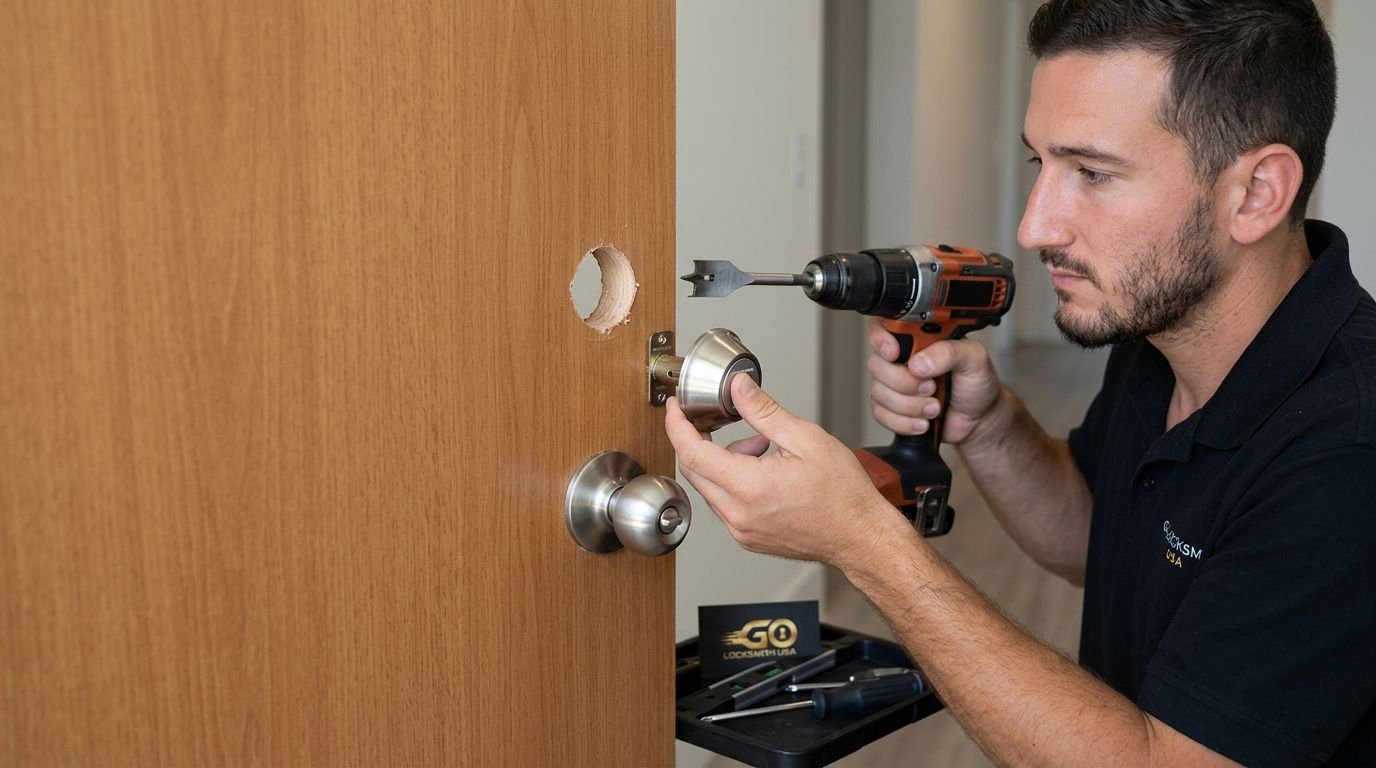
Yes, a locksmith can install a deadbolt on a door without one if the door and frame can accept the hardware. This is a fresh installation, not a lock replacement: it usually requires new openings in the door and a matching strike in the frame. The deciding factors are the door’s construction, condition, hardware clearances, and any restrictions on modifying the door assembly.
TL;DR
- Can a locksmith install a deadbolt on a door without one? Yes, when the door and frame accept it.
- GO Locksmith offers fresh lock installation; ask whether your door is suitable before buying hardware.
- A new deadbolt does not correct a damaged frame or a door that will not close properly.
- Check rental permissions and rated-door requirements before authorizing new holes.
Can a locksmith install a deadbolt on a door without one?
Yes—the absence of an existing deadbolt is not, by itself, a reason to replace the door. A suitable door can receive new preparation for the lock body, bolt, and strike. The work must follow the selected hardware’s installation instructions and account for the door’s construction.
The distinction matters when you request service. Replacing a deadbolt uses an existing lock location; adding one creates a new location. Rekeying changes which key operates a compatible existing cylinder but does not add another locking point.
If your door already has a lock and the real problem is sticking, damage, or unreliable operation, start with whether to repair or replace an exterior door lock. Adding hardware and correcting a faulty existing lock are different jobs.
What a locksmith needs to assess
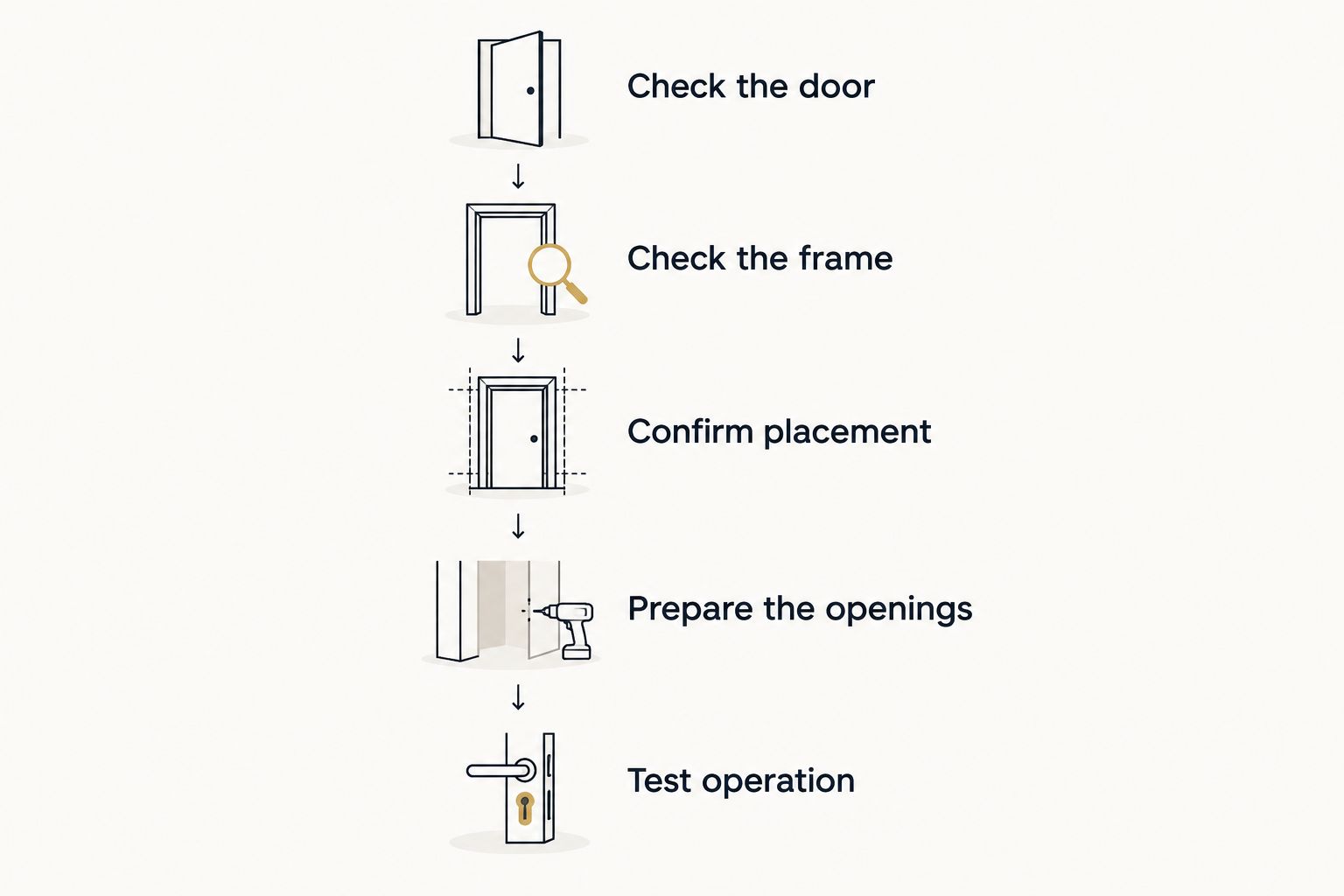
A fresh deadbolt installation generally involves these checks and tasks, with the exact method determined by the door and hardware:
- Check the door. Identify its material, thickness, condition, and any rating labels or manufacturer restrictions. Confirm that the proposed lock fits the door rather than assuming any deadbolt will work.
- Check the frame. Inspect the strike location and the surrounding material. The frame must accommodate the bolt and support the strike fastening specified for the installation.
- Confirm placement. Check clearance from the handle, trim, glass, and other hardware. The lock’s template determines the required preparation; appearance alone is not a sufficient guide.
- Prepare the openings. Create the required door and frame preparation using the appropriate method for that assembly. A wood door and a metal door do not necessarily call for identical preparation.
- Test operation. Check the deadbolt with the door open and closed. You should be able to operate it without pulling, lifting, or pushing the door into alignment.
These steps describe the scope of fresh installation, not a promise that every door can be modified. Identifying an unsuitable door before drilling is part of making the right decision.
Why this matters: the lock and doorway must work together
A deadbolt needs more than a place on the door. Its bolt must line up with the strike, extend into the receiving opening, and operate without binding. Loose hinges, a split jamb, or a door that rubs against the frame can interfere with that operation.
Do not treat an extra lock as a repair for an unhealthy doorway. If you already lift the handle to close the door, describe that problem when requesting an assessment. The alignment issue needs attention alongside any proposed lock installation.
Fresh preparation also changes the door permanently. If you later remove the deadbolt, the openings remain unless they are appropriately repaired or covered. That makes hardware selection, placement, and permission important before work begins.
Adding a deadbolt, replacing a lock, or rekeying: which fits?
Choose the work that addresses your actual problem. A new deadbolt adds hardware; replacement changes existing hardware; rekeying changes key access without adding a lock.
| Option | Best for | Main benefit | Limitation |
|---|---|---|---|
| Fresh deadbolt installation | A suitable door with no existing deadbolt | Adds a separate locking point | Requires new preparation and a compatible frame |
| Existing lock replacement | Worn, damaged, or unsuitable hardware | Changes the hardware at an existing location | New hardware still must fit the door and preparation |
| Rekeying a compatible lock | Changing who can use an existing key | Changes key access while retaining usable hardware | Does not add a deadbolt or repair damaged components |
If your front door has only a locking knob, ask specifically about adding a deadbolt rather than simply asking to “change the locks.” If you already have a working deadbolt but want old keys to stop operating it, discuss rekeying instead.
GO Locksmith’s fresh lock installation service is relevant for homeowners who want to add a mechanical lock to a suitable door. Its confirmed service list does not establish that every door or hardware model is compatible; the particular installation still needs assessment.
Which doors need extra checks before installation?
Door material alone does not settle compatibility. The construction behind the surface, the available mounting area, and any restrictions on the assembly matter as well.
Wood doors
A wood door needs sound material around the proposed openings and enough clearance for the selected lock. Splits, previous repairs, or openings left by old hardware can affect placement. A decorative panel is not automatically a suitable location for a deadbolt.
Ask the locksmith to consider both faces and the edge of the door. What looks like clear space from outside can conflict with a panel, trim, or existing hardware inside.
Steel and fiberglass doors
Steel and fiberglass doors require preparation appropriate to their construction. Their surfaces do not reveal every internal feature, so drilling based only on outward appearance is a poor starting point.
Check the door manufacturer’s instructions where available. Do not assume that an installation method suitable for a solid wood door is also appropriate for a manufactured door with different internal construction.
Doors with glass nearby
Glass panels and narrow door sections can limit usable lock locations. The deadbolt also needs operating clearance from nearby trim and handles.
Interior release is another consideration. Do not choose a key-operated interior lock solely because glass is nearby. Whether that hardware is appropriate depends on the door’s use and applicable exit requirements.
Fire-rated or impact-rated doors
A rated door is part of an assembly with specific requirements. Before making new openings, check the applicable manufacturer documentation and approval requirements for the door, frame, and proposed hardware.
Do not assume that adding a deadbolt preserves a door’s fire or impact rating. Where the permitted modification is unclear, establish what is allowed before authorizing the installation—not after the holes are made.
Why fresh deadbolt installation varies from door to door
The same-looking deadbolt can involve different work on different entrances. These factors determine whether the job is suitable and what needs to be included in the assessment:
- Door construction: Material, thickness, internal structure, and existing damage affect the preparation and hardware fit.
- Existing hardware: Handles, trim, and old openings can restrict placement or interfere with operation.
- Frame condition: A loose, split, or poorly aligned jamb needs attention rather than simply receiving another strike.
- Door designation: Fire-rated, impact-rated, and other specified assemblies require checks before modification.
- Property permissions: A tenant or condominium resident should confirm who can authorize alterations to the entrance door.
- Hardware selection: The chosen deadbolt’s template, mounting requirements, and operating method must suit the door and its use.
These are reasons to request an assessment before purchasing hardware. A photograph helps explain the situation, but it does not reveal every condition inside the door or frame.
What should you tell the locksmith before the visit?
Start with a plain description: “The door has a locking handle but no deadbolt, and I want to know whether one can be added.” That identifies fresh installation instead of replacement or rekeying.
Have the following information ready:
- Your service location and whether the door is residential or commercial.
- The door material, if you know it.
- Whether the door closes and latches without lifting or force.
- Any visible damage, glass panels, or existing hardware near the proposed location.
- Any rating labels or manufacturer information you can identify.
- Whether you own the property or need installation permission.
Ask whether photographs would help before sending them. Useful views include the inside and outside faces, the door edge, the frame, and any relevant label. Avoid publishing photographs of keys or personal property information in public posts.
You can review GO Locksmith’s services before requesting an assessment. The mobile service covers Fort Myers and confirmed Southwest Florida areas including Cape Coral, Lehigh Acres, Estero, Bonita Springs, and Naples; call to check current availability for your location.
Will the existing handle and key still work?
The existing handle can remain if it is suitable and does not interfere with the new deadbolt. Adding a separate lock does not automatically require replacing a working knob or lever. Clearance, condition, and the door’s requirements determine whether keeping it makes sense.
Using the same key is a separate compatibility question. Matching keys depends on the cylinders and keyways involved; it is not guaranteed simply because both locks are on the same door.
If using a single key matters to you, say so before selecting hardware. That gives the locksmith a chance to assess compatible choices rather than discovering a mismatch after installation.
Can a deadbolt be added to a rental or business entrance?
A deadbolt can be considered only after permission and exit requirements are checked. Tenants should obtain the property owner’s authorization before modifying a door or changing key access. Condominium entrances can also have association requirements governing alterations.
Business doors require particular care because additional locking hardware must not conflict with required exit operation. An entrance with a push bar or other exit hardware needs an assessment specific to that door—not a residential lock recommendation copied onto a commercial opening.
Do not add a lock that makes an occupied space difficult to leave. Ask about the permitted mechanical hardware for the entrance and involve the responsible property representative where approval is needed.
FAQ
Can a locksmith add a deadbolt without replacing my door?
Yes, a locksmith can add a deadbolt without replacing the door when the existing door and frame are suitable. Damage, restricted mounting space, or assembly requirements can change that decision.
Does installing a deadbolt require drilling new holes?
A conventional fresh deadbolt installation usually requires new preparation in the door and frame. The selected hardware’s template and the door’s construction determine the openings needed.
Can I buy a deadbolt before calling a locksmith?
You can buy one first, but confirming fit before purchasing avoids choosing incompatible hardware. Ask about door thickness, preparation, clearances, and any restrictions on modifying the assembly.
Can my new deadbolt use the same key as my front door handle?
Matching the existing key depends on cylinder and keyway compatibility. Tell the locksmith that you want matching keys before choosing the deadbolt; compatibility is not automatic.
How much does it cost to add a deadbolt to a door?
The estimate depends on the door, frame, selected hardware, and preparation required. Call GO Locksmith at (239) 412-1101 for a job-specific estimate rather than treating replacement and fresh installation as the same work.
Can I add a deadbolt to a fire-rated door?
A fire-rated door needs an assessment of the permitted hardware and modifications before new preparation is made. Check the assembly’s requirements rather than assuming that any deadbolt can be added.
Will adding a deadbolt fix a door that is hard to close?
No, adding a deadbolt does not fix a door that is hard to close. The underlying alignment, hinge, door, or frame problem needs assessment so the lock can operate without binding.
One last thing: test it with the door closed
A deadbolt that turns easily while the door is open can still bind against the frame when the door closes. Before the job is finished, check normal locking and unlocking with the door closed, without lifting the handle or pressing against the door.
For a fresh deadbolt assessment, call (239) 412-1101 to discuss your door and request an estimate. Service hours are Sunday–Thursday, 7:00 AM–11:00 PM, and Friday, 7:00 AM–5:00 PM; Saturday is closed.