
Blog ·
How much does it cost to install a new lock on an exterior door?
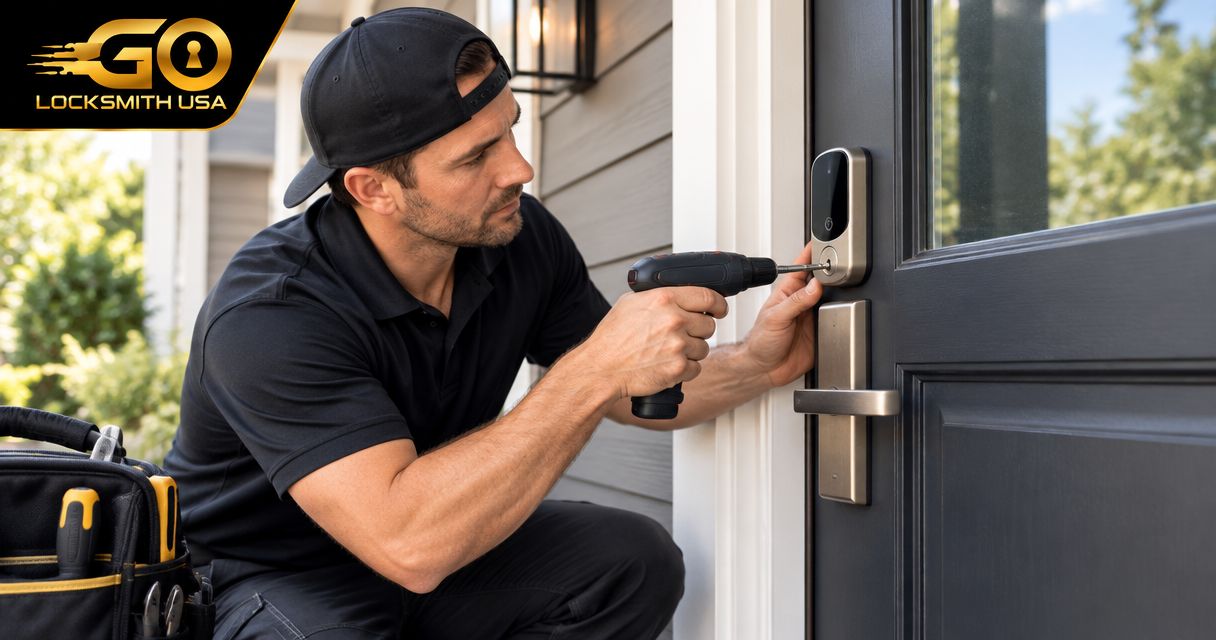
The cost to install a new lock on an exterior door depends on the hardware, whether the door already has compatible holes, and the work needed to make the lock operate correctly. Ask for a job-specific estimate that separates the lock from installation and identifies any door-preparation or alignment work; a hardware-only figure does not describe the full job.
TL;DR
- The cost to install a new lock on an exterior door depends on hardware, door preparation, and installation scope.
- Replace damaged hardware; consider rekeying when a working lock only needs a different key.
- GO Locksmith provides mobile residential lock replacement, rekeying, and fresh installation in Southwest Florida.
- Confirm what the estimate includes before authorizing drilling, replacement, or additional work.
How much does it cost to install a new lock on an exterior door?
A useful estimate describes your actual door, not just a lock pictured online. Replacing an existing deadbolt, adding a deadbolt where none exists, and changing which key operates a working lock are different jobs.
For a local estimate, GO Locksmith provides mobile residential lock replacement, rekeying, and fresh installation. Explain whether you want new hardware, an additional lock, or simply to stop an old key from working.
Ask the estimator to address each part of the job below. These are items to clarify, not a statement that every provider charges for each separately.
| Estimate component | What to confirm | Why it matters |
|---|---|---|
| Lock hardware | Exact hardware proposed and who supplies it | A lock purchase and an installed lock are different scopes |
| Installation labor | Removal, fitting, fastening, and operation checks | Labor depends on the existing setup |
| Door preparation | Whether existing openings fit the proposed lock | New or altered openings add work |
| Strike alignment | Whether the bolt lines up with the frame opening | New hardware does not automatically correct misalignment |
| Key requirements | Whether matching another existing key is requested and feasible | Not every cylinder accepts the same key type |
| Other charges | Whether any applicable visit charge or tax is included | You need the expected total, not an incomplete line item |
Compare estimates for the same hardware and the same work. An estimate that includes a new deadbolt and door preparation cannot be compared fairly with one covering labor alone.
Why the installation scope matters
“Install a new lock” can mean replacing worn hardware, adding another locking point, or changing access after a move. Start with the outcome you need. Otherwise, you risk requesting replacement when rekeying would address the problem—or requesting rekeying when the hardware itself is damaged.
A lock also works as part of a door assembly. The latch or bolt must meet the strike correctly, and the door must close properly. Replacing the cylinder alone does not correct every sticking or closing problem.
Which job matches your situation?
| Option | Best for | Main advantage | Limitation |
|---|---|---|---|
| Replace an existing lock | Worn or damaged hardware, or a hardware change | Replaces the selected lock assembly | Does not automatically fix door or frame problems |
| Fresh lock installation | Adding a lock where there is no suitable existing preparation | Adds the requested locking hardware | Requires compatibility checks and potentially new openings |
| Rekey an existing lock | Changing access while retaining suitable working hardware | Changes which key operates the cylinder | Does not repair worn parts or improve the existing hardware |
| Assess a repair first | A lock that sticks, binds, or operates inconsistently | Identifies whether replacement is necessary | The condition of the lock determines whether repair is appropriate |
These options are not interchangeable. Describe what happens when you use the door rather than deciding on a repair from the symptom alone.
Replacing an existing exterior-door lock
Replacement starts with the hardware already on the door. A new lock must fit the relevant openings, door thickness, and latch arrangement. A similar appearance does not establish compatibility.
Best for: replacing damaged hardware or making a deliberate hardware change. The advantage is a new lock assembly; the limitation is that an existing opening or strike position might still need attention.
Before buying hardware yourself, ask whether the proposed lock suits the door and whether customer-supplied hardware is accepted. Keep the model information and packaging available so the installation requirements can be checked.
Also explain the current problem. If the lock works smoothly with the door open but binds when closed, that distinction is useful information for an assessment. Do not force a difficult key or bolt while waiting for advice.
Adding a lock where none exists
Fresh installation means preparing the door for additional hardware rather than simply exchanging an existing lock. Depending on the assembly, the work involves the door face, door edge, and corresponding strike location in the frame.
Best for: adding a locking point that the door does not currently have. The benefit is the additional hardware you requested; the trade-off is more preparation and a need to confirm the door can accept it.
Tell the installer whether the door is wood, metal, fiberglass, or another material, if known. Provide any manufacturer information you have. For a labeled fire-rated or impact-rated assembly, confirm applicable manufacturer requirements before authorizing modifications.
A residential front door and a business exit door should not be treated as identical projects. Commercial exterior-door changes must account for applicable exit requirements, not just whether the new lock physically fits.
Rekeying instead of installing a new lock
Rekeying changes the internal keying of a suitable lock so a different key operates it. It retains the existing hardware, making it a relevant option when your concern is who has a key rather than the lock's condition.
Best for: changing access to a working, suitable lock. Rekeying avoids replacing the whole assembly, but it does not repair a damaged mechanism, correct alignment, or change the hardware's underlying design.
Ask for the appropriate scope rather than assuming every exterior lock needs replacement after a move or lost key. A locksmith must assess whether the existing hardware can be rekeyed and whether it remains suitable for use.
If you want several doors to use the same key, mention that before work begins. Compatibility depends on the cylinders and key systems involved; matching keys is not automatic across unrelated locks.
Why exterior-door lock installation costs vary
The estimate changes with the work required, not simply because the door is an exterior door. These details help define the job:
- Hardware selection: Identify the proposed lock and whether the estimate includes it. Different assemblies have different installation requirements.
- Existing preparation: State whether the job replaces a lock or adds one in a new location. Existing openings must suit the selected hardware.
- Door and frame condition: Describe sticking, visible damage, loose hardware, or difficulty closing. Those symptoms can require assessment beyond the lock itself.
- Door construction: Share the material and any available manufacturer or rating information. Modification requirements depend on the assembly.
- Keying requirements: Explain whether you want a new key, matching keys across doors, or replacement of only selected hardware.
- Access and job scope: Say whether the door opens and how many locks need attention. Being locked out is a separate issue from installing new hardware.
If you cannot get inside, explain that at the start of the call. The guide to getting into a locked house covers that separate service question; a lockout request should not be described as installation alone.
What should you send when requesting an estimate?
Give the locksmith enough information to distinguish a straightforward replacement from a job requiring further assessment. Photos help describe the setup, but they do not replace checking the door and hardware.
- Show the door. Provide clear views of the inside, outside, door edge, and strike area. Avoid sharing images that expose key cuts or sensitive access details.
- Describe the problem. Say whether the key turns, the bolt moves, and the door closes normally. Mention recent damage without attempting to diagnose it.
- Define the goal. Explain whether you want replacement hardware, an additional lock, or different keys for an existing lock.
- Identify the hardware. Share visible manufacturer or model information and details of any lock you have already purchased.
- Confirm the scope. Ask what the estimate includes and what requires an on-site assessment before a final amount is agreed.
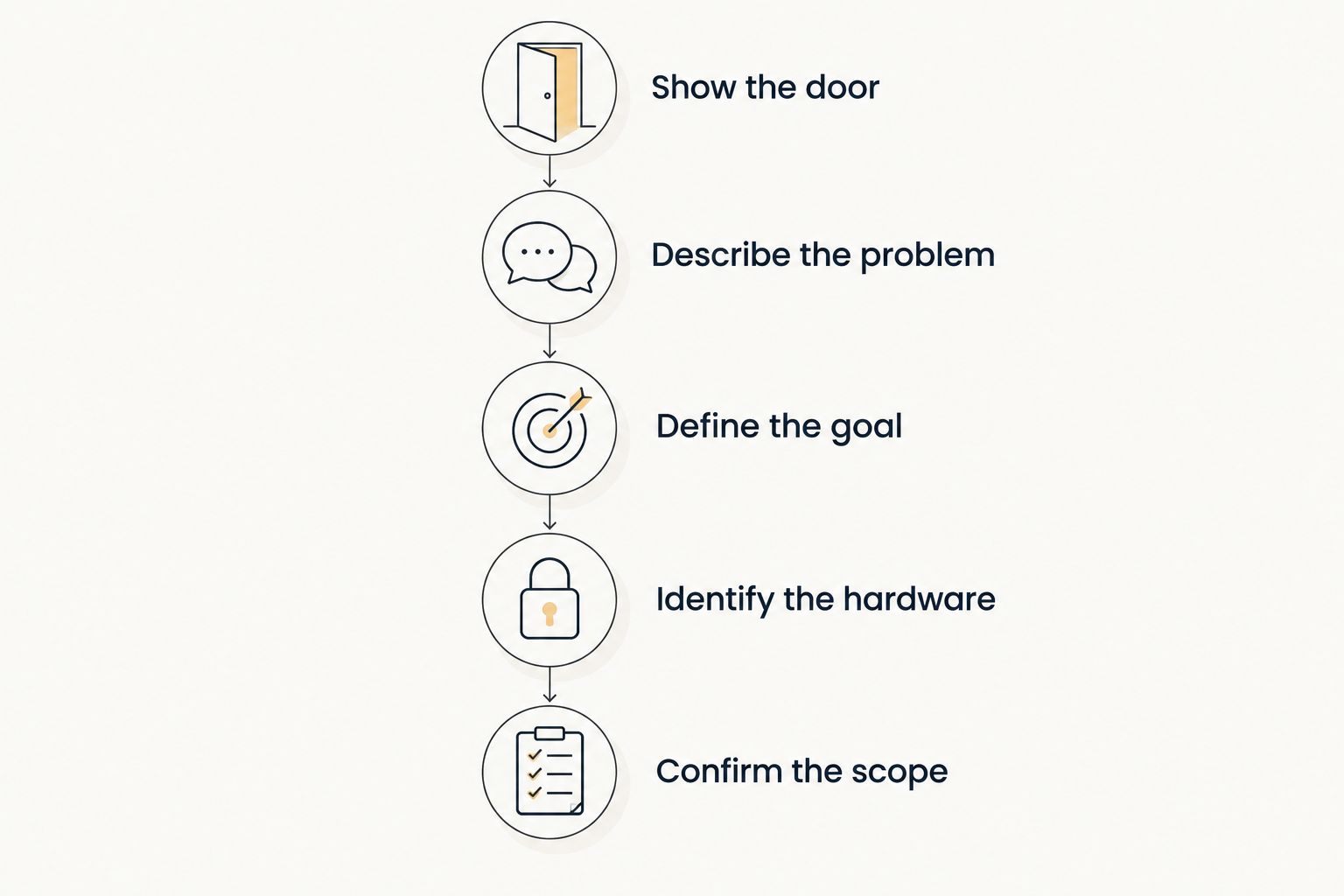
Describe both the existing door and the result you want before requesting an installation estimate.
Request an explanation before approving work beyond the agreed scope. If inspection reveals a fit or condition problem, ask what changed and how the proposed work addresses it.
Can you save money by buying the lock yourself?
Buying the hardware yourself separates the purchase from the installation, but it does not establish that the lock fits your door. Confirm suitability before purchase and ask whether the installer accepts customer-supplied hardware.
The practical advantage is control over the hardware selection. The drawback is that an incompatible purchase can leave you needing a return or a different installation plan. Ask who handles a hardware defect separately from any installation issue; do not assume the responsibilities are identical.
Should you replace every exterior lock at once?
Replace the locks that need replacement, and assess working hardware separately. If your only goal is to prevent old keys from operating the doors, ask whether rekeying suitable locks meets that need.
Count the actual locks rather than only the doors. An exterior door can have separate locking components, and a request covering “the front door” should identify which components you want changed. Include other entrances only when they are part of your intended scope.
What should you check before the job is finished?
Ask the installer to demonstrate operation with the door open and closed. Then confirm that the key, latch, bolt, and inside operation work as intended without forcing the hardware.
Check that the completed work matches the agreed scope. If matching keys was requested, test each included lock with the intended key. Keep any supplied hardware instructions and ask how to address a problem after installation without assuming a particular warranty applies.
For business premises, confirm the door's required exit operation before approving hardware changes. Do not choose an exterior lock solely by appearance or key convenience.
FAQ
How do I get an accurate cost to install a new lock on an exterior door?
Request a job-specific estimate identifying the hardware, installation labor, and any door-preparation work. Explain whether you are replacing an existing lock or adding one where none exists, and ask what needs on-site confirmation.
Does an exterior-door lock installation estimate include the lock?
Confirm whether the estimate includes hardware; installation labor alone does not include a lock unless stated. Ask for the proposed hardware and scope to be identified before authorizing the job.
Can I rekey my exterior lock instead of replacing it?
Rekeying is an option when the existing lock is suitable and working and you want a different key to operate it. Rekeying does not repair damaged hardware or correct door alignment.
Can I buy a deadbolt and have a locksmith install it?
Ask the locksmith whether customer-supplied hardware is accepted and whether that deadbolt fits your door. Share the model information before purchase rather than relying on appearance alone.
Will a new lock fix a door that sticks?
A new lock does not automatically fix a sticking door. The cause can involve the door, frame, strike alignment, or lock, so describe when the sticking happens and request an assessment.
Can every exterior lock use the same key?
Matching keys depends on the locks' cylinders and key systems. Ask whether the existing or proposed hardware is compatible before including matching keys in the installation plan.
Does GO Locksmith install residential exterior-door locks?
GO Locksmith provides residential lock replacement, rekeying, and fresh installation as a mobile service. Southwest Florida service areas include Fort Myers, Cape Coral, Lehigh Acres, Estero, Bonita Springs, and Naples; call (239) 412-1101 to discuss the job and check availability.
One last thing: a new lock is not a door repair
Do not judge the finished installation only by whether the key turns with the door open. The lock must also operate correctly when the door is closed, without needing to lift, pull, or push the door into position.
For an exterior-door lock estimate, call GO Locksmith at (239) 412-1101 with your location, the existing hardware, and the change you want. Hours are Sunday–Thursday, 7:00 AM–11:00 PM, and Friday, 7:00 AM–5:00 PM; Saturday is closed.