
Blog ·
Best interior privacy locks for home offices 2026
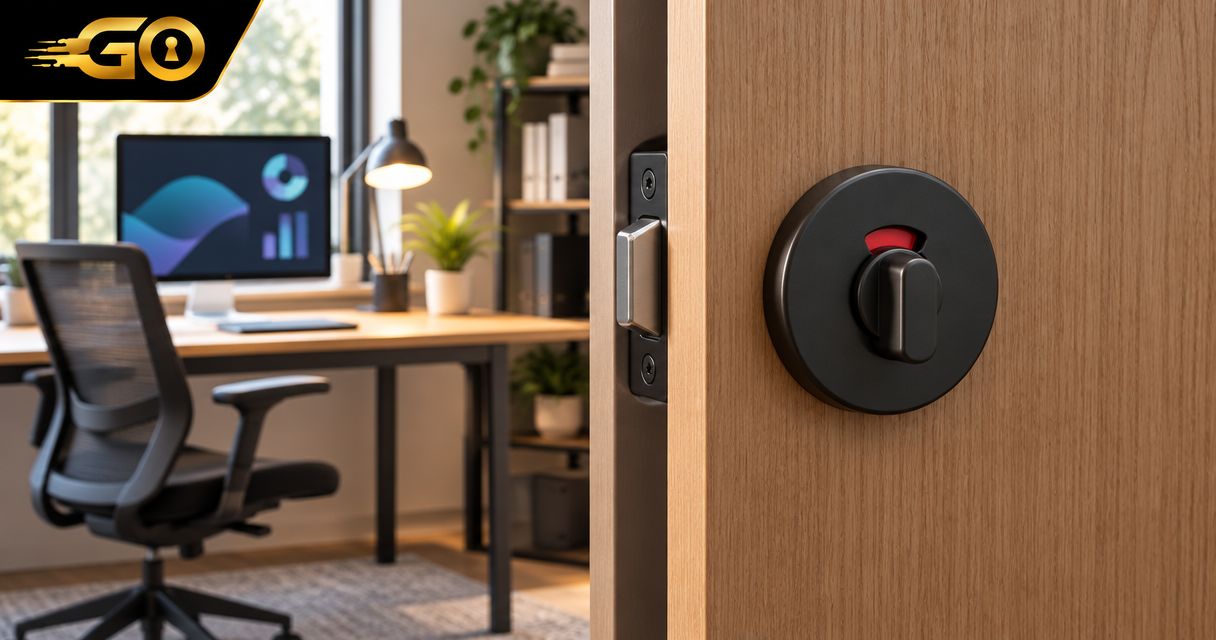
Best overall for everyday home-office privacy: a privacy lever with an outside emergency release. Best for a visible occupied signal: an indicator privacy lock. Best for matching existing round hardware: a privacy knob. Best for a sliding pocket door: a purpose-built pocket-door privacy set. Choose by door construction, ease of use, and emergency access—not appearance alone.
TL;DR
- The best interior privacy locks for home offices prevent interruptions without making emergency access difficult.
- A privacy lever is the default choice for a hinged office door; verify its release function before buying.
- Choose an indicator privacy lock when your household needs a visible occupied signal.
- GO Locksmith provides interior lock replacement and fresh installation; call to discuss your door and request an estimate.
Why the lock function matters more than the finish
A home-office privacy lock tells your household that you need uninterrupted time. It is not a substitute for a security lock when you need to restrict access to equipment or confidential records while you are away.
Privacy and security are different jobs. A typical bedroom-or-bathroom privacy lock operates from inside and includes an emergency release outside, rather than a conventional keyed cylinder. Check the exact product instructions because release methods and inside operation vary.
GO Locksmith is a mobile locksmith service offering residential interior door lockout assistance, lock repair, replacement, rekeying, and fresh installation. Describe whether your goal is fewer interruptions, restricted entry, or help with an existing lock before choosing hardware.
What makes the best interior privacy locks for home offices
Judge the lock by these criteria before comparing finishes:
- Correct function: Look for privacy hardware when you want temporary privacy while occupying the room. A passage handle does not lock; a dummy handle does not operate a latch.
- Usable inside operation: Choose a handle and locking control that you can operate comfortably. Check how the inside handle releases the lock rather than assuming every design works alike.
- Outside emergency access: Identify the manufacturer's emergency-release method and keep its supplied tool accessible to responsible household members.
- Door compatibility: Match the door thickness, existing holes, backset, latch preparation, and handing requirements. Pocket doors need different hardware from hinged doors.
- Reliable latching: The door should close and latch without lifting, pushing hard, or slamming. New hardware does not automatically correct an alignment problem.
- Clear household communication: An occupied indicator helps only when people can see it and understand what it means. Agree on when knocking is appropriate.
Home-office privacy locks at a glance
These are hardware configurations, not claims that every product within a category performs identically. An indicator can be part of a lever or knob set; it earns a separate recommendation because it solves a different household problem.
| Lock configuration | Best for | Standout feature | Key limitation |
|---|---|---|---|
| Privacy lever | Everyday use on a hinged office door | Handle operates without grasping and twisting a round knob | Lever shape and inside-release behavior still need checking |
| Indicator privacy lock | Households that need a visible occupied signal | Shows the lock's privacy status outside | Indicates lock status, not whether someone is actually inside |
| Privacy knob | Matching existing round interior hardware | Familiar round handle with an inside privacy control | Requires grasping and turning |
| Pocket-door privacy set | Offices with sliding pocket doors | Hardware designed for a door that slides into a wall pocket | Requires compatible edge preparation and strike alignment |
1. Privacy lever: best for everyday home-office use
A privacy lever combines a lever-operated latch with an inside privacy control. On a compatible hinged door, it is a straightforward way to stop casual walk-ins during meetings or focused work.
The lever is the default recommendation because you do not have to grasp and twist a round knob. That does not make every lever suitable for every person: try the handle and locking control, and check the manufacturer's instructions for inside release.
Privacy lever pros:
- Lever operation avoids the twisting grip required by a round knob.
- Provides an inside privacy control without requiring routine key management.
- Available as a hardware function intended for occupied interior rooms.
Privacy lever cons:
- An outside emergency release means it is not intended to keep determined people out.
- A projecting lever needs clearance from nearby trim, walls, and other hardware.
- Some designs have handing or setup requirements that need checking before installation.
Best for: A hinged office door used frequently throughout the day, especially when comfortable handle operation matters more than matching round knobs elsewhere.
Buy: Choose a privacy lever with documented outside emergency access and inside operation you can use comfortably. Skip a passage lever if you need the door to lock.
2. Indicator privacy lock: best for a visible occupied signal
An indicator privacy lock adds a visible status display to a privacy mechanism. Depending on the product, the outside trim uses words, colors, or another marking to show whether the privacy control is engaged.
This configuration suits a shared home where people otherwise keep testing the handle during calls. The indicator communicates the lock's position; it does not detect occupancy or tell someone whether you are speaking on a call.
Indicator privacy lock pros:
- Provides information before another person tries the handle.
- Makes a household knock-first rule easier to follow.
- Combines the status signal and privacy function in the door hardware.
Indicator privacy lock cons:
- A locked, empty room can still display the occupied status.
- Small markings or color-only indicators are not equally readable for everyone.
- Emergency-release access and door fit still require separate checks.
Best for: A home office shared by household members who benefit from a visible reminder that the room should not be entered casually.
Check the display from the direction people approach the door, not just close up. Choose readable wording or markings that make sense to everyone who uses the home.
Buy: Choose an indicator privacy lock when the visible signal solves a recurring interruption problem. Skip the extra feature if nobody will see or use it.
3. Privacy knob: best for matching existing round hardware
A privacy knob provides a round operating handle with an inside privacy control. It fits the same general purpose as a privacy lever: temporary privacy in an occupied interior room, with an outside emergency-release method specified by the manufacturer.
Choose a knob because it suits your existing hardware and the people using it—not because a round shape makes it more secure. The lock function and door assembly matter more than the handle's outline.
Privacy knob pros:
- Matches homes where round interior handles are already the preferred style.
- Provides a familiar control layout for people accustomed to knobs.
- Keeps routine operation mechanical, without batteries or an app.
Privacy knob cons:
- Requires grasping and turning, which does not suit every user.
- Small push buttons or turn controls deserve a hands-on usability check.
- Does not provide meaningful protection for unattended valuables simply because it locks.
Best for: A conventional hinged office door where matching round hardware matters and everyone who needs access can comfortably operate a knob.
Check clearance between the knob and the door trim. Also inspect the latch and strike: a matching finish is little help if the door needs a hard shove to close.
Buy: Choose a privacy knob when grip comfort and door fit are confirmed. Skip it when turning a round handle is difficult for a regular user.
4. Pocket-door privacy set: best for a sliding office door
A pocket-door privacy set is designed for a door that slides into a wall pocket rather than swinging on hinges. The hardware must work with that sliding movement and the door's existing preparation.
Do not select an ordinary hinged-door privacy set just because its finish matches. Pocket-door hardware varies in its mounting, edge cutout, pull arrangement, and engagement with the strike.
Pocket-door privacy set pros:
- Provides a privacy function suited to a sliding pocket door.
- Uses hardware designed around the door's sliding path.
- Can combine privacy operation with a recessed pull, depending on the design.
Pocket-door privacy set cons:
- Existing cutouts can limit replacement choices.
- Small recessed controls are not equally comfortable for every user.
- Poor alignment can prevent the locking mechanism from engaging correctly.
Best for: A home office that already has a pocket door and needs privacy hardware compatible with that door's construction.
Photograph both door faces, the leading edge, and the receiving jamb before requesting replacement advice. Avoid enlarging an existing cutout until the replacement hardware's requirements are confirmed.
Buy: Choose a purpose-built pocket-door privacy set after checking the preparation and emergency-release design. Hold off if the door binds or does not reach the strike correctly.
Check the door before ordering hardware
A lock that looks right online can still be wrong for the opening. Use this checklist to describe what you have before buying a replacement or arranging installation.
Door type
Identify whether the door is hinged or sliding. For a hinged door, note its swing direction and any nearby wall or trim that limits handle clearance.
Door thickness
Measure the door itself, not the surrounding trim. Compare that measurement with the specific lock's published fit requirements; do not assume all interior doors accept the same hardware.
Existing preparation
Record the face-hole and edge-hole arrangement. For a hinged latch, measure the backset from the door edge to the center of the handle opening; for a pocket door, document the existing cutout instead.
Latch alignment
Close the unlocked door gently and check whether the latch engages without pressure. If you have to lift the handle or lean on the door, describe that symptom before treating the job as a simple hardware swap.
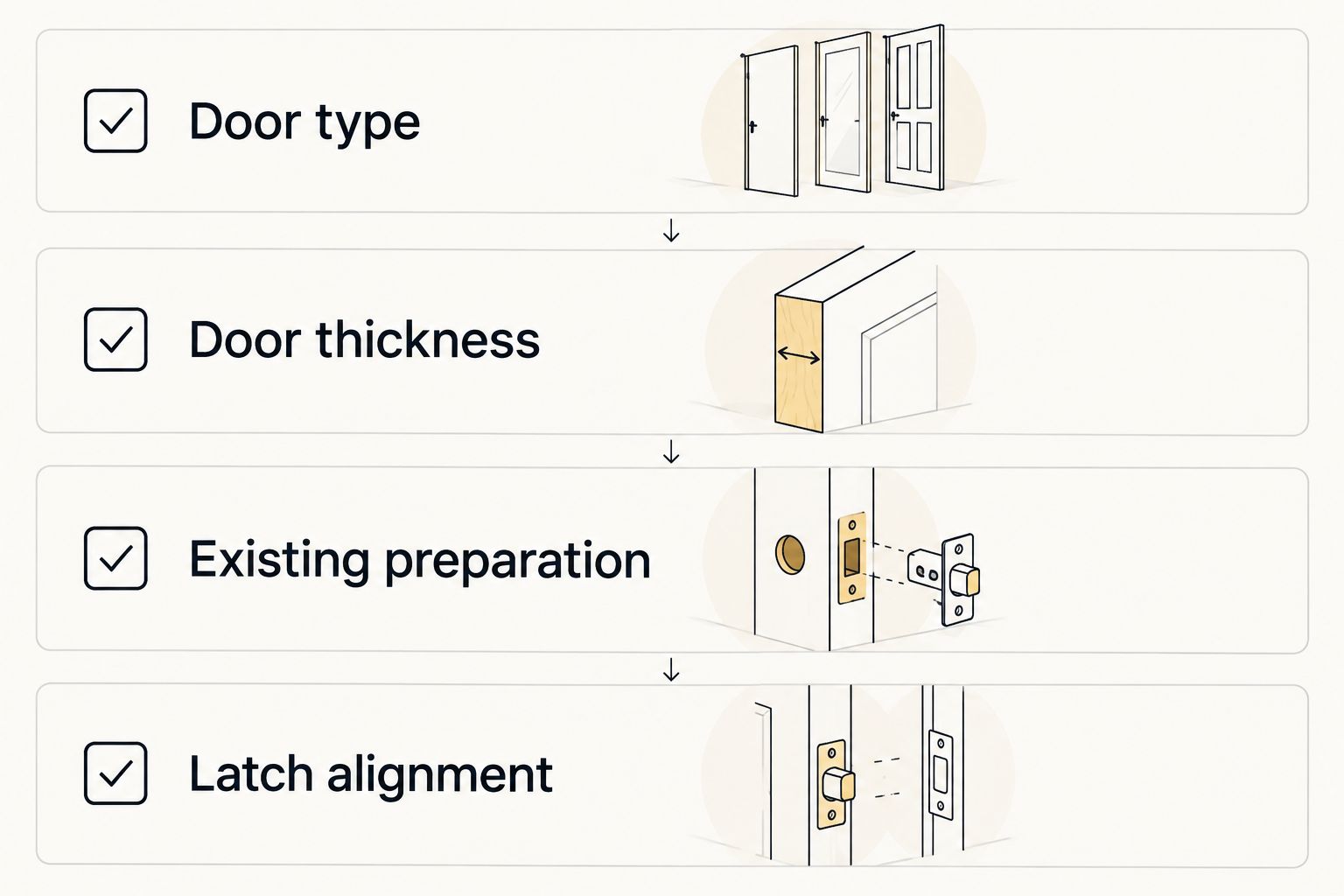
Check the opening before choosing replacement privacy hardware.
Photographs help explain the opening, but they do not replace measurements or the product's installation instructions. Keep any removed hardware until the replacement is fitted and operating correctly.
Plan for emergency access before using the lock
Know how the privacy lock releases from outside before anyone relies on it. Read the instructions and identify the supplied emergency-release tool, if the design uses one. Store it outside the office where responsible household members can find it.
Test the handle and privacy control with the door open first. After installation, confirm normal operation from both sides with another adult present, following the manufacturer's instructions.
Do not add improvised restraints or a lock that requires an inside key just to stop interruptions. If the door has a fire label or forms part of a required exit route, get appropriate professional guidance before changing its hardware.
GO Locksmith offers residential lock repair, replacement, and fresh installation. Explain whether the door currently sticks, the handle fails, or you need a new privacy function so the service request addresses the actual problem.
How these recommendations were ranked
The ranking prioritizes comfortable daily operation, the correct privacy function, emergency access, and compatibility with the door. The privacy lever is the default for a hinged opening; the indicator, knob, and pocket-door options address distinct needs rather than representing descending levels of quality.
This is a function-based buying guide, not a product endurance test. Compare individual manufacturers' installation instructions, dimensions, and operating details before choosing a specific set.
Which privacy lock should you choose?
Choose a privacy lever for an ordinary hinged home-office door unless another requirement changes the decision. Choose an indicator when household communication is the main issue, a knob when matching existing round hardware matters, or a pocket-door privacy set for a sliding opening.
If you need to protect records or equipment while the office is empty, stop shopping by the word privacy. Ask about an appropriate keyed locking function and the condition of the complete door assembly instead.
FAQ
What's the best interior privacy lock for a home office?
A privacy lever with a documented outside emergency release is the default choice for a compatible hinged home-office door. Choose an indicator version when a visible privacy signal would help your household.
Is a privacy lock the same as a keyed office lock?
No. A typical privacy lock provides temporary privacy while the room is occupied and includes an outside emergency release. A keyed locking function serves a different access-control purpose, so choose according to what you need to protect.
Is a lever better than a knob for an office door?
A lever avoids the grasping-and-twisting action required by a round knob. A knob remains an option when everyone using the door can operate it comfortably and it matches the existing hardware.
Can I put a regular privacy knob on a pocket door?
A pocket door needs hardware designed for its sliding movement and door preparation. Check the existing cutout, pull arrangement, and strike before choosing a pocket-door privacy set.
Does an occupied indicator prove someone is inside?
No. An occupied indicator generally shows the privacy mechanism's status, not actual room occupancy. Check the specific product's operation and agree on a household knocking rule.
Will a privacy lock make my home office soundproof?
No. A privacy lock controls entry, not sound transmission. The door, gaps around the opening, and surrounding construction affect how sound travels.
Can GO Locksmith replace a home-office privacy lock?
GO Locksmith offers residential lock replacement and fresh installation as a mobile locksmith service. Call (239) 412-1101 to describe the door, check availability, and request a job-specific estimate.
One last thing: a locked handle is not proof of a latched door
After fitting privacy hardware, check that the latch actually engages the strike. An engaged privacy button does not secure an opening if the latch never seats properly.
For help with a home-office lock in Fort Myers, Cape Coral, Lehigh Acres, Estero, Bonita Springs, or Naples, call GO Locksmith at (239) 412-1101. Describe your door and the privacy function you want, then request an estimate and check current availability.