
Blog ·
Can a locksmith unlock an interior bedroom door without a key?
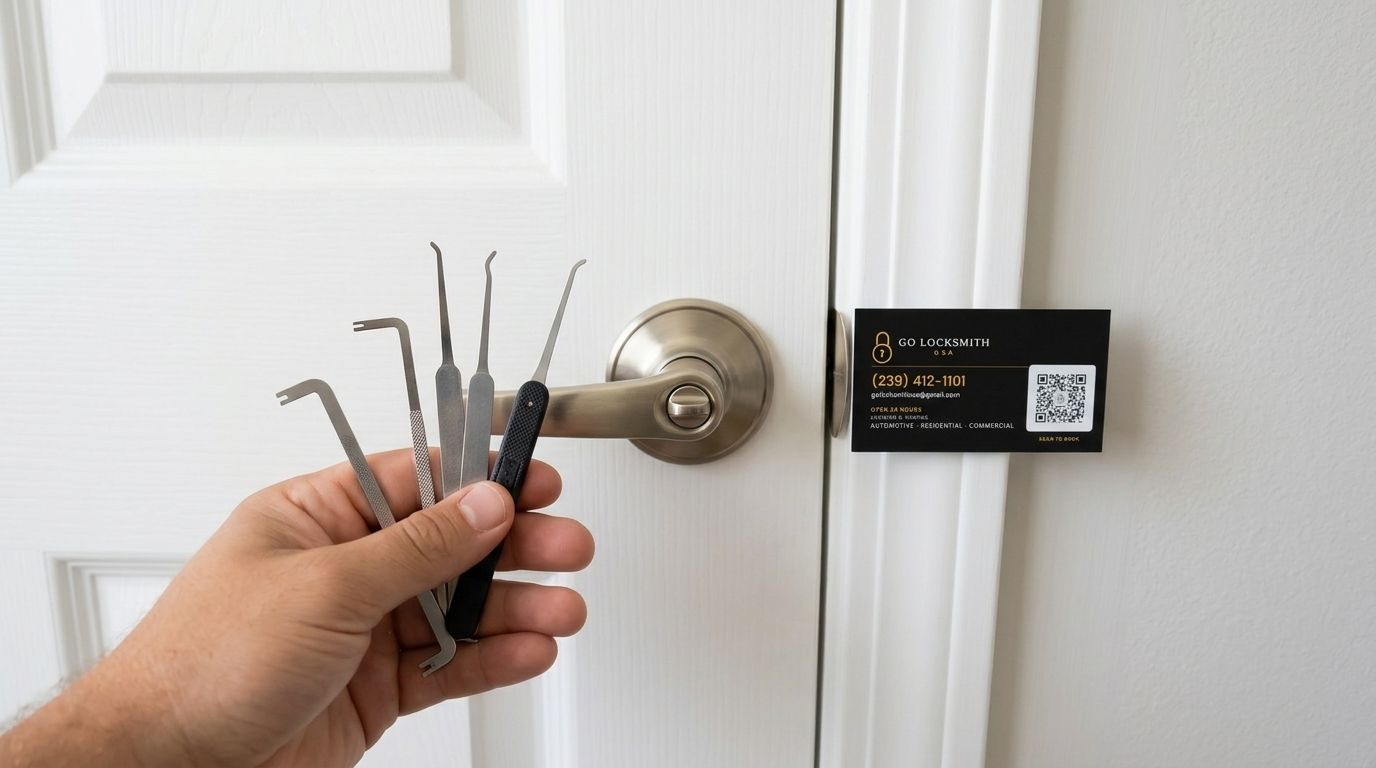
Yes, a locksmith can unlock an interior bedroom door without the original key, but the approach depends on the lock and whether the latch or door hardware is damaged. Opening the door does not automatically require replacing the lock, although broken hardware can make repair or replacement necessary afterward.
TL;DR
- Can a locksmith unlock an interior bedroom door? Yes; the lock type and hardware condition determine the approach.
- A bedroom privacy lock is different from a keyed lock; identify which one you have before requesting help.
- GO Locksmith provides mobile interior door lockout service in its confirmed Florida service areas.
- Ask about opening the door and repairing the problem separately; damage-free entry is not guaranteed.
Can a locksmith unlock an interior bedroom door without a key?
A locksmith can assess a locked bedroom door and select an opening method without having the original key. The important distinction is whether you have an accidentally engaged privacy lock, a keyed lock with a missing key, or a mechanical failure that keeps the latch from retracting.
GO Locksmith offers residential interior door lockout service. When you call, describe what you see on the hallway side of the door rather than trying to identify a particular opening technique.
| Bedroom door situation | What it means | Useful next step | Limitation |
|---|---|---|---|
| Privacy knob or lever | Typically provides privacy rather than keyed security | Identify the hardware and check its manufacturer instructions | Not every small opening or slot works the same way |
| Keyed knob or lever | Uses a key-operated cylinder | Explain that the key is missing or inaccessible | Opening the door does not replace the missing key |
| Handle moves but door stays closed | The latch or its connection to the handle needs assessment | Describe how the handle behaves | Unlocking alone does not fix a broken latch |
| Door rubs or binds against the frame | Door fit can contribute to the problem | Report any earlier sticking or scraping | The lock is not necessarily the only cause |
The door's location does not identify its lock. A bedroom can have privacy hardware, keyed hardware, or a replacement lock installed by a previous owner.
Why this matters: a locked door and a jammed latch are different
A missing key is an access problem. A handle that turns without moving the latch is a hardware problem, even if both situations leave you outside the bedroom.
That difference affects what you should request. Tell the locksmith whether you only need the door opened or whether the lock was already sticking, loose, or unreliable before it stopped working.
If someone inside is in immediate danger, call 911 instead of waiting for a routine locksmith appointment. An unresponsive person, smoke, or a medical emergency changes the priority from protecting the hardware to protecting the person.
What kind of bedroom lock do you have?
Privacy lock: intended for privacy, not keyed security
A bedroom privacy lock typically uses an inside button or thumbturn. Many models include an outside emergency-release feature, but its design depends on the manufacturer and model.
Best suited to ordinary bedroom privacy, this hardware can provide a way to resolve an accidental lockout using the manufacturer's instructions. Its limitation is that it is not intended to provide the same access restriction as a keyed lock.
Look for a brand or model marking that you can see without taking anything apart. Do not assume an unidentified hole is a release point or push improvised tools into it.
Keyed lock: a missing key needs a different assessment
A keyed bedroom knob or lever has a keyway on the outside. Tell the locksmith whether the key is lost, locked inside, or broken in the cylinder.
Best suited to rooms that need controlled key access, keyed hardware adds a key-management responsibility. If every copy is inside the bedroom, opening the door resolves the immediate lockout but leaves you without an accessible spare.
A working keyed lock does not automatically need replacement after entry. Whether to retain it, rekey it, or replace it depends on its condition and whether the existing keys should continue working.
Jammed hardware: the lock might already be unlocked
A door can remain closed even when the locking mechanism is disengaged. A failed latch, loose connection, or binding door can prevent normal opening.
Describe the symptoms precisely: does the handle feel loose, stop partway, or turn normally while the door stays shut? Also mention whether the door previously needed lifting or pushing to close.
Do not keep increasing force to test it. A lockout diagnosis should distinguish a locked mechanism from a door that cannot physically release.
What to do before calling a locksmith
You do not need to diagnose the mechanism yourself. These steps help you explain the problem without changing its condition or risking damage.
- Check safety. Establish whether anyone is inside and whether they can communicate. Use emergency services for immediate danger.
- Identify hardware. Note whether the outside face has a keyway, a small opening, or a slot. Describe what you see without inserting anything.
- Describe symptoms. Explain whether the door closed normally, the key disappeared, or the handle stopped working.
- Confirm authorization. Be ready to explain your right to access the room and ask what identification or permission is needed.
- Request assessment. Ask about current availability, the opening assessment, and how any proposed repair will be explained.
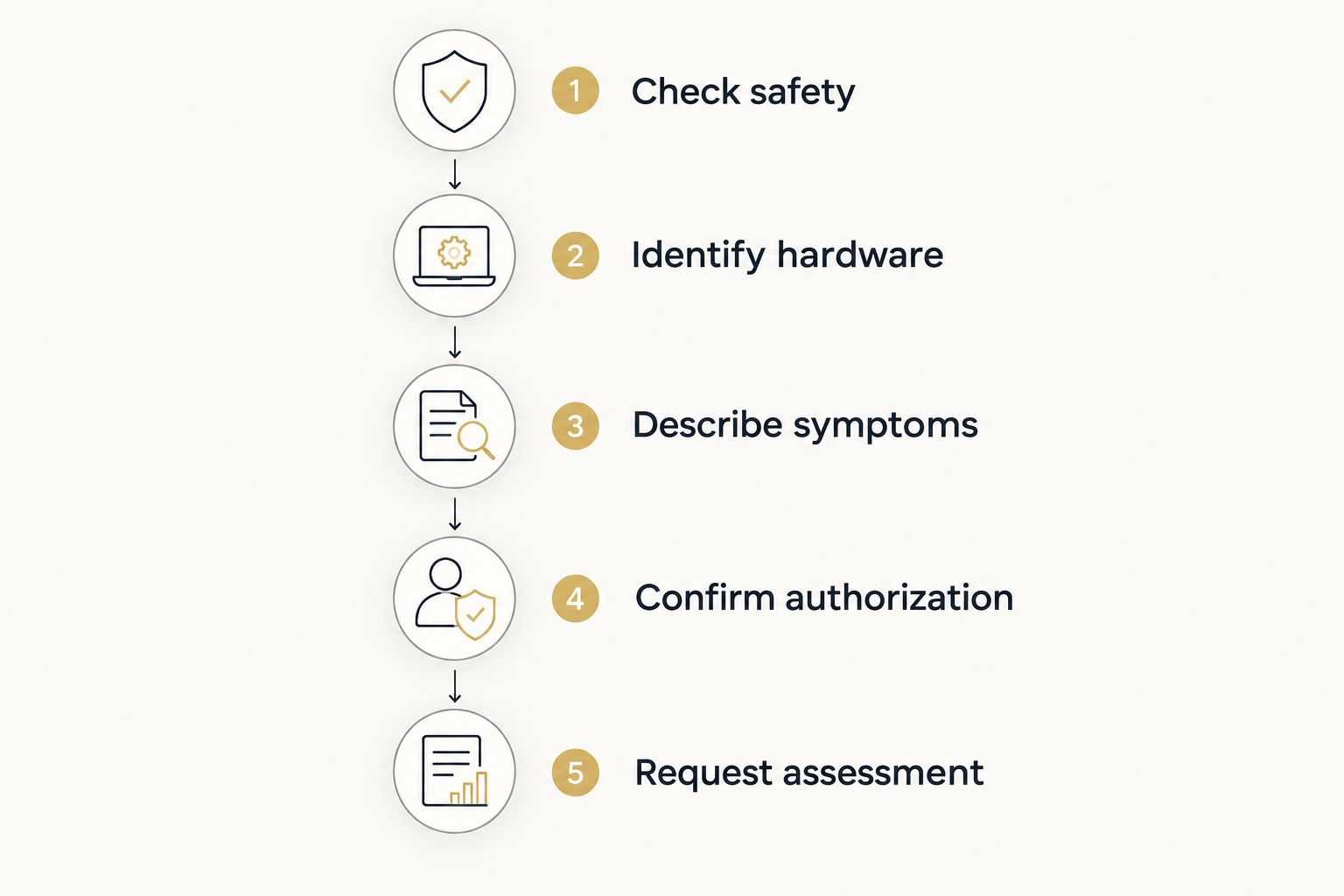
Describe the lock and symptoms without forcing or dismantling the hardware.
If you rent, contact the landlord or property manager before authorizing hardware changes unless an immediate safety emergency requires action. Permission to enter a room and permission to replace its lock are separate questions.
Can the bedroom door be opened without damage?
A locksmith can assess whether a non-destructive approach is suitable, but damage-free entry is not a promise that applies to every lockout. The lock design, existing damage, and condition of the latch all matter.
Ask for an explanation before work that would damage or replace hardware. Useful questions include:
- Is the problem the lock, the latch, or the door binding against the frame?
- Can the existing hardware remain in use after opening?
- What would make destructive entry necessary?
- Would opening leave the bedroom unable to latch or lock?
- What additional work would need separate approval?
A bedroom door can open successfully and still need attention. For example, a latch that no longer retracts reliably should not be treated as repaired simply because the room is accessible again.
Avoid kicking the door, prying against the frame, or attempting entry through a window. Those actions introduce injury and property-damage risks without establishing what failed.
Why the opening method and follow-up work vary
There is no single procedure for every interior bedroom door. These factors explain why a locksmith needs more than the room name:
- Lock type: Privacy hardware and keyed cylinders have different operating designs.
- Hardware condition: A working lock with an inaccessible key presents a different problem from a broken mechanism.
- Latch behavior: A latch that does not retract requires a different assessment from an engaged privacy button.
- Door fit: Rubbing, sagging, or pressure against the frame can contribute to a door staying shut.
- Previous attempts: Bent parts, foreign objects, or force applied before the visit can complicate the original problem.
Mention previous attempts honestly. Knowing that something was inserted into the lock or that the handle was removed helps the locksmith understand the current condition.
Will I need a new bedroom lock after it is opened?
Not automatically. If the existing lock and latch work correctly after opening, replacement is a separate decision rather than an unavoidable part of the lockout.
| Follow-up option | Best suited to | Benefit | Limitation |
|---|---|---|---|
| Keep the existing hardware | A functioning lock after an accidental lockout | Avoids changing hardware unnecessarily | Does not resolve a lost-key security concern |
| Rekey a compatible keyed lock | A working lock whose old keys should stop operating it | Changes key access while retaining suitable hardware | Does not repair a broken latch or worn mechanism |
| Repair the existing hardware | A fault that can be corrected | Addresses the identified problem | Not every damaged component is repairable |
| Replace the hardware | Failed or unsuitable hardware | Replaces the affected assembly | Requires selecting hardware that fits the door and intended use |
For privacy hardware, confirm how its emergency-release feature works before closing the door again. For keyed hardware, decide where an authorized spare will be kept so that it remains accessible during a lockout.
Do not close an unreliable door just to see whether the problem happens again. Have the operation checked with the door open first.
How much does unlocking a bedroom door cost?
Pricing depends on the specific job, including the hardware and whether the work involves opening alone or additional repair. Ask for a job-specific estimate rather than assuming every interior door lockout is the same.
Explain your location, the visible lock type, and any signs of mechanical failure. Ask what the estimate includes and how changes will be discussed if the on-site assessment identifies additional work.
GO Locksmith offers interior door lockout, lock repair, replacement, and rekey services. Call (239) 412-1101 for a job-specific estimate and current availability; these services are not a guarantee that every lock needs or supports the same solution.
What should I tell a mobile locksmith about my location?
Give your city, address, and any property-access instructions. Explain whether you can enter the home normally and only the bedroom is inaccessible, or whether an exterior lockout also prevents access.
The confirmed Southwest Florida service areas are Fort Myers, Cape Coral, Lehigh Acres, Estero, Bonita Springs, and Naples. Service also operates in Jacksonville, Florida; call to check availability for your location rather than assuming an arrival time.
Hours are Sunday–Thursday 7:00 AM–11:00 PM and Friday 7:00 AM–5:00 PM; Saturday is closed. This is mobile service, not a confirmed walk-in storefront.
FAQ
Can a locksmith open my bedroom door if the key is locked inside?
Yes, a locksmith can assess opening a bedroom door without the original key. Explain that the key is inside and describe the outside hardware; the method depends on the lock and its condition.
Can a locksmith unlock a bedroom door without breaking the knob?
A locksmith can assess non-destructive opening, but preserving the knob is not guaranteed. Broken hardware or a failed latch can change the work required.
What if my bedroom handle turns but the door will not open?
A turning handle with a closed door can indicate a latch or handle-connection problem rather than an engaged lock. Stop forcing the handle and describe its movement when requesting help.
Should I try the small hole on my bedroom doorknob?
Check the manufacturer's instructions before using an opening on a bedroom doorknob. Emergency-release designs differ, and an unidentified opening is not a reason to insert improvised tools.
Can a locksmith open a bedroom in a rented home?
A locksmith can assess an authorized bedroom lockout in a rental home. Contact the landlord or property manager and ask what authorization is needed before arranging access or changing hardware.
Does unlocking a bedroom door mean I need to rekey it?
No, unlocking a bedroom door does not automatically require rekeying. Rekeying concerns key access on compatible keyed hardware; it does not repair a broken latch and is not the same as resetting a privacy lock.
What should I do if a child is locked inside the bedroom?
Check whether the child can communicate and whether there is immediate danger. Call 911 for an immediate safety threat rather than waiting for a routine locksmith visit.
One last thing: test the fix before closing the door
Opening the bedroom is only part of resolving a mechanical failure. Before the door closes again, confirm that the handle operates, the latch retracts, and any privacy-release instructions are understood.
Need help with a locked bedroom? Call GO Locksmith at (239) 412-1101 during business hours to describe the problem, request an estimate, and check current availability.