
Blog ·
Is it safe to let a locksmith into your house after a lockout?
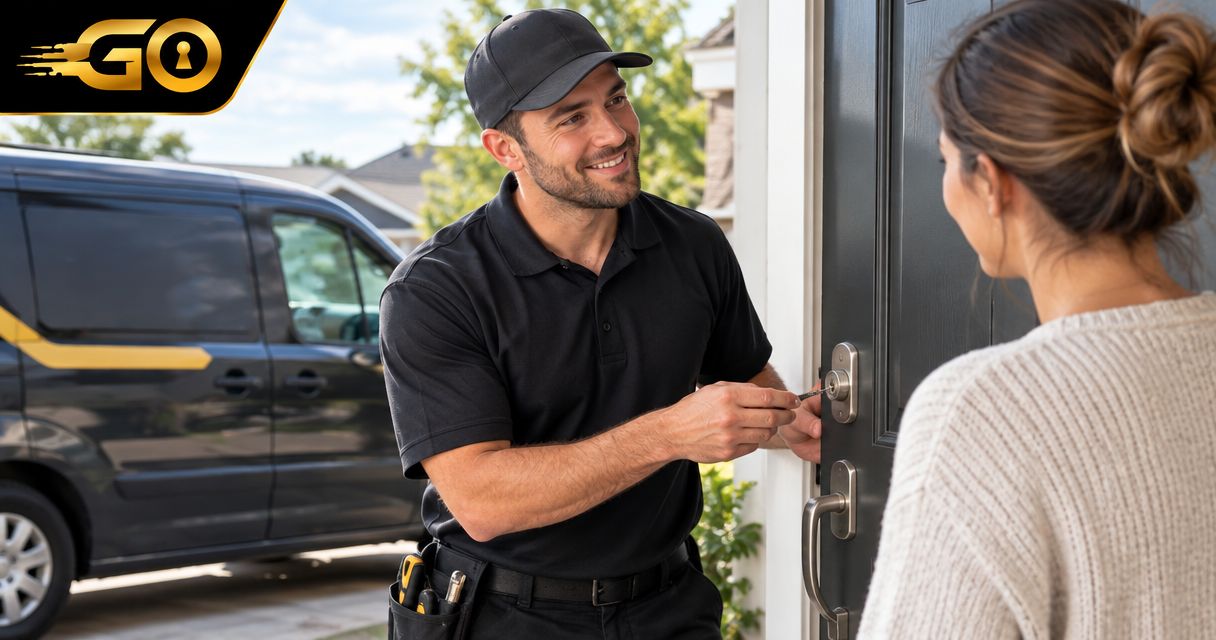
Yes—it is safe to let a locksmith into your house after a lockout when you verify who you hired, confirm the person at your door, and agree on the work before it starts. That does not mean giving unrestricted access: keep the visit focused on the affected door and any testing you authorize. If the technician’s identity, explanation, or requested access does not match the job, pause before allowing work or entry.
TL;DR
- Is it safe to let a locksmith into your house? Verify identity, authorize the work, and limit access.
- GO Locksmith provides mobile house lockout and rekey services in Fort Myers and Southwest Florida.
- Ask what entry method is proposed and whether it could damage the lock before approving it.
- A lockout alone does not mean you need replacement locks; missing keys raise a separate security question.
Why this matters
A house lockout creates two separate decisions: who you trust to work on your door and what work you actually need. Opening the door does not automatically require replacing the lock, making new keys, or inspecting other rooms.
For homeowners seeking mobile house lockout assistance, GO Locksmith serves Fort Myers, Cape Coral, Lehigh Acres, Estero, Bonita Springs, and Naples. Confirm availability and the details of your particular job when you call. A service description is not a substitute for checking the person who arrives.
Authorize a specific task, not unrestricted access to your home. That boundary applies whether you need the door opened, a broken key removed, or a lock assessed afterward.
Is it safe to let a locksmith into your house after a lockout?
Yes, with checks before work begins and clear limits once the door opens. Use the following sequence rather than relying on a uniform, vehicle, search listing, or reassuring introduction alone.
1. Confirm the business
Keep the business name and phone number you used to arrange service. Ask who will attend, how you can confirm that person’s connection to the business, and what information they need about the lockout.
If someone arrives under an unfamiliar name, call the business through the number you already have. Resolve the mismatch before allowing work. A different vehicle or lack of branding is not proof of wrongdoing, but neither is a branded vehicle proof of identity.
2. Verify the technician
Ask the arriving technician to identify themselves and confirm the job you requested. Compare that information with what the business told you, and ask for clarification if anything differs.
Do not treat your street address alone as verification; you supplied it when requesting service. If the business cannot confirm who is standing at your door, keep the visit paused.
3. Confirm your authorization
Ask what evidence the locksmith needs to confirm that you are entitled to enter. Explain early if your identification is locked inside or your documents do not show the current address.
A lease, property-management contact, or other evidence might help establish authorization, but do not assume a particular document will be accepted. Agree on how your circumstances will be checked before the work starts. For a rental or managed property, contact the landlord or manager when authorization is unclear.
4. Approve the work
Ask what the technician proposes to do, what damage is possible, and what would require additional approval. Request an estimate that identifies the agreed work and ask how any changes will be handled.
Opening the door is not blanket permission to drill, replace hardware, or work on other locks. If the proposed method changes after inspection, ask for the reason and an updated estimate before agreeing.
5. Limit access
Once the door opens, keep the work area limited to the affected entrance. If the technician needs to work from the inside or test the door, ask what access is needed and why.
Stay nearby without obstructing the work. You can keep unrelated rooms closed, secure pets, and ask another adult to be present if that helps you feel comfortable.
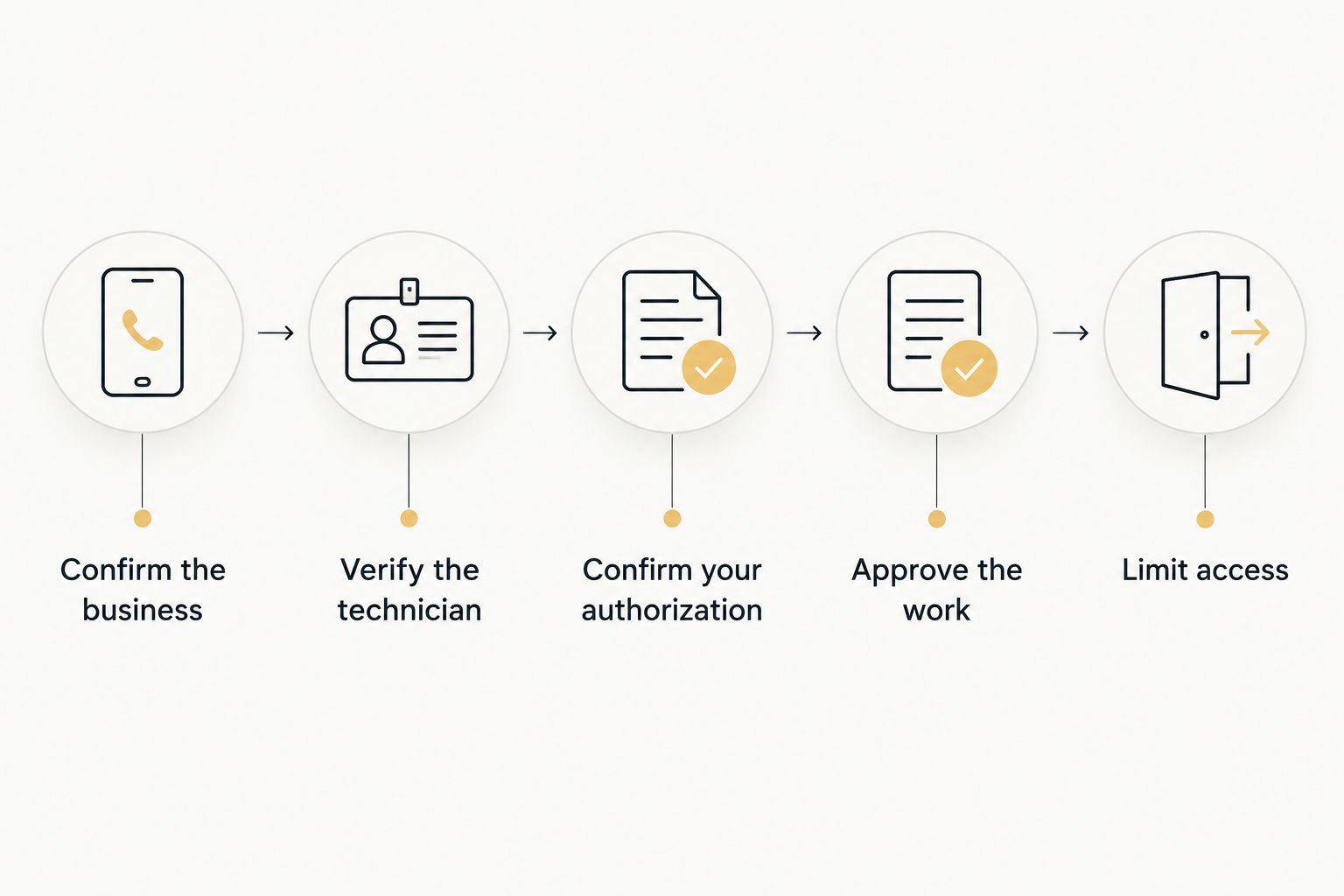
Verify identity and agree on the work before allowing access.
Does the locksmith need to come inside?
Not every house lockout requires a locksmith to walk through your home. The access needed depends on the affected door, the lock, and whether you have authorized work beyond opening it.
Working on the inside face of a door or checking its operation can require access around that entrance. That does not explain a request to enter bedrooms, inspect valuables, or tour unrelated areas.
Ask directly: What do you need to access inside, and what part of the job does that support? A clear explanation lets you decide whether to approve that access. If the explanation does not fit the work, stop and clarify it with the business.
Keep sensitive information separate from the job
Provide information needed to establish your authority and complete the service. You do not need to discuss where you store valuables, when the house is usually empty, or your household’s travel plans to explain a front-door lockout.
If you use an alarm or connected lock, ask whether you can operate it yourself. Do not volunteer account passwords or unrelated access codes. Keep documents used for verification in your possession whenever practical, and ask why any copy or photograph is needed before agreeing.
What should make you pause the visit?
Pause when something remains unresolved, not simply because the visit feels unfamiliar. You can ask questions, decline added work, and request an explanation without making an accusation.
Specific reasons to stop and clarify include:
- An identity mismatch: The business cannot confirm the person who arrived.
- Unexplained changes: The proposed work changes without a clear reason or updated estimate.
- Pressure to approve damage: You are pushed to accept drilling or replacement without an explanation of why it is needed.
- Unrelated access: Someone requests entry to rooms or information that does not fit the task.
- Refusal to document: You cannot obtain a clear description of the work you are being asked to authorize.
None of these points, by itself, proves a crime. They are reasons to withhold approval until you understand the situation. If you feel threatened, move to a safe place rather than trying to resolve the disagreement at the doorway. Call emergency services if there is an immediate threat.
Do you need a rekey or new lock afterward?
A lockout and a key-security problem are not the same thing. If your key was left inside and remains under your control, opening the door does not itself mean that someone else has a key. If a key is missing or was stolen, recovering access does not resolve who might still be able to enter.
The right follow-up depends on the key situation and the condition of the hardware—not simply on the fact that a locksmith visited.
| Service | Best for | What it addresses | Limitation |
|---|---|---|---|
| House lockout assistance | Regaining entry when you cannot access your key | The immediate access problem | Does not change which existing keys operate the lock |
| Rekeying | Changing key access when suitable hardware can be retained | Changes the lock’s keying so previous keys no longer operate it | Does not fix every mechanical or door-alignment problem |
| Lock replacement | Addressing hardware that needs replacement | Replaces the affected lock hardware | Requires suitable hardware and does not resolve every door or frame issue |
A rekey changes the internal keying of a compatible lock; replacement changes the hardware. Whether either approach suits your door requires an assessment. For the distinction, see whether rekeying is as secure as replacing a lock.
GO Locksmith offers residential lock repair, replacement, and rekeying, as well as house lockout assistance. These are separate services to discuss—not automatic additions to every lockout visit.
Why the precautions vary from one lockout to another
Your basic checks stay the same, but these circumstances affect what you need to discuss:
- Your authority to enter: An owner, tenant, guest, or property manager can have different documentation and permission questions.
- Where your identification is: Documents locked indoors require a verification discussion before work begins.
- What happened to the key: A key left inside presents a different concern from a missing or stolen key.
- The lock’s condition: A functioning lock and a damaged or jammed lock can require different work.
- The property arrangement: A rental, condo, or managed home can involve another person’s approval before hardware changes.
- The agreed scope: Opening the door, repairing hardware, and rekeying are distinct tasks with different access needs.
Tell the business about these details when arranging service. Do not wait until work has started to mention that you rent, lack identification outside, or need to change who has key access.
What if your ID is locked inside the house?
Tell the business before the technician arrives and ask what alternative verification it can consider. Do not assume that knowing the address or describing the interior is enough to establish permission to enter.
If someone else can help establish your authority, contact them early. That could be the owner or property manager, depending on your situation. Avoid sending identity documents to an unfamiliar number until you have verified who is requesting them and why.
Can a locksmith keep a copy of your house key?
Having access to a lock is not evidence that a technician kept a key. Still, you should understand whether the authorized job involves opening the door only, cutting keys, or changing the lock’s keying.
If keys are made, confirm what you ordered and collect them before the visit ends. If you have a specific concern about unauthorized key access, discuss rekeying with a verified locksmith rather than assuming that replacing every lock is necessary.
What should you check before the locksmith leaves?
Ask the technician to explain what was done and identify any remaining problem. Test the door and authorized hardware changes while the technician is still present, following any instructions needed to avoid another lockout.
Use a short completion check:
- Confirm the door opens, closes, locks, and unlocks as expected.
- Collect any keys made as part of the agreed work.
- Ask about damage or a condition that still needs attention.
- Obtain an itemized receipt identifying the business and completed work.
- Keep the estimate, approvals, and receipt together.
If the lock still binds or the door does not latch properly, raise it before the visit ends. Do not accept the ability to get inside as proof that every mechanical issue has been resolved.
FAQ
Should I stay with the locksmith while they work?
Stay nearby when it is safe, without obstructing the work. You can observe the agreed task, answer questions, and approve or decline proposed changes.
Is drilling my door lock a warning sign?
Drilling is not automatically a warning sign, but it requires an explanation and your approval. Ask why it is proposed, what damage it will cause, and what additional work would follow.
Can I refuse to let a locksmith walk through my house?
You can limit access to the area needed for the authorized work. Ask why any additional interior access is necessary before agreeing to it.
Should I change my locks just because a locksmith opened the door?
A locksmith opening the door does not, by itself, mean your locks need changing. Consider missing keys, unauthorized key access, hardware condition, and any damage separately.
Can a tenant arrange a locksmith after a house lockout?
A tenant should confirm permission and any property-management requirements before authorizing work. Opening a door and changing its locks are different decisions, so clarify both with the owner or manager when needed.
Does GO Locksmith provide house lockout service all night?
GO Locksmith is not a 24/7 service. Its hours are Sunday–Thursday, 7:00 AM–11:00 PM, and Friday, 7:00 AM–5:00 PM; it is closed Saturday. Call to check current availability.
One last thing: separate entry from security
Getting back inside solves access; it does not automatically settle who has a working key. Once the immediate lockout is over, ask yourself whether every key is accounted for and whether the lock still works correctly. Those answers—not the stress of being locked out—should guide any follow-up work.
For house lockout assistance in Fort Myers or the confirmed Southwest Florida service areas, call GO Locksmith at (239) 412-1101 to check availability and request a job-specific estimate. Mention whether your key is inside, missing, or broken so the conversation starts with the actual problem.