
Blog ·
Best commercial interior door locks for office suites 2026
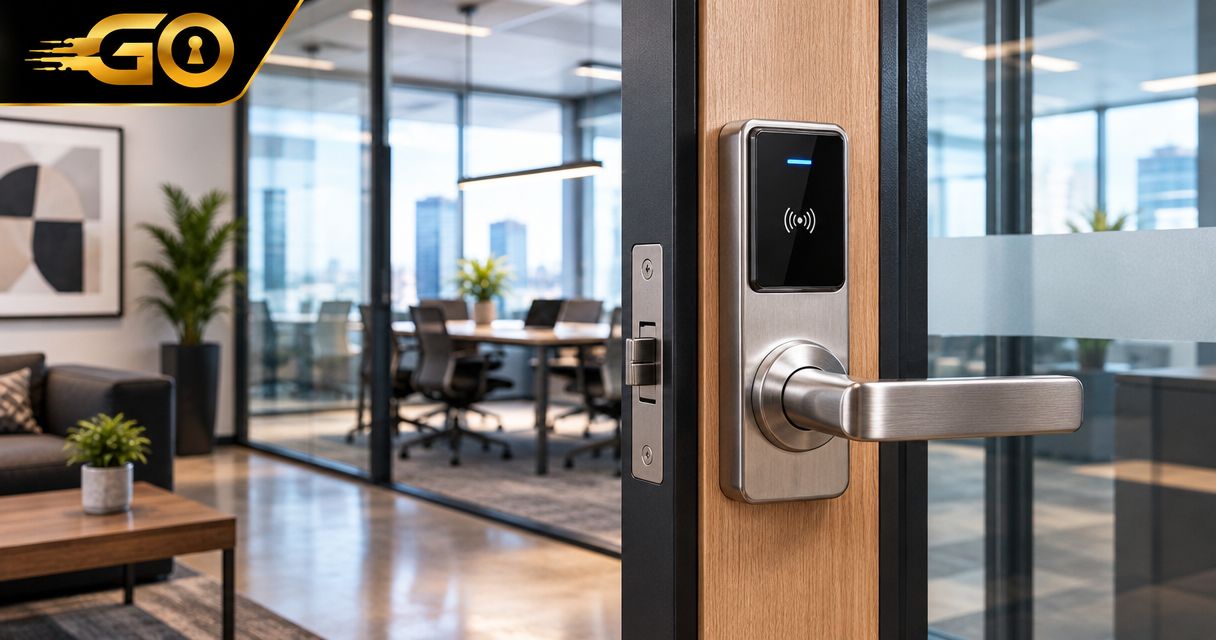
Best default for a conventional office door: a commercial cylindrical lever lock with an office function. Best for an existing mortise-prepped door: a compatible mortise lock; best for always-secured storage: a storeroom-function lock. The best commercial interior door locks for office suites match each room’s purpose, existing hardware, and exit requirements—not one lock fitted everywhere.
TL;DR
- The best commercial interior door locks for office suites match room function, door preparation, and exit requirements.
- Choose an office-function commercial lever for a private office that needs keyed entry and inside locking.
- Choose storeroom function for controlled storage; privacy function does not provide equivalent security.
- GO Locksmith provides mechanical commercial lock repair, replacement, and rekey services, not electronic access-control installation.
Why the room matters more than the lock’s appearance
An office suite contains different access needs. A private office needs a way to secure the room, a restroom needs privacy, and a shared meeting room might need no locking function at all.
Choose the function before choosing the finish. A lock can fit the door perfectly yet create daily lockouts or leave a room unsecured because its operation does not match how people use it.
GO Locksmith’s confirmed locksmith services include commercial lock repair, replacement, rekeying, fresh installation, push bars, and door closers. Electronic access-control installation and repair are not offered.
What makes the best commercial interior door locks?
Use these criteria before comparing lock types:
- Room function: Decide whether the door needs security, temporary privacy, or unrestricted passage.
- Exit operation: People must be able to leave as required by the applicable building, fire, and accessibility rules. Do not select inside locking behavior by appearance alone.
- Existing preparation: A cylindrical opening and a mortise pocket accept different hardware. Confirm the door and frame preparation before ordering.
- Documented suitability: Check the exact model’s commercial rating, function description, installation instructions, and any required fire-door listing.
- Key management: Establish who holds keys and what happens after a key is lost or an employee leaves.
- Door condition: Check alignment, hinges, strike engagement, and closer operation. New hardware does not correct every door problem.
A commercial grade is useful evidence, but it does not describe every aspect of suitability. A rating does not tell you whether the room needs privacy function, storeroom function, or a different exit arrangement.
Office lock options at a glance
This ranking compares mechanical hardware categories rather than named products. Each option serves a different purpose; confirm the exact manufacturer’s function before purchasing.
| Rank and option | Best for | Standout feature | Key limitation |
|---|---|---|---|
| Commercial cylindrical office-function lever | Conventional private offices | Keyed entry with an inside locking control | Inside locking can cause accidental lockouts |
| Commercial mortise lock | Doors already prepared for mortise hardware | Lock body fits a rectangular door-edge pocket | Replacement fit requires detailed checks |
| Storeroom-function commercial lock | Supply rooms and controlled storage | Outside entry stays key-controlled | Staff need a key whenever entering from outside |
| Commercial privacy-function lever | Restrooms and changing rooms | Occupant-operated privacy locking | Not a substitute for keyed security |
| Commercial passage lever | Shared rooms that need no locking | No locking step interrupts normal use | Provides no access restriction |
1. Office-function cylindrical lever: best for private offices
A commercial cylindrical office-function lock combines an outside key cylinder with an inside locking control. Exact button, thumbturn, and unlocking behavior varies by model, so read the function description rather than relying on the word office.
This is the default starting point for a conventional private office when the existing door preparation, traffic level, and exit requirements support it. Choose lever operation and verify the complete opening’s accessibility requirements.
Office-function cylindrical lever pros:
- Supports keyed entry to a private workspace.
- Lets the occupant control locking from inside.
- Fits doors prepared for compatible cylindrical hardware.
Office-function cylindrical lever cons:
- An occupant can leave the room locked with the key inside.
- Similar-looking models can have different unlocking behavior.
- It does not provide electronic access records or remote permission changes.
Best for: Private offices where the occupant needs control over locking during the day.
Before ordering, decide whether operating the inside lever should release the outside locking state or leave it secured. Have the supplier identify that behavior in the exact model’s documentation.
Verdict: Buy for conventional private offices after confirming fit and function.
2. Commercial mortise lock: best for existing mortise doors
A mortise lock has a lock body installed in a rectangular pocket in the door edge. It is a construction type, not a single locking function; you still need to specify how entry and exit should work.
For an existing mortise-prepped office door, start by identifying compatible replacement hardware. Do not assume that every mortise lock shares the same case dimensions, trim arrangement, or strike location.
Commercial mortise lock pros:
- Preserves a compatible existing mortise preparation.
- Offers different mechanical functions within the hardware category.
- Allows the locking arrangement to match the room’s purpose.
Commercial mortise lock cons:
- Replacement compatibility requires more than matching the visible handle.
- Changing to another hardware type can require door modification.
- A mortise body alone does not establish a security rating.
Best for: Office doors already fitted with serviceable, compatible mortise hardware.
Record the existing manufacturer and model where identifiable, then compare the replacement’s installation template. For a labeled fire door, verify that the proposed work preserves the required assembly listing.
Verdict: Buy a compatible mortise replacement; hold off on changing hardware types without an assessment.
3. Storeroom-function lock: best for controlled storage
A storeroom-function lock keeps the outside lever secured while allowing the inside lever to release the latch. Entry from outside requires the appropriate key; confirm the exact model’s operation before specifying it.
This function suits storage rooms where staff should not be able to leave the outside lever unlocked during ordinary use. It does not ensure the door closes, and it does not record who entered.
Storeroom-function lock pros:
- Keeps outside entry key-controlled without a separate locking step.
- Removes uncertainty about whether someone left the outside lever unlocked.
- Provides mechanical access control without batteries or network connections.
Storeroom-function lock cons:
- Staff need the key each time they enter from outside.
- A closed door can lock someone out immediately.
- Propping the door defeats the intended access restriction.
Best for: Supply rooms and storage spaces that need consistently controlled entry.
Plan key distribution before installation. If staff routinely need unrestricted entry throughout the day, reconsider the function rather than planning to prop the door open—particularly where fire-door requirements apply.
Verdict: Buy for controlled storage; skip for rooms intended to stay freely accessible.
4. Commercial privacy lever: best for restrooms
A privacy-function lock lets an occupant secure a room for temporary privacy. These locks commonly include an outside emergency-release feature, but the exact release method depends on the model.
Privacy is not the same as security. Do not select a restroom-style lock to protect confidential files, business equipment, or a private office after hours.
Commercial privacy lever pros:
- Gives the occupant control over temporary privacy.
- Avoids ordinary keyed entry for routine restroom use.
- Provides an emergency-release arrangement when specified in the selected model.
Commercial privacy lever cons:
- Does not provide the same access restriction as a keyed security lock.
- Emergency-release details differ between models.
- Incorrect function selection can create unwanted locking behavior.
Best for: Individual restrooms and changing rooms where privacy is the goal.
Confirm how staff would release the lock in an emergency and keep that information accessible to authorized personnel. Also check operating hardware, clearances, and other applicable accessibility requirements for the opening.
Verdict: Buy for privacy; skip for rooms requiring keyed security.
5. Commercial passage lever: best for unrestricted shared rooms
A passage lever operates a latch without a locking function. It belongs in this comparison because not every office-suite door needs a lock.
For a shared meeting room, an unnecessary locking control can create avoidable access problems. First establish whether the room contains equipment or records that require restricted entry.
Commercial passage lever pros:
- Allows entry without a key or unlocking step.
- Avoids accidental lockouts caused by the handle’s locking control.
- Keeps operation straightforward for shared spaces.
Commercial passage lever cons:
- Provides no security against unauthorized entry.
- Does not provide occupant-controlled privacy.
- Requires a different solution if the room’s access needs change.
Best for: Shared rooms that require latching but no access restriction.
Passage hardware is not permission to disregard a fire-door label or required latching arrangement. Verify the exact product’s suitability for the opening.
Verdict: Buy where unrestricted access is intentional; skip where security or privacy is required.
Match the function to the room
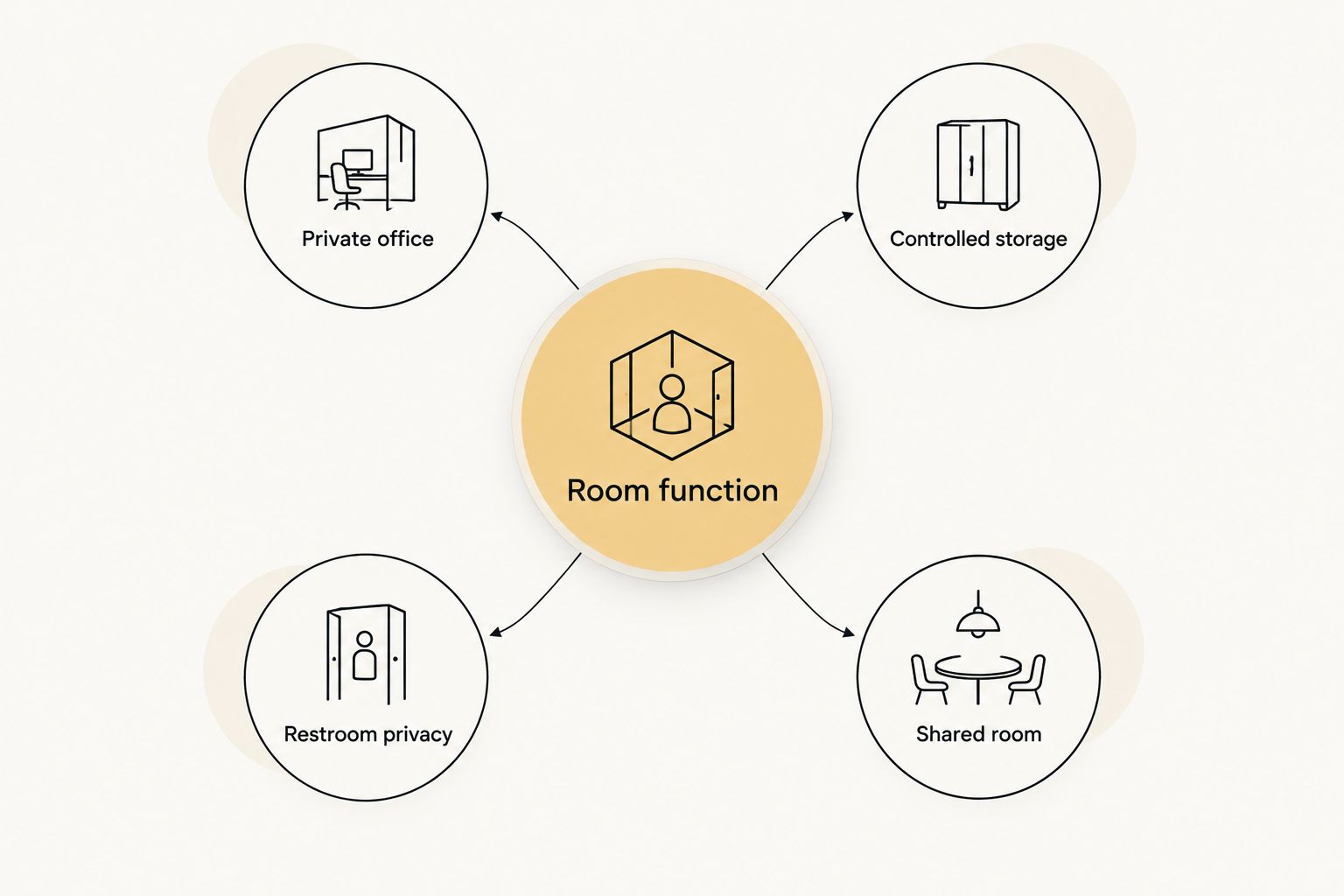
Use the room’s daily operation as the starting point. These are function choices, not interchangeable upgrades:
- Private office: Occupants need keyed entry and control over locking.
- Controlled storage: Outside entry should remain key-controlled.
- Restroom privacy: Occupants need temporary privacy, not keyed security.
- Shared room: Users need free access without a locking step.
The same-looking lever can operate differently behind the trim. Ask for a demonstration or the manufacturer’s function description before approving the hardware, especially when matching locks across several rooms.
Check the opening before replacing the lock
Separate a key problem from a hardware problem. If a lost key is the only concern and the lock remains suitable and serviceable, ask whether rekeying is appropriate instead of replacing the entire assembly.
For mechanical trouble, describe when it happens. A latch that binds only with the door closed points to a different assessment than a key that will not turn even with the door open; neither symptom establishes the repair by itself.
Before requesting an estimate, gather:
- Photos of the door faces, door edge, strike, and visible labels.
- The existing hardware’s manufacturer or model, if identifiable.
- The room’s purpose and desired locking behavior.
- Details of sticking, loose handles, failed latching, or lost keys.
- Any landlord or building-management requirements.
GO Locksmith is a mobile service offering confirmed mechanical commercial lock work in Fort Myers and Southwest Florida, including Cape Coral, Lehigh Acres, Estero, Bonita Springs, and Naples. Ask about the specific door and job rather than assuming every replacement fits.
How these options are ranked
The order starts with a conventional private office, then addresses existing door preparation and distinct room functions. The criteria are fit, entry and exit behavior, key management, and suitability—not a claim of hands-on testing or a brand durability ranking.
No category is universally strongest or appropriate for every door. A correctly specified function on a suitable opening is the recommendation; appearance alone is not.
Which office lock should you choose?
Choose a commercial cylindrical office-function lever as the starting point for a conventional private office. Keep compatible mortise hardware on a mortise-prepped door, choose storeroom function for controlled storage, and reserve privacy hardware for privacy needs.
GO Locksmith is a service option for Southwest Florida office managers seeking mechanical commercial lock repair, replacement, or rekeying. For an estimate, call (239) 412-1101 and describe the existing hardware, room use, and problem.
FAQ
What are the best commercial interior door locks for office suites?
A commercial cylindrical office-function lever is a starting point for a conventional private office. Existing mortise doors, controlled storage rooms, and restrooms need hardware selected for their preparation and room function.
Is a mortise lock better than a cylindrical lock for an office?
Neither construction type is automatically better for every office. Compare the exact model’s documented rating, function, door preparation, and suitability for the opening.
What is the difference between office and storeroom lock functions?
An office-function lock generally provides an inside locking control, while a storeroom-function lock keeps outside entry key-controlled. Verify the exact manufacturer’s function description because operating details differ.
Can I use a privacy lock to secure office files?
A privacy lock is not a substitute for keyed security. Select suitable keyed hardware for a room containing files that require restricted access.
Should I rekey office locks after an employee leaves?
Consider rekeying when a departing employee retains a key or key control is uncertain. First confirm that the existing hardware remains serviceable and suitable for the room.
Does every office-suite door need a push bar?
No; the requirement depends on the opening, occupancy, use, and applicable code. Have the building’s requirements checked before replacing required exit hardware with an ordinary lever lock.
How much does commercial interior lock replacement cost?
The estimate depends on the specific hardware, door preparation, condition, and work required. Call GO Locksmith at (239) 412-1101 for a job-specific estimate and to check availability.
One last thing: check the door after installation
A lock that works with the door open has not demonstrated correct operation with the door closed. Check latching, keyed entry, inside release, and the intended locking behavior under normal use; include the closer where fitted.
That final check connects the purchase decision to the result you need: the right people can enter, occupants can leave as required, and the door secures as intended.