
Blog ·
Can a locksmith repair a lock damaged in an attempted break-in?
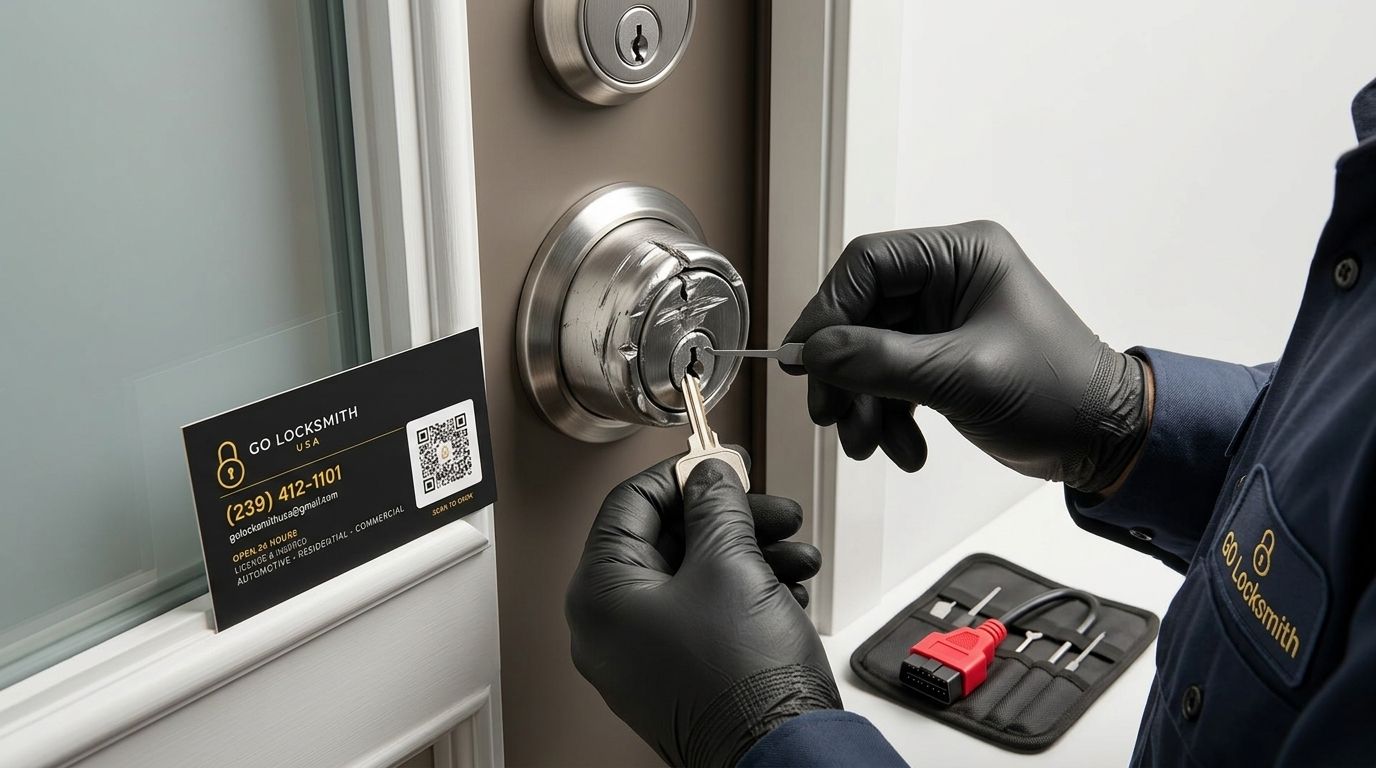
Yes—a locksmith can repair a lock damaged in an attempted break-in when the remaining mechanism and mounting points are sound. A cracked housing, bent bolt, or damaged door frame can make lock replacement or separate door repairs necessary. A key that still turns does not prove the door is secure.
TL;DR
- Locksmith repair after an attempted break-in depends on the lock, bolt, mounting points, and door frame.
- Repair suits serviceable hardware; replacement addresses damaged components that cannot be restored reliably.
- Rekeying changes which key operates a lock; it does not repair physical damage.
- GO Locksmith offers mobile residential and commercial lock repair and replacement in Southwest Florida.
Can a locksmith repair a lock damaged in an attempted break-in?
A locksmith can repair some damaged locks, but the decision depends on what the attempted entry affected. Surface marks, a displaced trim piece, and a broken internal component are different problems; appearance alone does not establish whether repair is appropriate.
The broader repair-or-replace decision for an exterior door lock starts with the same distinction: restore serviceable hardware, but do not retain damaged parts merely because they still move.
| Option | Best for | Main benefit | Limitation |
|---|---|---|---|
| Lock repair | Damage that leaves the essential mechanism and mounting sound | Retains serviceable hardware | Cannot correct every damaged component or surrounding door problem |
| Lock replacement | A damaged mechanism, housing, or bolt that cannot be restored reliably | Removes the affected lock hardware | Does not repair a split frame or damaged door |
| Rekeying | Sound, compatible hardware when existing keys should stop working | Changes which key operates the lock | Does not restore bent, cracked, or weakened parts |
| Separate door or frame repair | Damage to the structure supporting the lock | Addresses the surrounding opening | Requires the appropriate repair provider; lock work alone is insufficient |
Choose the work that restores the whole locking point—not just key movement. A functioning cylinder cannot compensate for a strike plate pulling away from damaged wood.
Why the surrounding door matters
A door lock works with the door, strike plate, and frame. The strike plate is the metal fitting on the frame that receives the latch or bolt; damage there matters even when the lock itself looks intact.
After an attempted break-in, separate the questions: does the mechanism operate, and does the door hold securely when closed? Neither answer substitutes for the other.
Avoid repeatedly forcing the key or slamming the door to test it. Describe any new sticking, looseness, scraping, or visible damage to the locksmith instead of trying to overcome it with more force.
When repairing the existing lock makes sense
Repair is appropriate when the affected hardware can be restored to reliable operation and remains securely mounted. The assessment needs to account for internal condition, not just visible scratches.
For example, loose exterior trim does not automatically require replacing every part of the lock. But trim movement after an attempted entry deserves inspection because the cause might involve the mounting hardware or the material beneath it.
Ask the locksmith to explain:
- Which part is damaged rather than merely marked.
- What the proposed repair will correct.
- Whether the lock housing, latch or bolt, and mounting points remain sound.
- Whether any door or frame damage remains outside the lock repair.
Repair should solve an identified problem. If the explanation is only that the key turns again, ask how the locking point and mounting were assessed.
When replacement is the better choice
Replacement is appropriate when damaged lock components cannot be restored reliably. A distorted housing, bent bolt, or damaged cylinder can rule out keeping the affected hardware, even if some functions still work.
Replacing the lock also gives you a clear distinction between the removed damage and any remaining problem. If the replacement hardware still binds because the door is out of position, the opening needs attention too.
Do not assume that a larger or different lock will fix the surrounding damage. Replacement hardware must suit the existing door preparation, door material, and intended use; changing the lock does not rebuild its support.
For a business entrance, replacement must also account for how occupants exit. Tell the locksmith if the damaged door has a push bar or other exit hardware, and do not improvise a fastening that prevents people from leaving.
Why the repair decision varies
The right response depends on the damage and the hardware already installed—not simply whether someone successfully entered.
- Cylinder condition: Damage around the keyway requires a different assessment from superficial marks on the trim.
- Latch or bolt condition: A component that binds or is visibly distorted needs evaluation before continued use.
- Mounting condition: Loose fittings can involve the fasteners, the lock assembly, or damaged material supporting them.
- Door and frame condition: Splitting, bending, or displacement can prevent sound hardware from securing the opening.
- Hardware type: A residential deadbolt and commercial exit hardware have different operating and replacement requirements.
- Key security: Missing or unaccounted-for keys create a separate reason to discuss rekeying or replacement.
These factors can overlap. You might need replacement of a damaged lock, repair of the surrounding door, and a decision about existing keys rather than a single repair that covers everything.
What should you do before the locksmith arrives?
Put personal safety ahead of inspecting the lock. If you suspect someone is still inside or there is an immediate threat, move to a safe location and contact emergency services rather than entering.
Once it is safe, use this sequence to prepare for the service call:
- Stay safe. Do not confront anyone or investigate an occupied property yourself. Keep others away from an unstable door or broken glass.
- Record damage. Photograph the lock, door edge, strike plate, and surrounding frame without dismantling them. Follow police instructions about preserving the scene.
- Describe symptoms. Explain what changed: the key sticks, the handle is loose, the bolt will not engage, or the door will not close normally. Avoid repeated testing that requires force.
- Confirm scope. Ask whether the proposed work covers the lock alone or whether another provider must address the door or frame. Explain whether the property is occupied and whether another entrance is usable.
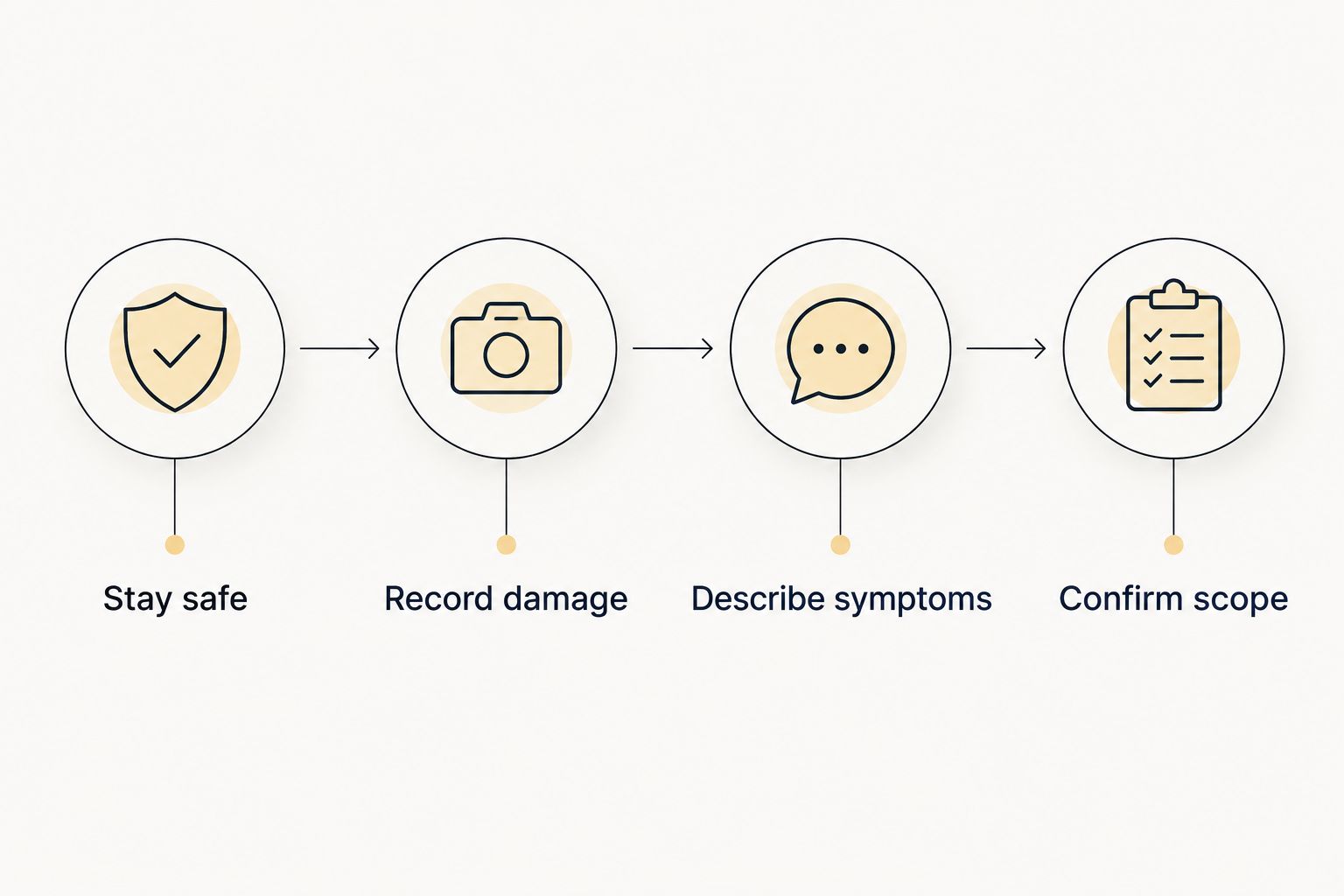
Describe both the lock symptoms and the surrounding door damage before arranging work.
You do not need to identify the failed internal part before calling. Clear observations are more useful than guessing that the lock needs lubrication, rekeying, or a particular replacement.
Can you keep using the door if the key still works?
Do not treat key movement as a security test. The key operates the cylinder, while the latch or bolt and surrounding structure hold the door closed.
A door that closes only when lifted, pushed hard, or slammed needs assessment. Likewise, new movement around the lock or strike plate should not be dismissed because you can still lock and unlock it.
Describe the difference between operation with the door open and closed if you have already noticed it. Do not keep cycling a damaged mechanism to collect more information, especially if the door could become stuck.
If the damaged entrance cannot be secured, tell the service provider before arranging the visit. That helps establish whether the immediate need is lock work, structural work, or both.
How do you secure the entrance while other repairs are pending?
Temporary protection and permanent lock repair solve different problems. If a split frame or damaged door prevents normal locking, replacing the cylinder alone will not secure the opening.
To secure a door after a break-in, temporary protection must account for the damaged opening without trapping occupants or obstructing an exit. Arrange the appropriate door, frame, or board-up provider when the opening needs work beyond locksmith services.
Make responsibility explicit before anyone leaves: who is addressing the lock, who is addressing the structure, and what remains unresolved? Do not mistake a temporary measure for confirmation that the permanent entrance is ready for normal use.
For a rental or managed building, notify the owner or property manager promptly. Confirm authorization for permanent changes and coordinate any separate contractors so the lock is not fitted to an opening that still needs repair.
What should the repair estimate explain?
Ask for an estimate tied to the observed damage and proposed work. A general lock-repair estimate does not establish whether replacement hardware or separate structural repairs are included.
Useful questions include:
- Is the proposal for repair, replacement, rekeying, or a combination?
- Which damaged components will remain, and why are they serviceable?
- Does the scope include the strike plate and lock mounting?
- Is any door or frame work excluded?
- What findings would change the proposed work?
GO Locksmith's confirmed locksmith services include residential and commercial lock repair, replacement, and rekeying. Describe the attempted break-in and ask for a job-specific estimate rather than assuming the work is a routine lock adjustment.
GO Locksmith is a mobile option for Southwest Florida homeowners and businesses needing mechanical lock repair or replacement. Service areas include Fort Myers, Cape Coral, Lehigh Acres, Estero, Bonita Springs, and Naples; door reconstruction and board-up work should not be assumed to be included.
Does rekeying fix damage from an attempted break-in?
Rekeying does not fix physical damage; it changes which key operates compatible, serviceable hardware. It is relevant when an existing key is missing or should no longer provide access.
Keep that decision separate from the damage assessment. A lock can need repair without needing a different key, or need both physical work and a key change.
Should you replace every exterior lock after an attempted break-in?
Replacing every exterior lock is not automatically necessary after an attempted break-in. Assess the affected entrance and separately consider whether any existing keys are missing or compromised.
Tell the locksmith which other doors share the same key. That information helps define the key-security question without assuming that every undamaged lock needs replacement.
FAQ
Can a locksmith repair a lock after someone tried to force it open?
Yes, a locksmith can repair some locks after attempted forced entry when the essential mechanism and mounting remain sound. Damaged components or surrounding door structure can require replacement or separate repairs.
Is my lock safe if the key still turns after an attempted break-in?
A turning key does not establish that the lock is secure. The bolt, strike plate, mounting points, door, and frame also need assessment.
Will rekeying repair a damaged deadbolt?
Rekeying does not repair a damaged deadbolt. It changes which key operates compatible hardware and does not restore bent or cracked components.
Can a new lock fix a split door frame?
A new lock does not repair a split door frame. The damaged structure needs appropriate repair so the locking hardware has sound support.
What should I tell a locksmith when I call after an attempted break-in?
Describe the visible damage, any change in lock operation, and whether the door closes and locks normally. Explain whether the affected entrance has commercial exit hardware or visible frame damage.
Does GO Locksmith repair residential and commercial locks?
GO Locksmith provides mobile residential and commercial lock repair, replacement, and rekeying. Call (239) 412-1101 to discuss the damage, request an estimate, and check current availability.
Is GO Locksmith available all night?
GO Locksmith is not a 24-hour service. Hours are Sunday–Thursday 7:00 AM–11:00 PM and Friday 7:00 AM–5:00 PM; Saturday is closed.
One last thing
Ask one question before the job is considered complete: Does any damage remain that prevents this entrance from being secured normally? That keeps the conversation focused on the door's condition, not simply whether you received a working key.
Call GO Locksmith at (239) 412-1101 during business hours to discuss the damaged lock, request a job-specific estimate, and check availability.