
Blog ·
Best padlocks for storage units 2026
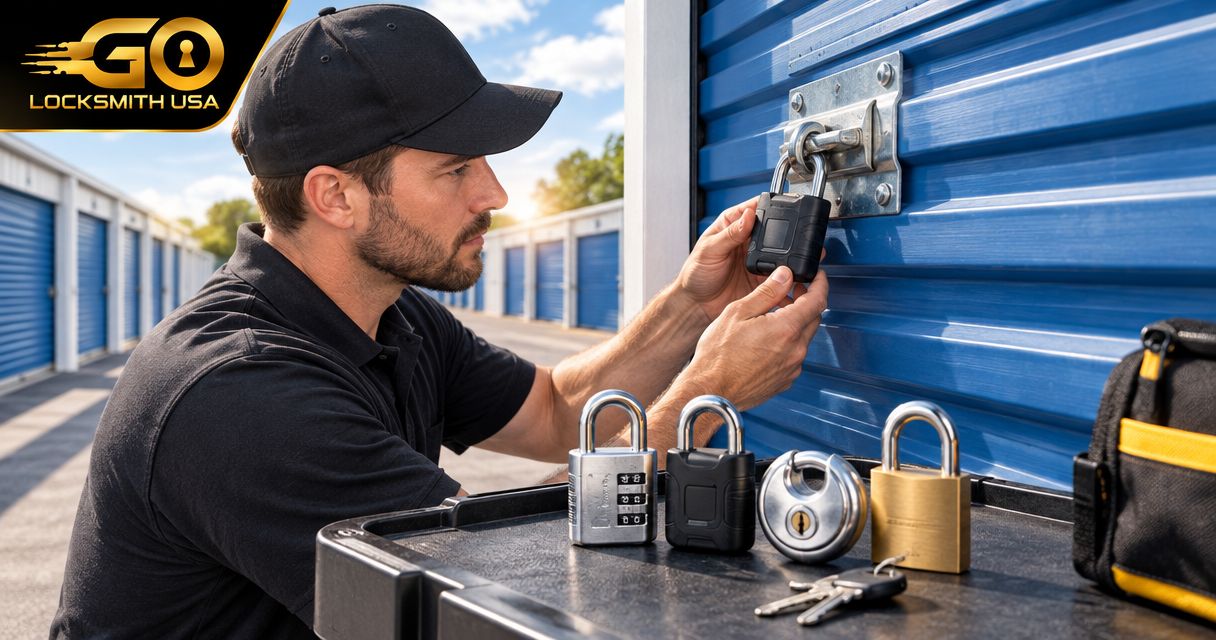
Best starting point: a close-fitting disc padlock. Best alternative for a compatible hasp: a closed-shackle padlock. Best for unusual clearance requirements: a long-shackle padlock, but only when the facility requires that fit. The best padlocks for storage units match the door hardware, leave little shackle exposed, and meet the facility’s rules.
TL;DR
- The best padlocks for storage units fit the hasp closely and meet the facility’s lock requirements.
- Disc padlocks are the default recommendation for compatible storage-unit doors.
- Closed-shackle padlocks suit hasps that accommodate their protective body.
- Long-shackle padlocks solve clearance problems but expose more of the shackle.
Why the lock’s shape matters more than its size
A large padlock is not automatically a suitable storage-unit lock. The shackle—the metal part that passes through the hasp—must fit without forcing, and the lock body must leave enough room for normal operation.
Start with the facility’s instructions, not a product listing. Ask which lock types the door accepts, whether you must supply your own lock, and what procedure applies if you lose the key. Keep your rental information accessible; this guide to replacing a lost padlock key addresses a separate problem from choosing the lock itself.
These recommendations compare lock designs rather than rank individual models. Within each design, materials, construction, cylinder quality, and documented testing still matter.
What makes a suitable storage-unit padlock?
Use these criteria before choosing a brand or model:
- Facility acceptance: The lock must comply with the storage operator’s requirements. A door designed for an integrated cylinder needs that cylinder type, not a padlock.
- Correct fit: Check the shackle diameter, inside width, and usable height against the hasp. Also check clearance around the lock body.
- Limited shackle exposure: Choose a shape that leaves less shackle accessible while still allowing you to operate the lock normally.
- Documented construction: Look for clear manufacturer information about the body, shackle, cylinder, and any independent security testing. Appearance alone proves little.
- Exposure suitability: An outdoor lock needs manufacturer guidance appropriate to its environment. A covered corridor and an exposed drive-up door present different conditions.
- Manageable access: Decide who holds the keys and where you will keep a spare. Security includes controlling access after the lock is installed.
Choose the smallest practical clearance, not the largest practical lock. A close fit is useful only if you can latch, unlock, and remove the padlock without struggling.
Storage-unit padlocks at a glance
| Rank and lock design | Best for | Standout feature | Key limitation |
|---|---|---|---|
| 1. Disc padlock | Compatible storage-unit hasps | Round body surrounds much of the shackle | Body shape and shackle opening do not fit every latch |
| 2. Closed-shackle padlock | Hasps with room for a protective lock body | Raised shoulders shield the sides of the shackle | Protective shoulders can interfere with the hasp |
| 3. Long-shackle padlock | Hardware that genuinely needs extra reach | Additional clearance around awkward hardware | More exposed shackle than a close-fitting alternative |
A disc lock and a closed-shackle padlock both reduce exposed shackle through their shape. Neither label establishes a security rating, and neither makes a weak or damaged hasp stronger.
1. Disc padlock: the default for compatible storage units
A disc padlock has a round body with a relatively small exposed section of curved shackle. That shape makes it a sensible starting point when your storage facility accepts disc locks and the door hardware accommodates one.
The fit matters as much as the shape. A disc lock can be awkward or unusable if the hasp opening is too small, the latch sits too close to the door, or nearby metalwork blocks access to the keyway.
Best for: Renters whose storage-unit latch accepts a close-fitting disc lock.
Disc padlock pros:
- The surrounding body limits the exposed section of shackle.
- The compact shape avoids the extra reach of a long-shackle design.
- A compatible hasp allows a close fit without a tall shackle projecting above the body.
Disc padlock cons:
- The round body can interfere with surrounding latch hardware.
- A narrow shackle opening limits compatibility.
- Similar-looking disc locks do not necessarily have equivalent construction or security testing.
Before choosing a disc lock, check the manufacturer’s dimension drawing against the actual latch. Do not assume that a lock described as suitable for storage will fit your particular door.
GO Locksmith’s default recommendation for storage-unit padlocks is a close-fitting disc lock, provided the facility permits it. That is a fit-based recommendation, not a claim that every disc lock outperforms every other padlock.
Verdict: Buy a disc padlock when its dimensions, construction, and facility approval match your unit.
2. Closed-shackle padlock: for compatible protective hasps
A closed-shackle padlock uses raised sections of its body, often called shoulders, to shield the sides of the shackle. It is an alternative when you want limited shackle exposure but a disc-shaped body does not suit the latch.
Those shoulders also create the main fit problem. The hasp must reach into the opening without colliding with the protective body, and you need room to insert the key and release the lock.
Best for: Renters with a hasp that accommodates protective shoulders and a short exposed shackle.
Closed-shackle padlock pros:
- Protective shoulders reduce access to the sides of the shackle.
- The design offers an alternative to a round disc body.
- A suitable model can fit closely around compatible hardware.
Closed-shackle padlock cons:
- The shoulders can prevent the lock from fitting an otherwise suitable opening.
- A bulky body can obstruct key access on a recessed latch.
- The design name alone does not establish resistance to cutting, drilling, or manipulation.
Compare the usable opening, not just the body dimensions. A lock can look large enough while its protected shackle opening is too narrow for the latch.
If a manufacturer lists an independent security classification, check which exact model and configuration it covers. Do not transfer a rating from another lock in the same product family.
Verdict: Buy a closed-shackle padlock when the hasp accepts its protective shoulders without interference.
3. Long-shackle padlock: a clearance solution, not the default
A long-shackle padlock provides extra space between the lock body and the top of the shackle. That reach helps with hardware that a shorter lock cannot span.
The trade-off is exposure. More accessible shackle leaves more room around the lock, so extra length should solve a real fit problem rather than serve as a precaution against choosing the wrong size.
Best for: Unusual latch arrangements that require additional shackle height and are approved by the facility.
Long-shackle padlock pros:
- Extra reach accommodates some awkward latch arrangements.
- Additional clearance can make the lock easier to position around obstructed hardware.
- The format provides an option when a short-shackle design physically cannot fit.
Long-shackle padlock cons:
- More shackle remains exposed than with an otherwise comparable close-fitting lock.
- Excess clearance can leave the lock hanging loosely around the latch.
- A storage facility’s rules can exclude the design regardless of whether it fits.
Ask the facility whether a different approved lock format suits the door before choosing a longer shackle. Do not bend, enlarge, or otherwise alter the facility’s hardware to accommodate your purchase.
Verdict: Skip a long-shackle padlock unless the hardware genuinely requires its extra reach.
Check the fit before committing to a lock
You need measurements from the actual door hardware, not another unit that looks similar. Photograph the closed latch with the facility’s permission, then compare its dimensions with the lock manufacturer’s drawing.
Work through these checks in order:
- Facility rules: Confirm the permitted lock format and any required specifications.
- Hasp opening: Check the opening through which the shackle must pass.
- Shackle clearance: Compare the shackle’s diameter, inside width, and usable height.
- Body clearance: Check whether the lock body clears the latch, door, and surrounding metalwork.
- Normal operation: Confirm that you can secure, unlock, and remove the lock without force.
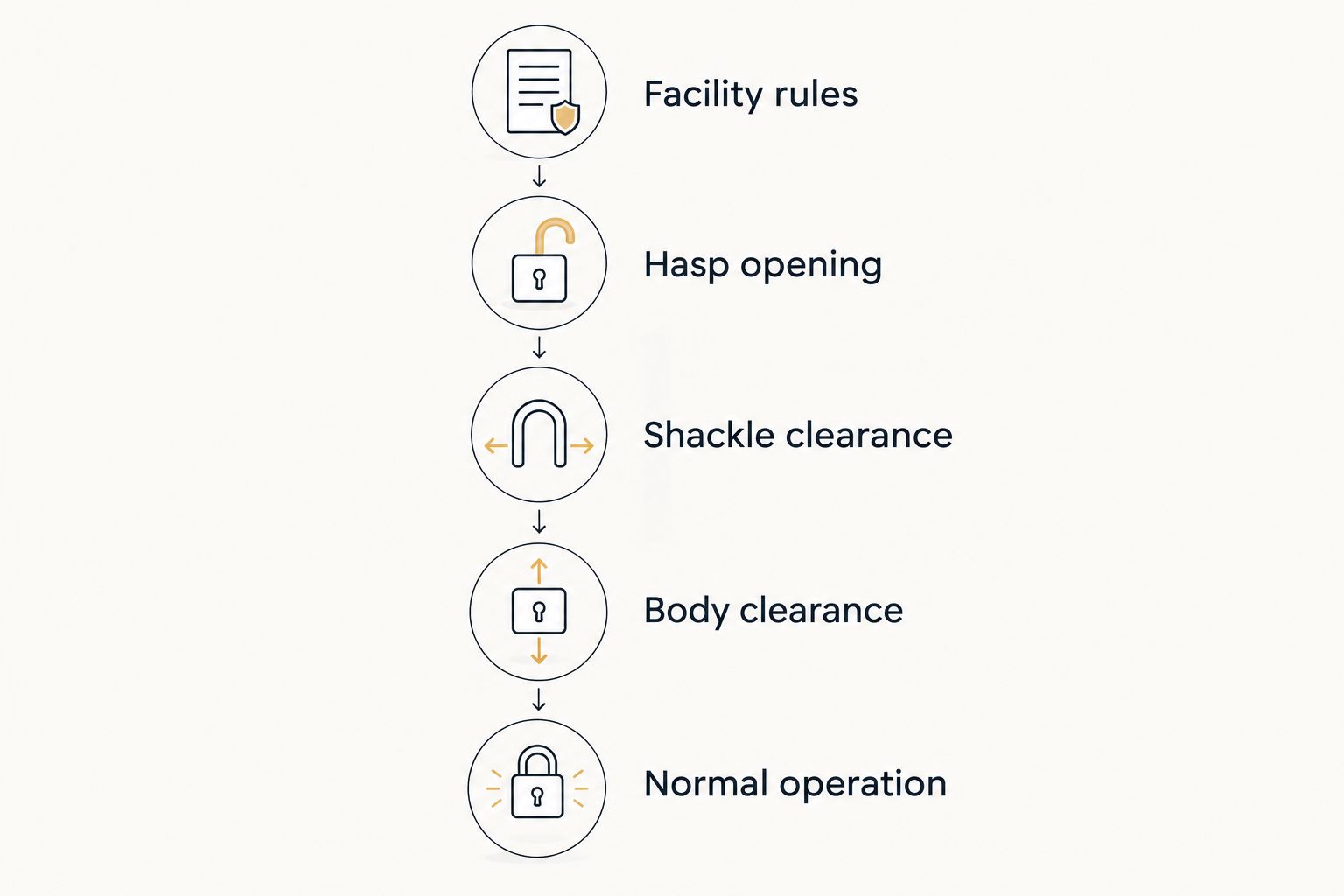
Check the facility’s requirements before comparing the lock’s dimensions.
Do the initial operation check while the unit is open and you retain access. Follow the lock manufacturer’s instructions, and do not force a key or shackle that binds.
If the latch is bent, loose, or difficult to align, report it to the facility. A different padlock does not correct damaged door hardware.
Outdoor storage needs an exposure check
For an outdoor unit in Southwest Florida, evaluate the lock’s exposure to rain, humidity, and any nearby salt environment. Choose according to the manufacturer’s stated application and maintenance guidance rather than assuming that a shiny finish means weather resistance.
Weather protection and security are separate questions. A protective cover does not establish attack resistance, and a security classification does not automatically establish suitability for sustained outdoor exposure.
Keep the keyway accessible and follow the manufacturer’s cleaning and lubrication instructions. Avoid improvising with household oils or other products unless the lock manufacturer recommends them.
Indoor storage does not remove the need for inspection. Check that the lock operates normally during visits, particularly if the unit stays unused for extended periods.
Keys, shared access, and lost-key planning
Choose the lock with your access arrangements in mind. If another person needs entry, decide how that person will receive and return a key rather than leaving a spare near the unit.
A keyed-alike arrangement lets several compatible locks use the same key. That simplifies access, but losing that key affects every lock it operates; separate keys limit that particular consequence.
Keep a spare somewhere secure outside the storage unit. Record the manufacturer and model in your own records, and keep key-identification information private.
If the key disappears, contact the facility before arranging work on the lock. Ask what authorization and proof of tenancy it requires, and do not assume that staff possess a spare key for your personally supplied padlock.
GO Locksmith is a mobile locksmith service, not a storage facility. For a service inquiry, describe the exact lock and location so the requested work can be confirmed rather than assumed.
How these recommendations are ranked
The order prioritizes facility acceptance, close fit, and limited exposed shackle, followed by documented construction, environmental suitability, and manageable access. It is a design-based buying guide, not a hands-on product test or an attack-resistance ranking.
Disc locks come first as the starting option for compatible storage-unit hasps. Closed-shackle locks provide an alternative geometry, while long-shackle locks address clearance at the expense of additional exposure.
Which storage-unit padlock should you choose?
Start with a disc padlock that the facility accepts and that fits the latch closely. Choose a closed-shackle alternative if its geometry works better with the actual hardware.
Use a long-shackle lock only to meet a confirmed clearance requirement. If none of these formats fits, ask whether the unit requires a cylinder lock or another facility-specified design instead of forcing a padlock into the decision.
FAQ
What’s the best type of padlock for a storage unit?
A close-fitting disc padlock is the default starting point when the facility accepts it and the latch accommodates it. Check the exact dimensions and construction before choosing a model.
Is a disc lock better than a regular padlock for storage?
A disc lock exposes less shackle than a conventional open-shackle design, which makes it a useful storage-unit option. Overall suitability still depends on the specific lock’s construction, the hasp, and the facility’s rules.
What size padlock do I need for my storage unit?
You need a padlock whose shackle diameter, inside width, usable height, and body dimensions match the unit’s latch. Ask the facility for its requirements and compare the actual hardware with the manufacturer’s dimension drawing.
Can I use a long-shackle padlock on a storage unit?
Use a long-shackle padlock only if the facility permits it and the latch needs the additional reach. Unnecessary length leaves more shackle exposed than a close-fitting alternative.
Can I put a padlock on a unit that uses a cylinder lock?
A padlock does not substitute for the cylinder required by an integrated cylinder-lock door. Ask the facility which lock format its hardware requires before purchasing anything.
What should I do if I lose my storage-unit padlock key?
Contact the storage facility first and ask about its authorization requirements for lock work or removal. Keep proof of tenancy available, and do not assume the facility has a spare for your personal lock.
Will a weather-resistant padlock protect everything inside my unit?
No. Weather resistance concerns the lock’s suitability for its environment; it does not establish the unit’s security, condition, or protection against water entering the space.
One last thing: inspect what holds the lock
The padlock is only one part of the closure. Before locking up, look for a loose hasp, distorted latch, or door that does not close correctly, and report concerns to the facility rather than modifying its hardware.
For a locksmith service inquiry, call GO Locksmith at (239) 412-1101 and describe the lock and requested work. Hours are Sunday–Thursday, 7:00 AM–11:00 PM; Friday, 7:00 AM–5:00 PM; Saturday closed.