
Blog ·
Can a locksmith open a padlock without the key?
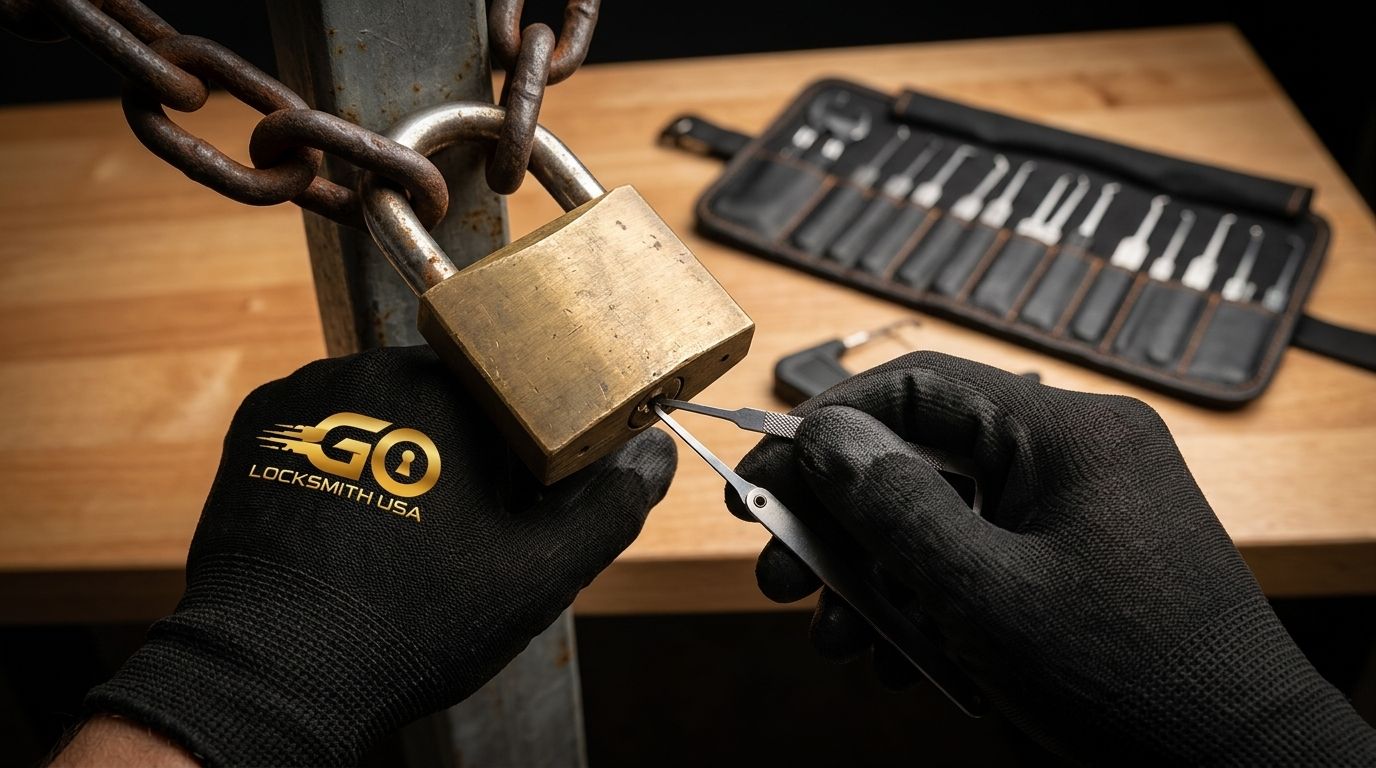
Yes, a locksmith can open many padlocks without the key, either by opening the locking mechanism or removing the lock. Opening without a key does not guarantee the padlock will remain usable. The right approach depends on the lock’s construction, its condition, how it is attached, and your authorization to access the property.
TL;DR
- Can a locksmith open a padlock without the key? Yes, but preserving the lock depends on its design and condition.
- Ask whether the proposed work preserves the padlock or requires replacement before authorizing it.
- GO Locksmith provides mobile locksmith services; call to confirm whether your particular padlock job is within scope.
Can a locksmith open a padlock without the key?
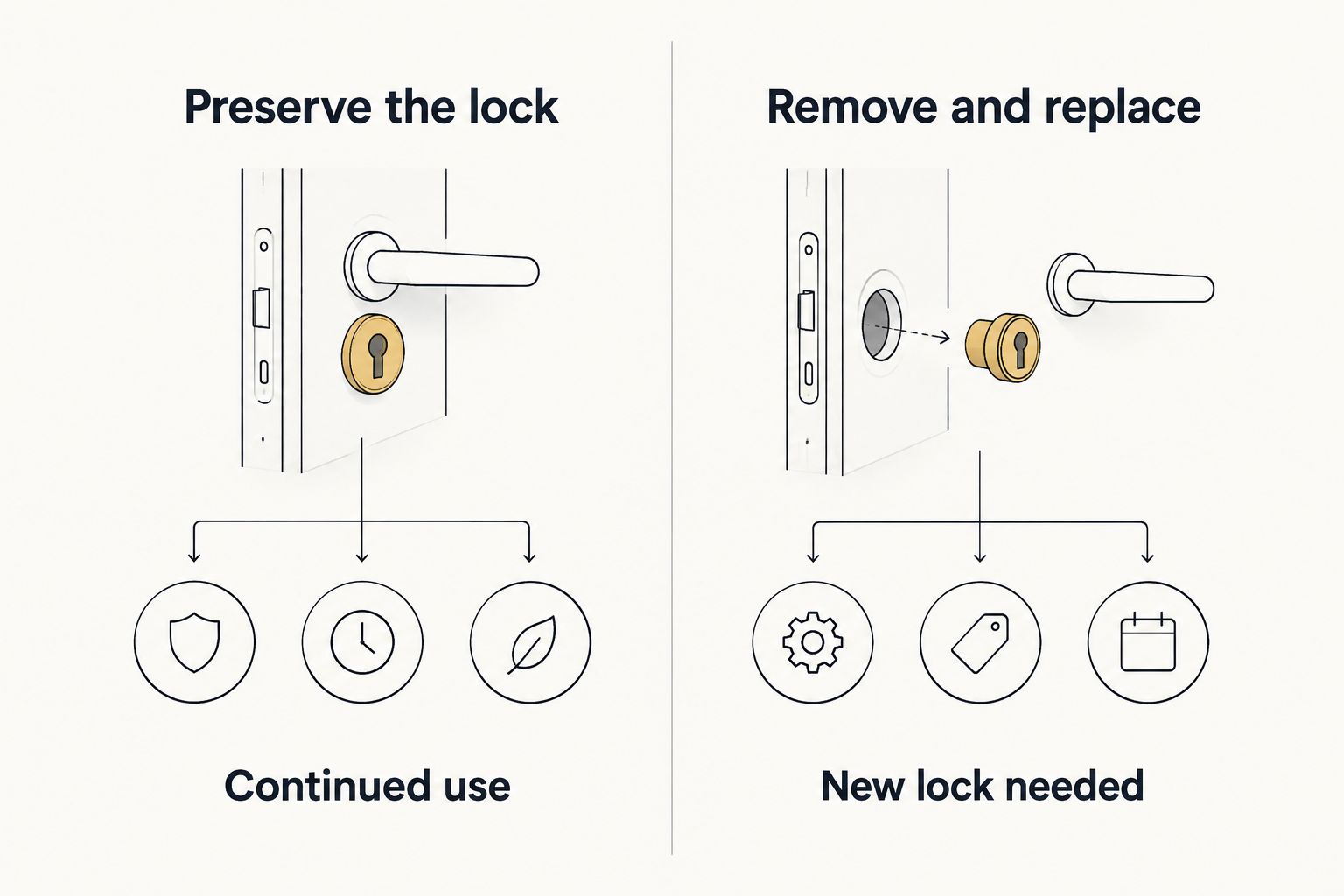
A locksmith can assess a padlock for an opening method that preserves it or, where appropriate and authorized, removal that sacrifices the lock. Those are different outcomes. If you need to keep using the same padlock, say so before work begins.
GO Locksmith’s confirmed locksmith services include residential and commercial lockouts, lock repair, replacement, and rekeying. For a padlock request, describe the lock and what it secures when you call to confirm the specific job.
| Approach | Best for | Main advantage | Main limitation |
|---|---|---|---|
| Opening without destroying the padlock | Owners who want to preserve a serviceable lock | Keeps replacement from becoming an automatic requirement | Not possible for every lock or condition; a missing key still needs a solution |
| Authorized destructive removal | Situations where preserving the padlock is not the priority | Releases the secured item when preserving the lock is not practical | Leaves the padlock unusable and requires another way to secure the property |
Neither approach should be promised solely from the fact that you have lost a key. A readable model marking or photograph helps identify the lock, but an on-site assessment can reveal damage, restricted access, or mounting problems that are not apparent in a picture.
Why preserving the lock is not the only concern
A padlock is part of a larger arrangement: the lock, the hasp or chain, and the gate, door, cabinet, or container it secures. Protecting that surrounding hardware matters just as much as opening the padlock.
For example, forcing a gate against a locked hasp puts stress on more than the lock. If the attachment is already loose or bent, tell the locksmith before anyone starts work. Ask what will remain usable afterward—not simply whether the padlock can be opened.
Also consider what happens once you regain access. An opened padlock without a working key is not necessarily ready for continued use, and a removed padlock no longer secures anything. Decide how you will secure the property before authorizing a method that destroys the lock.
When keeping the padlock makes sense
Preserving the padlock is a reasonable goal when the hardware is sound and you have a practical way to keep using it afterward. That might mean locating a spare key or checking whether the manufacturer offers an authorized replacement-key process for that particular model.
Do not assume that every padlock supports replacement keys or rekeying. Some designs have serviceable cylinders; others do not. The lock’s identity matters more than its appearance.
Tell the locksmith if the padlock belongs to a shared locking arrangement, such as several locks operated by the same authorized key. Losing that relationship can create an access-management problem even if a replacement padlock physically fits.
Best for preserving the lock: a serviceable padlock whose continued use matters to you. The limitation is that opening it and restoring dependable keyed operation are separate tasks.
When removal and replacement make sense
Removal is a reasonable option when the padlock does not need to survive or when its condition makes continued use unsuitable. The decision should follow an assessment, not an automatic assumption that every lost-key situation requires destruction.
Ask which components the proposed work affects. Replacing a padlock is different from repairing a damaged hasp, chain, gate, or door, and permission to remove one item does not automatically authorize changes to another.
For rented storage or shared property, contact the responsible manager before arranging removal. A padlock you purchased can still be attached to property governed by someone else’s access rules.
Best for removal: an authorized owner who accepts losing the padlock and has a plan to secure the opening afterward. The drawback is permanent loss of the lock, even if the surrounding hardware remains intact.
Why opening a padlock varies from job to job
The missing key explains why you need help, but it does not establish which opening method will work. These factors shape the assessment:
- Lock construction. The cylinder, body, and shackle design affect the available options. A covered shackle also changes access to the lock.
- Mechanical condition. Corrosion, a bent shackle, a damaged keyway, or a broken key can complicate the work. Describe visible damage rather than assuming the problem is only a lost key.
- Mounting position. A recessed lock or cramped attachment leaves different working space than an exposed padlock on an open gate.
- Surrounding hardware. A strained chain, misaligned hasp, or damaged door affects what needs protection during the job.
- Your required outcome. Preserving the lock, preserving a shared-key arrangement, and simply regaining authorized access are different goals.
A combination padlock also presents a different problem from a keyed padlock. Tell the locksmith which type you have; do not describe a forgotten combination as a lost key if the lock has no key cylinder.
What should you prepare before calling?
You do not need to diagnose the lock yourself. Gather enough information to explain the situation clearly and establish who can authorize the work.
- Identify the property. Explain whether the padlock secures your gate, shed, cabinet, storage unit, or business property. State whether another owner or manager controls access.
- Describe the lock. Read any visible manufacturer or model markings without disturbing it. Mention whether it uses a key, a combination, or both.
- Explain the problem. Say whether the key is missing, broken, or present but unable to operate the lock. Include any visible corrosion or damage.
- State your priority. Say whether you want to preserve the padlock and whether you have a spare key elsewhere.
- Ask about authorization. Find out what evidence of ownership or permission the provider needs before work can begin.
If photographs are requested, include the whole attachment as well as the lock. A close-up alone can hide a recessed mounting position or damage to the hasp. Avoid including access codes, documents, or unrelated personal information in the image.
What proof do you need to have a padlock opened?
Expect to establish that you own the secured property or have permission to access it. Ask the provider what documentation is appropriate for your situation rather than assuming identification alone will settle every case.
For a rental storage unit, that can involve the facility manager and rental records. For business property, the person requesting entry should be able to show authority from the business or property owner. Requirements depend on the circumstances and the provider’s verification process.
Do not arrange work on a disputed lock without resolving who can authorize access. A property dispute is not something opening the padlock can resolve.
How should you discuss the estimate?
Request an estimate for the specific lock and access problem. Ask what the proposed work covers, whether preserving the lock is the intended outcome, and what happens if assessment shows a different approach is needed.
Separate these questions before agreeing:
- Does the estimate cover opening only, removal only, or another agreed scope?
- Will the padlock remain usable after the proposed work?
- If removal is necessary, who will provide and fit the replacement?
- Does any damaged surrounding hardware need separate attention?
- Will you be asked to approve a change before additional work begins?
You can also read how to assess a locksmith quote. A useful estimate identifies the work you are authorizing; it does not turn an unexamined lock into a guaranteed outcome.
Avoid treating an arrival estimate as an opening-time promise. Travel, assessment, authorization, and the actual lock work are separate parts of a visit.
Should you try to force the padlock yourself?
Do not pull, strike, or pry at the locked assembly to test its strength. That can damage the surrounding attachment and introduce injury risks without resolving the access problem.
Avoid putting improvised objects into the keyway. If a key fragment is already lodged inside, leave it undisturbed and describe it when you call. Further damage can change an otherwise straightforward assessment.
If the lock belongs to a storage facility or shared property, ask management about its authorized access process first. That is more useful than attempting a method that violates the property’s rules or damages equipment you do not own.
Who should you call in Southwest Florida?
GO Locksmith is a mobile locksmith service for homeowners and businesses seeking help with confirmed lockout, repair, replacement, and rekey work. Its Southwest Florida service areas include Fort Myers, Cape Coral, Lehigh Acres, Estero, Bonita Springs, and Naples.
For a padlock, call GO Locksmith at (239) 412-1101 and describe the exact request before arranging service. Confirm whether the job is within scope, what authorization is needed, and current availability; do not assume every padlock type is covered.
Hours are Sunday–Thursday, 7:00 AM–11:00 PM, and Friday, 7:00 AM–5:00 PM. Saturday is closed. The business is mobile, so arrange service rather than planning a storefront visit.
FAQ
Can a locksmith open a padlock without breaking it?
A locksmith can open some padlocks without breaking them, but that outcome depends on the lock’s design and condition. Explain that preserving the lock matters before authorizing work.
Will I need a new padlock after a locksmith opens it?
You need a replacement if the padlock is destroyed during removal. If it is opened without damage, you still need a dependable way to operate and secure it afterward.
Can a locksmith make a new key for any padlock?
No, replacement-key options are not universal across padlocks. Identify the manufacturer and model, then ask whether that specific lock supports a replacement key or another serviceable option.
Can I get a padlock removed from my rented storage unit?
Contact the storage facility before arranging padlock removal. Confirm its access rules, authorization requirements, and who is permitted to carry out the work.
How much does it cost to have a padlock opened?
The estimate depends on the particular padlock, its condition, its mounting position, and the agreed work. Ask whether the estimate covers opening, removal, and any replacement separately.
Does GO Locksmith handle every kind of padlock?
Do not assume every padlock job is covered. Call (239) 412-1101 with the lock details and location to confirm whether the specific request is within GO Locksmith’s service scope.
One last thing: solve the missing-key problem too
Opening the padlock restores access; it does not account for the missing key. If someone else might have that key, preserving the original lock unchanged does not remove their ability to use it.
Before you finish the job, decide whether the goal is simply access or a change in who can gain access. For help assessing the request, call GO Locksmith at (239) 412-1101 during its listed hours and explain both concerns.