
Blog ·
Best padlocks for gates and fences 2026
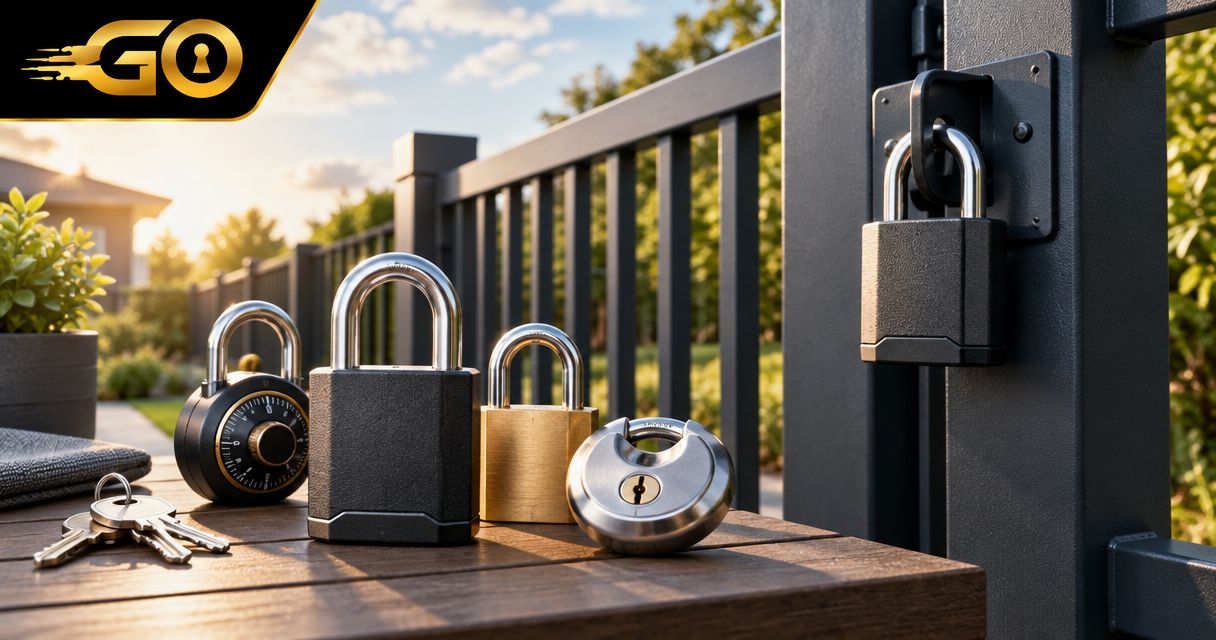
Best overall configuration: an outdoor-rated, closed-shackle padlock with a hardened-steel shackle. Best for salt exposure: a corrosion-focused marine padlock. Best for shared, lower-risk access: an outdoor mechanical combination padlock. The best padlocks for gates and fences match the latch, exposure, and access needs—not just the size of the lock body.
TL;DR
- The best padlocks for gates and fences combine outdoor suitability, correct fit, and limited exposed shackle.
- Choose closed-shackle designs for protection, marine designs for salt exposure, and combination locks for shared access.
- Discus padlocks suit compatible storage-gate hasps; long-shackle padlocks solve clearance problems but leave more shackle exposed.
- GO Locksmith provides mobile residential and commercial lock services; call to confirm whether your specific gate-lock job is covered.
Why the gate matters as much as the padlock
A strong padlock cannot compensate for a loose hasp, deteriorated gatepost, or weak fence attachment. Inspect the complete connection before replacing only the lock. If the problem involves an exterior door rather than a fence gate, this guide to repairing or replacing an exterior door lock addresses a different hardware decision.
For a Southwest Florida gate, consider rain, humidity, and any direct salt exposure alongside security. A covered garden gate and an exposed coastal storage enclosure do not need the same compromise between corrosion resistance, access convenience, and physical protection.
This guide ranks padlock configurations rather than declaring an unverified model winner. Use the configuration to narrow your search, then check the exact manufacturer's specifications before choosing a particular lock.
What makes the best padlocks for gates and fences?
Evaluate these criteria before comparing appearances or brand names:
- Weather suitability: Look for an explicit outdoor-use statement covering the intended exposure. A protective cover alone does not establish corrosion resistance.
- Shackle protection: Choose the least exposed shackle that still passes through your hardware and operates freely.
- Clearance: Check shackle diameter, inside width, and usable height against the actual latch or chain.
- Hasp strength: Inspect the latch, fasteners, hinges, and attachment points. The padlock is only part of the barrier.
- Access method: Decide whether you need individual keys, a shared combination, or compatibility with an existing key arrangement.
- Maintenance: Read the manufacturer's cleaning and lubrication instructions. Different lock designs and materials need different care.
Do not choose a larger padlock simply because it looks stronger. A bulky body that presses against the gate can make everyday operation awkward, while an oversized shackle might not fit at all.
Gate and fence padlocks at a glance
| Rank and configuration | Best for | Standout feature | Key limitation |
|---|---|---|---|
| Closed-shackle, hardened-steel padlock | General-purpose perimeter gates | Body shoulders shield part of the shackle | Restricted opening limits fit |
| Corrosion-focused marine padlock | Direct salt and weather exposure | Materials and construction selected for corrosion resistance | Marine labeling alone does not establish attack resistance |
| Outdoor-rated discus padlock | Storage gates with compatible hasps | Circular body leaves little shackle exposed | Narrow opening requires a close fit |
| Outdoor mechanical combination padlock | Shared, lower-risk garden access | Access without distributing physical keys | A shared code does not identify individual users |
| Outdoor long-shackle padlock | Deep or offset gate hardware | Extra reach through awkward fittings | More exposed shackle and room around the connection |
These categories overlap. A padlock can have both a protected shackle and corrosion-focused construction; prioritize the combination that fits your gate rather than treating the labels as mutually exclusive.
1. Closed-shackle padlock: best for general perimeter gates
A closed-shackle padlock uses raised body shoulders to shield part of the curved shackle. Choose an outdoor-rated version with a hardened-steel shackle when your gate hardware accepts its restricted opening.
Best for: A side gate or perimeter gate where physical protection matters and the latch fits a compact shackle opening.
Closed-shackle padlock pros:
- Shields more of the shackle than a comparable open-shackle design.
- Limits exposed space when closely fitted to a suitable hasp.
- Offers a useful default configuration for keyed gate access.
Closed-shackle padlock cons:
- Raised shoulders interfere with some chains and bulky latches.
- Hardened steel still needs suitable protection against outdoor exposure.
- Body size alone does not establish resistance to forced entry.
Check the space around the latch as well as the hole through it. You need room to insert the key, turn it, and remove the unlocked padlock without forcing the gate into position.
Verdict: Buy an outdoor-rated closed-shackle design when it fits without strain; skip it when the shoulders obstruct the latch.
2. Marine padlock: best for direct salt exposure
A marine padlock prioritizes corrosion resistance through its materials and construction. Depending on the exact model, that can involve stainless steel, brass, protective finishes, or protection for vulnerable internal components.
Best for: An exposed gate where salt spray or salty moisture is a regular maintenance concern.
Marine padlock pros:
- Addresses corrosion as a central selection requirement.
- Offers an alternative to locks intended only for sheltered use.
- Lets you compare outdoor durability separately from physical security.
Marine padlock cons:
- The word marine does not establish a particular security rating.
- Corrosion-resistant construction does not eliminate maintenance.
- Shackle material and strength vary between models.
Do not assume every stainless-steel shackle offers the same cutting resistance as every hardened-steel shackle. Compare the actual specifications and any independently documented rating for the complete lock, rather than judging one material in isolation.
For a gate near the coast in Cape Coral, Bonita Springs, or Naples, describe the actual exposure when requesting product advice. Distance from the water alone does not describe whether the lock receives direct spray or sits under cover.
Verdict: Buy a corrosion-focused marine padlock for salt exposure, but check its physical-security specifications separately.
3. Discus padlock: best for compatible storage-gate hasps
A discus padlock has a circular body surrounding much of its curved shackle. The design leaves a relatively small opening, making fit especially important.
Best for: A storage enclosure or gate with a hasp specifically compatible with a discus-style body and opening.
Discus padlock pros:
- Exposes a limited portion of the shackle.
- Forms a compact connection with compatible hardware.
- Avoids the unnecessary reach of a long-shackle design.
Discus padlock cons:
- Does not fit every chain, gate latch, or recessed fitting.
- A broad circular body can contact nearby hardware.
- The shape does not establish weather resistance or security performance.
Measure the usable opening rather than the outside diameter of the lock. Also check whether the body can rotate enough for normal locking and removal; a padlock that technically passes through the hole can still be awkward to use.
Verdict: Buy an outdoor-rated discus padlock for a compatible hasp; skip it when the gate needs extra reach.
4. Mechanical combination padlock: best for shared garden access
A mechanical combination padlock opens with a code rather than a physical key. An outdoor-rated model suits situations where several authorized people need straightforward access to a lower-risk enclosure.
Best for: Shared garden or utility access where distributing and retrieving keys would be inconvenient.
Mechanical combination padlock pros:
- Avoids handing out physical keys.
- Requires no battery for its mechanical code mechanism.
- Resettable models allow code changes according to their instructions.
Mechanical combination padlock cons:
- Anyone who knows the shared code can pass it on.
- A shared code does not provide an individual access record.
- Small dials can be inconvenient in poor light or with gloves.
Choose the access method based on what is behind the gate, not convenience alone. For valuable equipment or a sensitive commercial area, assess the complete lock's documented security performance rather than assuming a combination mechanism is sufficient.
For resettable models, retain the instructions somewhere accessible without opening the gate. Change the code when someone no longer needs access, following the manufacturer's procedure.
Verdict: Buy an outdoor mechanical combination padlock for shared, lower-risk access; skip it when individual access control is necessary.
5. Long-shackle padlock: best for deep or offset hardware
A long-shackle padlock provides additional reach between the body and the top of the shackle. That extra space accommodates fittings that a compact padlock cannot span.
Best for: Deep, offset, or unusually shaped hardware that genuinely requires additional clearance.
Long-shackle padlock pros:
- Reaches through deeper latches and awkward fittings.
- Provides clearance where a short shackle cannot close.
- Accommodates some connections without changing their layout.
Long-shackle padlock cons:
- Leaves more shackle exposed.
- Creates additional space around the locked connection.
- Does not correct a weak or badly aligned latch.
Choose the shortest shackle that works freely. If a long shackle is necessary only because the gate sags or the latch no longer lines up, address that hardware problem before treating extra reach as the permanent solution.
Verdict: Buy a long-shackle padlock only when the measured clearance requires it; otherwise choose a closer-fitting configuration.
Check the fit before you choose
Use this sequence with the gate closed in its normal resting position. Measuring an open or manually lifted gate can hide an alignment problem.
- Inspect hardware: Check the hasp, latch, hinges, chain, and attachment points for looseness, damage, and deterioration.
- Measure clearance: Record the smallest opening, the span the shackle must bridge, and the space around the lock body.
- Check exposure: Identify direct rain, trapped moisture, and salt exposure before selecting materials or weather protection.
- Confirm access: Make sure authorized users can operate the lock normally and that the locking arrangement does not obstruct required escape.
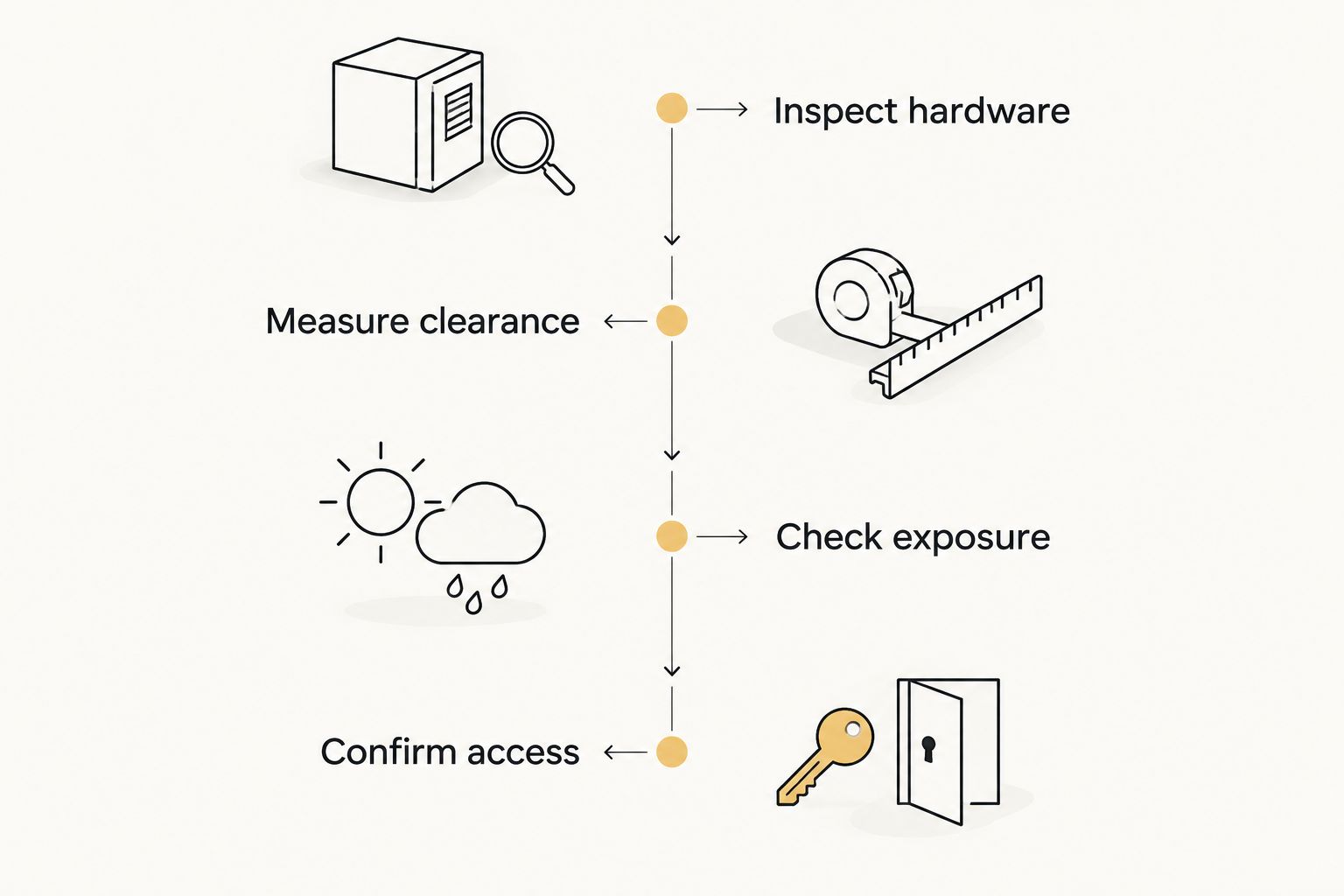
Check the gate and latch before selecting the padlock.
Measure shackle diameter and internal clearance separately. If you record dimensions in millimeters, keep every measurement in millimeters when comparing specifications; outside body dimensions do not tell you what fits inside the shackle.
For a pool barrier, business exit, or shared escape route, verify the applicable requirements before adding a padlock. Security hardware must not prevent required emergency escape or defeat required gate operation.
How the configurations are ranked
The order prioritizes protected shackle geometry and practical gate fit, then addresses corrosion, specialized hasps, shared access, and extra reach. It is not a claim that every closed-shackle model outperforms every marine or discus model.
For any shortlisted product, check its manufacturer documentation for materials, outdoor suitability, dimensions, maintenance, and any stated test rating. Do not compare unexplained security scores from different manufacturers as though they use the same scale.
If your problem involves an existing residential or commercial lock, review GO Locksmith's services and confirm that the specific job falls within the offered work. Padlock sales, gate repair, and a particular padlock-opening capability are not established by a general locksmith service listing.
Which gate padlock should you choose?
Start with an outdoor-rated, closed-shackle padlock that fits closely without binding. Choose a corrosion-focused version for salt exposure, a discus body for a matching storage hasp, or a combination mechanism when shared convenience is the priority.
Reserve long shackles for genuine clearance needs. If none of the configurations fits properly, reassess the latch rather than forcing an unsuitable lock into place.
FAQ
What's the best padlock for an outdoor fence gate?
An outdoor-rated, closed-shackle padlock is a useful default when it fits the gate hardware. Check corrosion resistance, shackle material, usable clearance, and the strength of the latch before choosing a model.
Is a discus padlock better than a regular padlock for a gate?
A discus padlock is a better fit when the hasp accepts its circular body and restricted opening. It exposes little shackle, but its shape alone does not establish security performance or weather resistance.
What type of padlock should I use near saltwater?
Choose a padlock explicitly intended for the expected salt exposure, then check its security specifications separately. Marine labeling does not replace checking materials, construction, maintenance instructions, and fit.
Should I choose a keyed or combination padlock for a shared gate?
Choose a combination padlock for convenient shared access where a shared code is acceptable. Choose keyed access when managing physical keys better suits the property; neither mechanism alone establishes the lock's security level.
How do I measure a gate for a padlock?
Measure the latch opening, required internal shackle width and height, and available space around the lock body. Take those measurements with the gate resting closed rather than lifting it into alignment.
Can I put a padlock on any fence gate?
No—fit, intended use, and applicable safety requirements determine whether a padlock is appropriate. Pool barriers and gates on required escape routes need particular attention before changing their locking arrangements.
Does GO Locksmith sell or service gate padlocks?
Call GO Locksmith at (239) 412-1101 to confirm whether your specific padlock job is covered. The business provides mobile locksmith services, but padlock sales and particular gate-lock capabilities are not confirmed here.
One last thing
Test the latch with the gate resting naturally, not while holding it up. A lock that works only when you lift or pull the gate is showing you an alignment problem, not a reason to buy a larger padlock.
Need help identifying the right next step for an existing lock problem? Call GO Locksmith at (239) 412-1101, describe the hardware and your location, and ask whether the job is covered. Hours are Sunday–Thursday, 7:00 AM–11:00 PM; Friday, 7:00 AM–5:00 PM; Saturday closed.