
Blog ·
How long does it take to fix a car ignition that won't turn?
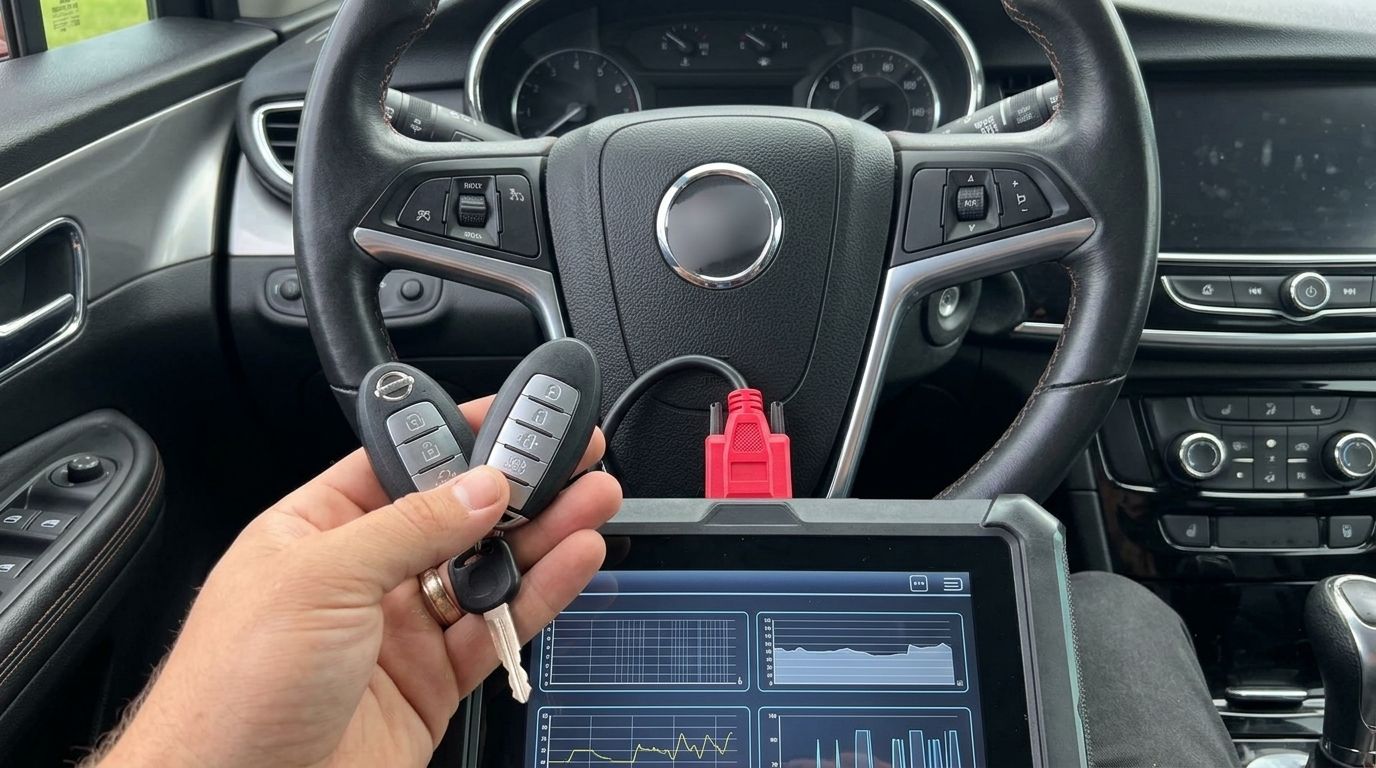
Fixing a car ignition that won't turn takes as long as the underlying fault requires: a key or steering-lock issue needs a different response from a damaged ignition cylinder. Ask for a vehicle-specific repair estimate after assessment, and keep technician arrival time separate from diagnosis and repair time.
TL;DR
- How long to fix a car ignition that won't turn depends on the cause, vehicle, and required work.
- A key that will not rotate is different from an engine that will not start.
- GO Locksmith offers mobile ignition repair and replacement; confirm service for your specific vehicle before booking.
- Do not force the key or assume the ignition needs replacement before assessment.
How long does it take to fix a car ignition that won't turn?
There is no single repair duration that applies to every ignition that will not turn. The useful estimate is for your vehicle and the fault found—not simply for “ignition repair.” A problem with the key, a steering-lock bind, and internal cylinder damage do not involve the same work.
Separate the service visit into these stages when asking about timing:
- Arrival: When someone can reach your vehicle. This is not repair time.
- Assessment: Determining whether the problem involves the key, mechanical ignition lock, steering lock, or another vehicle system.
- Repair or replacement: Completing the work supported by the diagnosis and your vehicle's requirements.
- Verification: Checking that the agreed work resolves the original complaint.
For mobile service, GO Locksmith offers ignition repair and replacement, car key cutting, car key programming, and broken key extraction. Describe the exact symptom before requesting a time estimate; those services are not interchangeable, and vehicle compatibility needs confirmation.
An initial phone discussion helps identify the service you need. It does not replace examining an ignition that is physically sticking or damaged.
Why the symptom matters more than a general time estimate
“Won't turn” can describe several different problems. Before you call, distinguish between a key that cannot rotate in the ignition and a key that rotates normally but does not start the engine.
A mechanical ignition lock accepts the key and permits rotation. The electrical and starting systems perform different jobs. Calling every starting problem a bad ignition cylinder risks arranging the wrong service.
Use plain descriptions rather than trying to diagnose the part yourself:
- The key will not enter fully: Say whether it stops partway or whether you can see damage on the key.
- The key enters but will not rotate: Mention whether the steering wheel also feels locked.
- The key turns but the engine does not start: Explain whether the engine cranks, clicks, or remains silent.
- The key is stuck after use: Say which position it is in and whether the vehicle is safely parked.
- Part of the key broke inside: Tell the service provider before attempting anything else.
These observations help define the problem without committing you to an unnecessary replacement. Report what the vehicle does, not just which part you think has failed.
What can you safely check before requesting service?
Start with your surroundings. If the vehicle is in traffic or another unsafe position, prioritize your safety and appropriate roadside assistance rather than inspecting the ignition.
If you are safely parked, keep checks limited to normal vehicle operation and the owner's manual. Do not dismantle the steering column, bypass security components, or use tools to force the key.
Check safety
Set the parking brake and keep the vehicle stationary. Do not attempt ignition troubleshooting while the vehicle is moving or when doing so puts you near passing traffic.
If there is smoke, a burning smell, or an immediate hazard, stop troubleshooting and seek appropriate emergency assistance. A stuck key is not a reason to continue operating a vehicle with signs of an electrical problem.
Describe the symptom
Note whether the key inserts fully, rotates at all, or comes back out normally. Look at the key for an obvious bend, crack, or damaged blade without trying to straighten it.
If you already have a spare key, mention that when you call. A difference between keys is useful information, but it does not prove the ignition cylinder is undamaged.
Check the manual
For a vehicle with an automatic transmission, confirm that the selector is fully in Park, following the owner's manual. Also check the manual's instructions for releasing the steering lock; steering pressure can bind some keyed ignition systems.
Use only the gentle movement the manufacturer describes. If the key still resists, stop rather than applying more force.
Request an assessment
Stop if the key bends, feels close to breaking, or continues to bind. Do not strike the key, grip it with pliers, insert improvised objects, or spray an unspecified product into the ignition.
The right treatment depends on the lock and the fault. Repeated force can turn a sticking-key complaint into a broken-key problem.
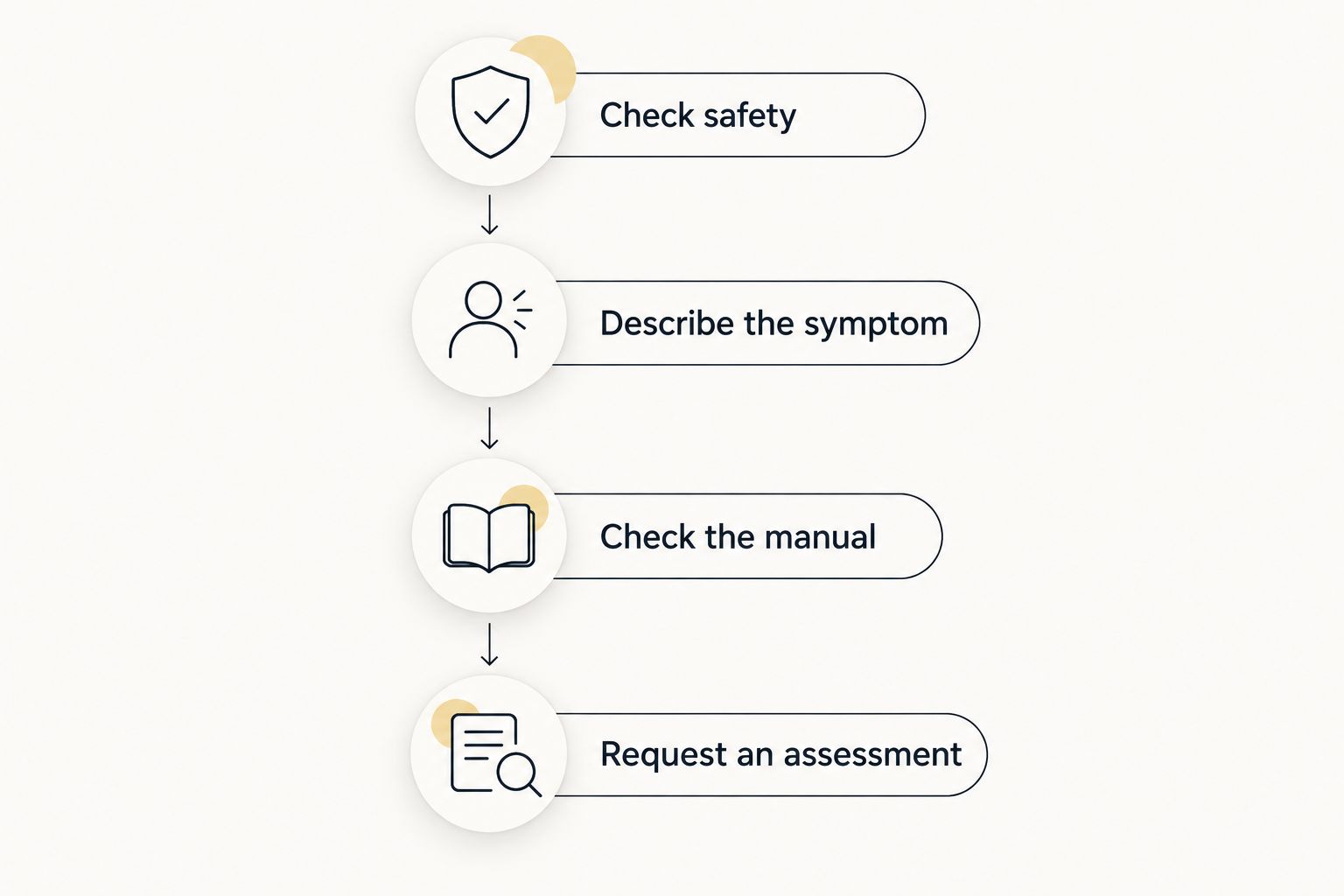
Limit checks to normal operation and the owner's manual; stop if the key continues to resist.
Key work, ignition repair, or ignition replacement?
Choose the work after identifying the fault, not by assuming replacement will be quicker. A replacement cylinder does not address every starting problem, and a replacement key does not correct every damaged lock.
The following options describe different repair paths, not guaranteed outcomes for your vehicle:
| Option | Best for | Main benefit | Limitation |
|---|---|---|---|
| Key assessment and appropriate key work | A suspected worn, bent, or damaged key | Addresses a key-related fault when confirmed | Does not repair internal ignition damage |
| Broken key extraction | A key fragment lodged in the ignition | Removes the obstruction for further assessment | Extraction alone does not establish why the key broke |
| Ignition repair | A diagnosed fault that is repairable | Addresses the identified ignition problem | Suitability depends on the component and its condition |
| Ignition replacement | A diagnosed component that requires replacement | Replaces the failed component | Correct parts and any vehicle-specific key requirements must be addressed |
When key work is relevant
Tell the service provider whether the key was difficult to use before it stopped turning. Also mention whether another key behaves differently.
A worn or damaged key is a reason to assess the key and ignition together. Do not assume that copying the existing blade or programming a key will resolve a mechanical bind.
When ignition repair is relevant
Ignition repair is an option when the diagnosed fault and component condition support it. Ask what needs repair and whether the proposed work addresses the sticking or non-turning symptom you reported.
The advantage is a repair directed at the actual fault. The limitation is that not every damaged assembly is suitable for repair.
When ignition replacement is relevant
Replacement is appropriate when assessment identifies a component that needs replacing. Ask which component is involved: an ignition lock cylinder and an electrical ignition switch are different parts.
Also ask whether the work affects your existing key and whether any cutting or programming is required for your vehicle. Do not assume either requirement applies universally.
Why ignition repair time varies
The most useful timing factors describe the job itself. Ask the service provider to explain which of these applies to your vehicle:
- The diagnosed fault: Key damage, a lodged fragment, and ignition-component damage call for different work.
- Vehicle year, make, and model: Ignition design, component access, and key-system requirements differ between vehicles.
- Key condition: A complete key and a broken key inside the cylinder present different starting points.
- The repair scope: Assessment, extraction, key work, repair, and replacement are separate tasks, even when one visit involves several.
- Component requirements: Confirming the correct replacement component is part of planning a replacement job.
- Additional key-system work: Any required cutting or programming depends on the vehicle and the proposed repair.
These factors explain why a time estimate should identify its scope. Ask whether the estimate covers diagnosis and final checks, and what would require a revised estimate.
You do not need technical vocabulary to ask this clearly: “What work does that time estimate include, and what still needs to be checked?”
Does a key that won't turn mean the ignition needs replacing?
A key that will not turn does not, by itself, establish that ignition replacement is necessary. Key condition, steering-lock pressure, and the ignition assembly all need consideration.
Describe any earlier sticking and whether the problem began suddenly. That history helps the person assessing the vehicle understand the complaint without treating a suspected cause as a confirmed diagnosis.
Will programming a car key fix an ignition that won't turn?
Key programming is not a general fix for a mechanically stuck ignition. Programming concerns the vehicle's electronic key recognition; a key blade that will not rotate presents a separate symptom.
Some jobs involve both mechanical key work and electronic requirements. Confirm what your vehicle needs rather than booking programming solely because the engine will not start.
Can a mobile locksmith handle the problem where the car is parked?
GO Locksmith is a mobile locksmith service for drivers seeking ignition repair or replacement assessment in its confirmed service areas. Whether a particular job can be completed depends on the vehicle and the fault; confirm those details before arranging service.
The primary market is Fort Myers, with Southwest Florida service areas including Cape Coral, Lehigh Acres, Estero, Bonita Springs, and Naples. The company also operates in Jacksonville, Florida. Give the vehicle's actual location when you call, rather than assuming a general service-area listing establishes a visit time.
Mobile service does not mean every starting-system problem is locksmith work. If assessment points beyond the key or ignition-lock service needed, ask which type of automotive service is appropriate next.
What should you have ready when you call?
Prepare the vehicle year, make, model, location, and your description of the symptom. Say whether you have the key, whether a fragment is inside the ignition, and whether you have a spare.
Then ask:
- Can you assess this ignition complaint on my specific vehicle?
- What information do you need before arranging the visit?
- When can you confirm current service availability?
- When can you give a repair-time estimate?
- What would require additional work or a revised estimate?
GO Locksmith's hours are Sunday–Thursday, 7:00 AM–11:00 PM, and Friday, 7:00 AM–5:00 PM; Saturday is closed. These are operating hours, not promised arrival or completion times.
FAQ
Can you tell how long ignition repair will take over the phone?
A useful repair-time estimate depends on the vehicle and the identified fault. A phone discussion helps define the complaint, but a physically sticking ignition needs assessment before the repair scope is confirmed.
Should I keep trying if my car key will not turn?
Stop if the key continues to resist after the normal checks in your owner's manual. Do not force, strike, or twist the key with tools.
Does a locked steering wheel mean my ignition is broken?
A locked steering wheel does not by itself establish that the ignition is broken. Follow the owner's manual for releasing steering-lock pressure, and stop if the key still will not turn.
Will a spare key tell me whether the ignition is faulty?
A spare key provides useful comparison information, but it does not establish the ignition's condition. Report whether each key inserts and turns normally when requesting assessment.
Is ignition repair the same as fixing a car that will not start?
Ignition repair is not the same as diagnosing every no-start condition. Tell the service provider whether the key refuses to rotate or turns normally while the engine fails to start.
Can GO Locksmith repair or replace a car ignition?
GO Locksmith offers mobile ignition repair and replacement. Call with the vehicle year, make, model, location, and exact symptom to confirm service for the specific job.
One last thing: make the time estimate specific
Before agreeing to work, ask: “Does that estimate include diagnosis, the agreed repair, any required key work, and checking the result?” That question makes a repair estimate more useful than a general promise about how quickly ignition jobs are completed.
For help with a key that will not turn, call GO Locksmith at (239) 412-1101 during its operating hours. Describe the vehicle and symptom to check current availability and request a job-specific estimate.