Blog ·
Best commercial locks ranked by price 2026
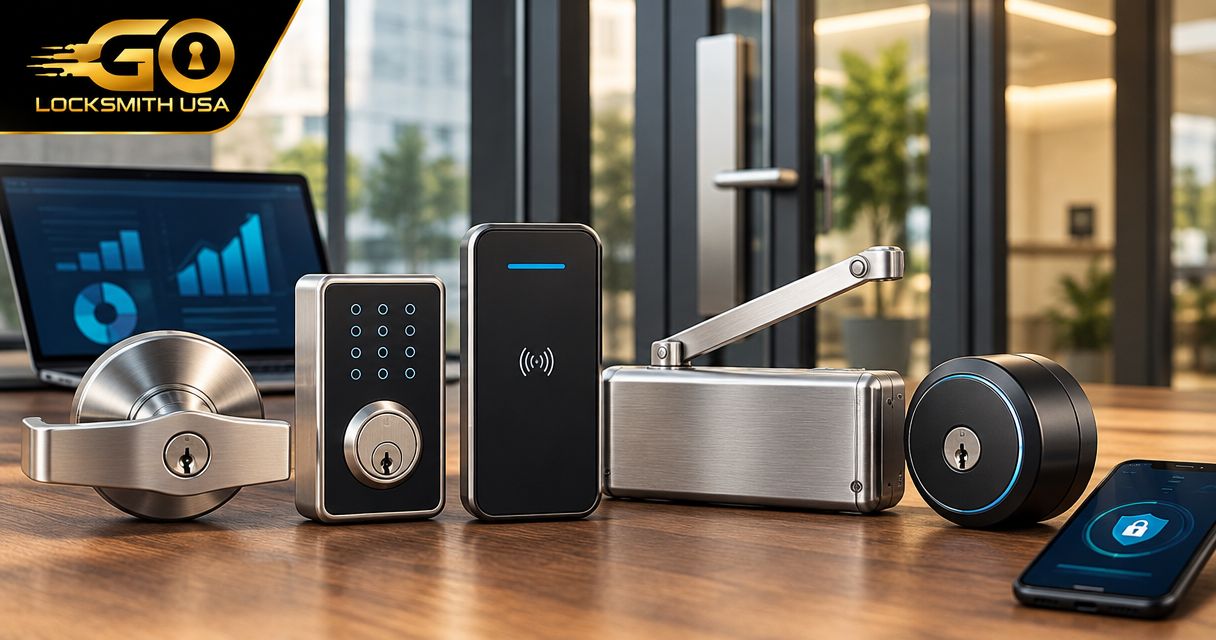
Best default for a compatible office door: a commercial cylindrical lever. Best for an existing mortise door: a matching mortise lock. Best budget decision: assess repair or rekeying before replacing sound hardware. This guide compares commercial lock types and explains how to request a job-specific estimate from GO Locksmith; it does not present an unsupported cheapest-to-most-expensive price ladder.
TL;DR
- The best commercial locks ranked by price must account for door fit, lock function, and installation work.
- Commercial cylindrical levers suit compatible office doors; mortise locks require matching door preparation.
- Rekeying changes key access but does not repair damaged commercial door hardware.
- GO Locksmith provides mechanical commercial lock services; call for a job-specific estimate.
Why the cheapest lock is not always the right purchase
A lock's purchase cost does not describe the whole job. Your door might need a replacement cylinder, a complete lock body, compatible trim, or attention to the strike and alignment. Those are different scopes, even when the finished doors look similar.
Choose the required door function first, then compare estimates for the same work. An office lock, a storefront lock, and an exit device serve different purposes. Ranking them solely by purchase cost can lead you to buy hardware that does not fit or cannot perform the required function.
GO Locksmith is a practical choice for businesses needing mobile commercial lock repair, replacement, or rekeying in its confirmed service areas. Its commercial services also include business and interior door lockouts, fresh installation, push bars, door closers, and broken key extraction. Electronic access-control installation and repair are not offered.
What makes a commercial lock worth buying?
Use these criteria before comparing a quote or choosing replacement hardware:
- Door fit: Match the existing preparation, door material, frame, and hardware dimensions. A visually similar lock is not necessarily compatible.
- Lock function: Decide whether the door needs passage, privacy, keyed entry, storeroom, or another specified function. These terms describe different operating behavior.
- Exit requirements: Confirm how occupants must leave the room or building. Do not select an additional lock without checking its effect on egress.
- Documented performance: Look for the exact product's applicable ANSI/BHMA certification, grade, and intended application. A marketing description is not a substitute for documentation.
- Serviceability: Ask whether the cylinder or another failed component can be serviced without replacing the entire assembly.
- Complete scope: Compare hardware, labor, door preparation, and any related work on the same basis. Ask what the estimate includes.
Grade and suitability are separate questions. A commercial hardware grade describes performance under the relevant standard; it does not automatically establish fire-door suitability, weather resistance, or compatibility with your opening.
Commercial lock options at a glance
The order below is a selection sequence for different door applications, not a monetary ranking. There is no reliable universal price order across these categories because specifications and installation requirements differ.
| Rank and option | Best for | Standout feature | Key limitation |
|---|---|---|---|
| 1. Cylindrical lever | Compatible office and interior business doors | Combines a lever handle and latch in a bored-door assembly | Must match the required function and door preparation |
| 2. Mortise lock | Doors already prepared for a mortise body | Lock body sits in a pocket within the door edge | Replacements require careful matching of the body and trim |
| 3. Narrow-stile lock | Compatible aluminum storefront doors | Fits the limited space in a narrow door stile | Faceplate, backset, cylinder, and operating hardware must match |
| 4. Commercial deadbolt | Openings where a separate locking bolt is appropriate | Provides a locking bolt distinct from a spring latch | Must not conflict with required exit operation |
| 5. Exit device | Doors requiring suitable push-operated exit hardware | Allows occupants to release the door using a push bar | Device type, outside trim, door construction, and listings matter |
1. Cylindrical lever: best for compatible office doors
A cylindrical lever combines the handle and latch in hardware fitted through a prepared opening in the door. It is a sensible starting point when an office already uses this type of assembly and needs replacement hardware with the correct function.
Do not choose by handle appearance alone. An office entry and a storage room can require different locking behavior even when both use the same style of lever.
Cylindrical lever pros:
- Provides a handle and latching function in one assembly.
- Offers distinct operating functions for different room uses.
- Supports a like-for-like replacement when the specifications match.
Cylindrical lever cons:
- Does not fit every existing door preparation.
- The wrong function can create access or operational problems.
- Replacing the lock does not correct a misaligned door or strike.
Best for: A compatible office or interior business door needing a correctly specified lever lock.
Buy: Choose a commercial cylindrical lever when the door preparation, operating function, and documented performance match the job. Ask whether the existing cylinder can be rekeyed before approving a complete replacement.
2. Mortise lock: best for an existing mortise-prepared door
A mortise lock has a body installed within a pocket cut into the door edge. Depending on the model and function, that body contains the mechanisms used for latching and locking.
Treat an existing mortise installation as a matching exercise. Body dimensions, mounting positions, trim, handing, and operating function all affect the replacement decision.
Mortise lock pros:
- Suits doors already prepared for a compatible mortise body.
- Offers different functions for different commercial applications.
- Allows the lock body and external trim to form a coordinated assembly.
Mortise lock cons:
- A different body can require changes to the door preparation.
- Similar-looking trim does not establish compatibility.
- Cylinder replacement alone does not repair a failed internal mechanism.
Best for: A business door that already has a mortise lock and needs a compatible repair or replacement.
Hold: Identify the existing mortise hardware before purchasing. Ask whether the problem involves the cylinder, trim, lock body, or door alignment; each points to a different repair scope.
3. Narrow-stile lock: best for aluminum storefront doors
A narrow-stile lock is designed for the limited space within certain aluminum storefront door frames. The lock body, cylinder, strike, and operating hardware must work together within that opening.
A storefront replacement is not simply a choice between two familiar lock brands. The existing backset, faceplate, door arrangement, and method of exit are central to the specification.
Narrow-stile lock pros:
- Fits an application that ordinary office locksets do not necessarily accommodate.
- Offers mechanical locking arrangements suited to compatible storefront openings.
- Supports component-focused repairs when the existing assembly permits them.
Narrow-stile lock cons:
- Door geometry limits compatible hardware choices.
- Different latch and bolt arrangements are not automatically interchangeable.
- A damaged or misaligned frame can affect operation after replacement.
Best for: A compatible aluminum storefront door with existing narrow-stile hardware.
Buy: Choose narrow-stile hardware only after identifying the opening and required operating arrangement. Include any handle, paddle, strike, or cylinder work in the same estimate rather than assuming it is included.
4. Commercial deadbolt: best for an appropriate separate locking point
A deadbolt uses a locking bolt rather than relying solely on a spring latch. It is an option only where the opening, intended use, and applicable exit requirements allow that arrangement.
Do not assume a second lock is automatically an improvement. On an occupied exit route, extra locking hardware can affect how people leave the building.
Commercial deadbolt pros:
- Provides a locking bolt separate from the door's spring latch.
- Can address a specific locking need on a suitable opening.
- Allows selection of a documented mechanical product for the application.
Commercial deadbolt cons:
- Does not provide a handle or door-closing function.
- Requires suitable door and frame preparation.
- Can conflict with required exit operation if selected incorrectly.
Best for: An opening where a separate deadbolt is appropriate and its use has been checked against applicable requirements.
Wait: Confirm the door's use and exit requirements before adding a deadbolt. Do not purchase one merely because its hardware quote is lower than another lock type.
5. Exit device: best for a door needing push-operated egress
An exit device releases the door when an occupant operates its push bar. Whether a particular opening requires panic hardware or fire exit hardware depends on the building, occupancy, door, and applicable requirements.
The outside entry function is a separate specification. A push bar alone does not tell you whether the door allows keyed entry from outside or how the outside trim operates.
Exit device pros:
- Provides push-operated release from the exit side.
- Offers configurations for different compatible door arrangements.
- Can combine appropriate exit operation with specified outside entry trim.
Exit device cons:
- Requires the correct device type for the opening.
- Outside trim and locking function must be specified separately.
- Fire-rated openings require appropriate listed hardware and installation.
Best for: A commercial exit door requiring a suitable push-operated device.
Buy: Select the device around the opening's requirements, not its purchase cost alone. Include outside trim and any related closer work in the requested scope when those components need attention.
How to compare estimates without comparing different jobs
A useful estimate begins with the problem, not a preferred product. Follow this sequence so each quote addresses the same door and intended result.
- Identify the door. Explain whether it is an office door, storefront entrance, storage room, or exit. Share clear photographs of the existing hardware if requested.
- Describe the problem. Separate lost-key concerns from sticking, loose handles, failed latching, or damaged hardware.
- Confirm the function. Explain who should enter, how the door should lock, and how occupants must leave.
- Match the scope. Ask whether the estimate covers rekeying, component repair, complete replacement, fresh preparation, or related door-hardware work.
- Request an estimate. Confirm the proposed hardware and included work before authorizing the job.
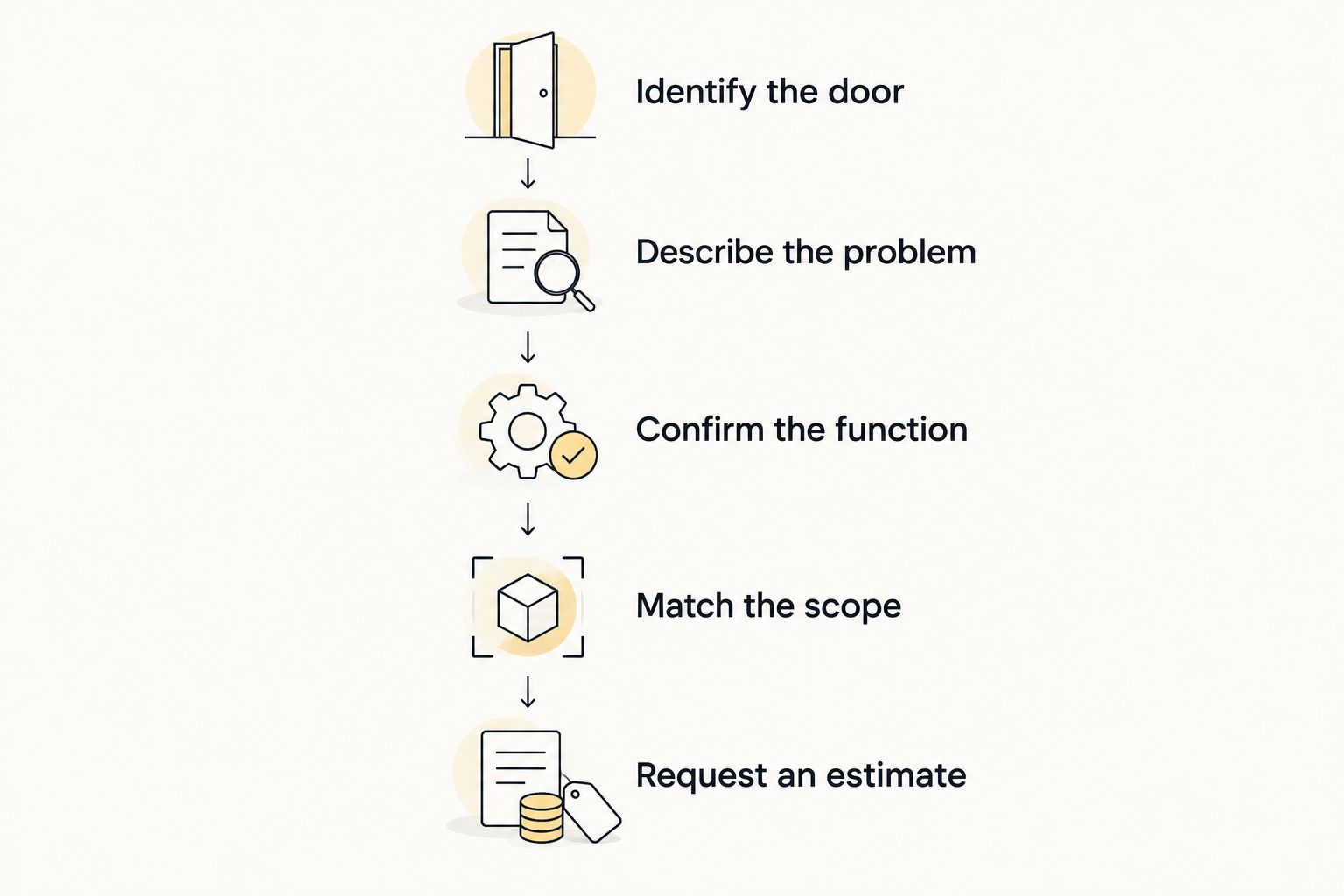
Comparable estimates describe the same door, operating function, and work.
Rekeying addresses key access; repair addresses a fault; replacement changes hardware. If an employee's key is unaccounted for but the lock works correctly, ask about rekeying. If the door will not latch, describe that failure rather than assuming a new cylinder will fix it.
For GO Locksmith commercial lock service, explain the specific door problem and request an estimate. The company serves Fort Myers, Cape Coral, Lehigh Acres, Estero, Bonita Springs, and Naples in Southwest Florida, and also operates in Jacksonville.
How these recommendations are ranked
These recommendations prioritize door fit, required function, exit requirements, documented performance, and serviceability. Each lock type owns a distinct application; none is presented as universally cheaper or more secure than every alternative.
The default recommendation is a compatible replacement or appropriate service to the existing assembly. Converting a door to another lock type requires a clear reason, not just a different-looking handle.
Which commercial lock should you choose?
For a compatible office door, start with a correctly specified commercial cylindrical lever. Keep a mortise-prepared door matched to its mortise requirements, and assess a narrow-stile storefront around its existing geometry and operating hardware.
For an exit door, let the required exit operation determine the hardware. A separate deadbolt and an exit device are not interchangeable answers to the same problem.
Before replacing anything, establish whether the actual need is a key-access change, a mechanical repair, or new hardware. That decision makes your estimate useful.
FAQ
What's the best commercial lock for an office door?
A commercial cylindrical lever is a suitable starting point for an office door with compatible preparation. Select the required operating function and verify the exact hardware specification before buying.
Can commercial locks be ranked from cheapest to most expensive?
Commercial locks cannot be placed in a reliable universal price order by type alone. Hardware specifications, door preparation, trim, and installation scope change the comparison; request estimates for the same job.
Is rekeying better than replacing a commercial lock?
Rekeying is appropriate when you need to change key access and the existing compatible hardware is serviceable. Replacement addresses hardware that is unsuitable or cannot be adequately repaired; rekeying does not fix mechanical damage.
Is a mortise lock better than a cylindrical lock?
A mortise lock is not automatically the better purchase for every business door. Choose the assembly that matches the door preparation, required function, and documented performance for the application.
Can I add a deadbolt to my business exit door?
Do not add a deadbolt until its effect on required exit operation has been checked. The door's use, occupancy, existing hardware, and applicable requirements determine whether that arrangement is appropriate.
Does GO Locksmith install electronic access-control systems?
GO Locksmith does not install or repair electronic access-control systems. Its confirmed commercial work includes mechanical lock repair, replacement, rekeying, fresh installation, push bars, door closers, lockouts, and broken key extraction.
How do I request a commercial lock estimate?
Call (239) 412-1101 and describe the door, existing hardware, problem, and intended result. Business hours are Sunday–Thursday 7:00 AM–11:00 PM and Friday 7:00 AM–5:00 PM; Saturday is closed. Ask about current availability rather than assuming an arrival time.
One last thing: test the door, not just the key
A key turning successfully does not prove that the door closes and latches correctly. When explaining the problem, describe what happens with the door open and closed, whether the latch meets the strike, and whether the closer brings the door fully shut. Do not force sticking hardware.
Need help choosing between repair, rekeying, and replacement? Call GO Locksmith at (239) 412-1101 during its listed hours to request a job-specific commercial lock estimate and check current availability.