Blog ·
Best commercial high-security locks ranked by durability 2026
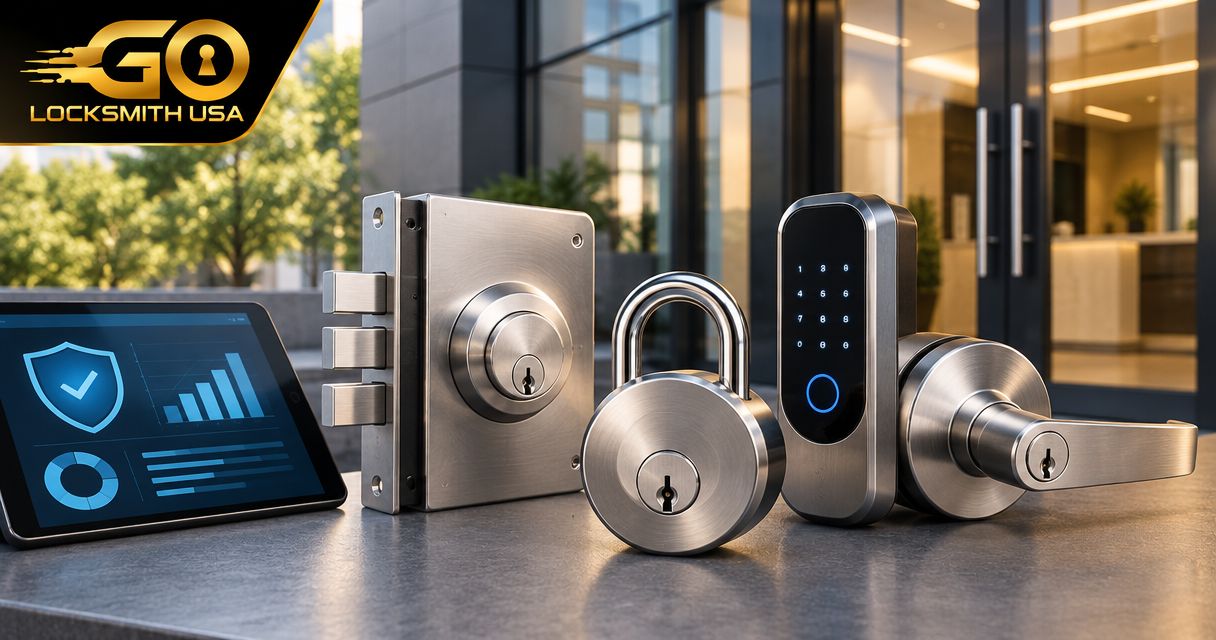
Best overall for a compatible commercial door: an ANSI/BHMA Grade 1 mortise lock with a documented high-security cylinder. Best for an existing cylindrical preparation: a Grade 1 cylindrical lock with a compatible high-security cylinder. Best for an exit door: compliant exit hardware with compatible high-security exterior trim. These are application-based recommendations, not a claim that one untested product outlasts every competitor.
TL;DR
- The best commercial high security locks ranked by durability must separate mechanical endurance from cylinder attack resistance.
- Grade 1 mortise locks are the default recommendation for compatible, heavily used commercial doors.
- Grade 1 cylindrical locks suit existing cylindrical door preparations; verify the complete configuration.
- GO Locksmith provides commercial mechanical lock services; call to discuss the door, hardware, and job-specific estimate.
Why durability means more than a strong cylinder
A commercial lock has two different jobs: operate reliably through repeated use and resist unauthorized entry. A high-security cylinder addresses the second job, but it does not establish the endurance of the latch, lever, lock case, hinges, or door closer.
Choose the complete door assembly, not just the cylinder. A well-specified lock still needs correct alignment, suitable exterior exposure, and an appropriate door function. For mechanical lock repair, replacement, rekeying, push bars, and door closers, GO Locksmith serves Fort Myers, Cape Coral, Lehigh Acres, Estero, Bonita Springs, and Naples.
This guide ranks mechanical configurations by their suitability for different commercial doors. It does not rank electronic access-control systems or promise compatibility with a particular building.
What makes the best commercial high-security lock?
Use these criteria before comparing names or choosing hardware:
- Mechanical endurance: Look for the applicable ANSI/BHMA standard and grade for the exact lock model. Grade 1 is the highest grade within the relevant graded commercial lock category; grades are not interchangeable across unrelated hardware categories.
- Cylinder security: Ask for documented attack-resistance testing, not just a high-security label. UL 437 and ANSI/BHMA A156.30 address security matters distinct from ordinary operating endurance.
- Door compatibility: Match the lock to the door material, thickness, preparation, handing, and frame. A strong lock that does not fit is not a useful recommendation.
- Exit function: Verify that occupants can leave as required. Security upgrades must not defeat required egress or alter a fire-rated assembly improperly.
- Exposure and alignment: Check the manufacturer's intended environment and the condition of the hinges, strike, and closer. A finish name alone does not prove suitability for exterior exposure.
- Key control and servicing: Establish how replacement keys, lost keys, and cylinder changes will be handled. Restricted duplication is a separate specification, not proof of mechanical durability.
For a purchase in 2026, use current manufacturer documentation for the exact model and configuration. ANSI/BHMA A156.13 covers mortise locks and latches, while ANSI/BHMA A156.2 covers bored and preassembled locks and latches. Those standards provide a clearer starting point than an unqualified heavy-duty description.
Commercial high-security locks at a glance
The order below prioritizes a suitable mechanical assembly first, then the cylinder. No option wins on every door.
| Rank and configuration | Best for | Standout feature | Key limitation |
|---|---|---|---|
| 1. Grade 1 mortise lock with a documented high-security cylinder | Compatible, heavily used commercial doors | Mortise assembly selected for commercial endurance, paired with separately documented cylinder security | Requires the correct mortise preparation and door function |
| 2. Grade 1 cylindrical lock with a compatible high-security cylinder | Existing cylindrical door preparations | Commercial-grade hardware without changing to a mortise layout | Cylinder compatibility and door preparation need verification |
| 3. Narrow-stile mechanical lock with a compatible high-security cylinder | Aluminum storefront doors with limited stile space | Hardware designed around the storefront door's geometry | Narrow-stile fit alone does not establish endurance or compliant egress |
| 4. Exit device with compatible high-security exterior trim | Doors requiring panic or fire exit hardware | Required exit operation paired with controlled exterior entry | The complete device, trim, door, and function must work together |
1. Grade 1 mortise lock: best for compatible high-use doors
A mortise lock places its lock case inside a prepared pocket in the door. For a compatible commercial opening, a Grade 1 mortise assembly with a documented high-security cylinder is the default configuration to evaluate first.
The important distinction is between the lock body and its cylinder. Specify both; a cylinder upgrade does not automatically upgrade an older mortise assembly's mechanical condition.
Grade 1 mortise lock pros:
- Provides an identifiable commercial endurance specification when the exact model carries the applicable grade.
- Lets you assess the lock case and cylinder as separate parts of the security decision.
- Offers commercial functions that can be selected around how the room or entrance is used.
Grade 1 mortise lock cons:
- Requires a compatible mortise pocket, faceplate, strike, and door thickness.
- Changing from another preparation involves more than swapping a cylinder.
- An unsuitable function or misaligned door can undermine an otherwise sound selection.
Best for: A compatible commercial door where repeated use and controlled exterior entry both matter.
Before choosing a mortise lock, describe the opening's actual use. A staff-only room, public entrance, and room that must remain freely accessible from inside do not necessarily need the same function. Ask how the proposed hardware behaves when locked, unlocked, and operated from each side.
Verdict: Buy when the complete Grade 1 assembly, cylinder, preparation, and door function are verified. Hold if the recommendation names only the cylinder.
2. Grade 1 cylindrical lock: best for an existing bored preparation
A cylindrical lock uses a bored door preparation rather than a mortise pocket. A Grade 1 cylindrical assembly is a practical starting point when you want commercial mechanical hardware suited to that existing layout.
Do not assume every high-security cylinder fits every cylindrical lock. The lock's cylinder format, tailpiece or drive arrangement, and approved configuration require confirmation from the relevant documentation.
Grade 1 cylindrical lock pros:
- Matches doors already prepared for compatible cylindrical hardware.
- Provides a defined commercial grade when documented for the exact assembly.
- Allows you to specify cylinder security without assuming a different lock format is necessary.
Grade 1 cylindrical lock cons:
- The existing holes and strike location still need measurement.
- Not every cylinder upgrade is supported by every lock model.
- It does not substitute for required panic or fire exit hardware.
Best for: Offices and other commercial openings with an appropriate existing cylindrical preparation.
Function matters as much as format. For shared workplace rooms, interior door locks for medical offices provide a related decision context: consider who needs entry, whether privacy is required, and how occupants leave.
A replacement should also address the reason the current hardware is failing. If the latch rubs against the strike because the door has shifted, installing another lock without correcting the alignment leaves that cause in place.
Verdict: Buy for a verified cylindrical retrofit. Skip a proposed cylinder conversion that lacks documented compatibility.
3. Narrow-stile mechanical lock: best for aluminum storefront doors
An aluminum storefront door often leaves limited space for its lock case. Narrow-stile hardware addresses that geometry, but the term describes fit rather than a universal security rating.
Choose the mechanical function and compatible cylinder together. Confirm whether the opening needs a latch, deadbolt arrangement, or exit hardware before treating a storefront lock as a complete answer.
Narrow-stile mechanical lock pros:
- Addresses the limited mounting space of compatible storefront doors.
- Allows the cylinder and mechanical case to be specified for the actual opening.
- Keeps the selection focused on the existing door and frame rather than an unrelated lock format.
Narrow-stile mechanical lock cons:
- Case dimensions, backset, strike, and cylinder details are installation-specific.
- Narrow-stile construction alone does not prove high-security performance.
- A locking arrangement must not obstruct required exit operation.
Best for: A compatible aluminum storefront opening where standard mortise or cylindrical hardware does not fit the existing preparation.
Pay particular attention to the frame and door movement. Describe whether the lock works with the door open but binds when it closes, whether the door drags, and whether it latches without being pushed. These observations help distinguish a hardware problem from an alignment problem; they do not replace an inspection.
Verdict: Buy only after confirming storefront fit, the required function, and the cylinder specification. Hold when the proposal relies on the phrase high security without supporting documentation.
4. Exit device with high-security trim: best for required exit doors
An exit device provides the interior operating hardware for an applicable exit opening. Compatible exterior trim determines how authorized people enter from outside; a documented high-security cylinder can form part of that arrangement.
This option ranks fourth only because it serves a specialized opening. For a door requiring panic or fire exit hardware, the appropriate exit assembly takes priority over the other configurations.
Exit device with high-security trim pros:
- Keeps required exit operation central to the hardware decision.
- Separates exterior entry control from the interior exit action.
- Lets you assess the device, trim, cylinder, and door as one assembly.
Exit device with high-security trim cons:
- Device type and trim compatibility depend on the door and application.
- Fire-rated openings require the appropriate listed hardware and permitted installation.
- Adding a separate lock can create an egress problem rather than a security improvement.
Best for: Commercial doors where the applicable requirements call for panic or fire exit hardware.
Do not add a deadbolt simply because an exit door feels insufficiently secure. Establish what hardware the opening requires, then address exterior entry through a compatible arrangement. Also investigate a door that fails to close and latch; stronger exterior trim does not correct that fault.
Verdict: Buy the appropriate complete exit assembly when required. Skip any proposal that improves exterior locking by interfering with required exit operation.
Check the opening before ordering hardware
Work through the opening in this order. The purpose is to identify what needs attention before choosing a replacement, not to dismantle the lock yourself.
- Door condition: Note sagging, rubbing, loose hinges, frame damage, and signs of corrosion.
- Closing action: Observe whether the door closes and latches during normal use without being slammed or pulled shut.
- Lock operation: Describe sticking, a loose lever, a damaged key, or a latch that binds only when the door is closed.
- Hardware specification: Gather the existing model markings and ask for the proposed model, function, grade, cylinder format, and relevant documentation.
This sequence separates symptoms from purchase decisions. Keep using the door only as safely permitted, and do not disable required exit hardware while investigating a problem.
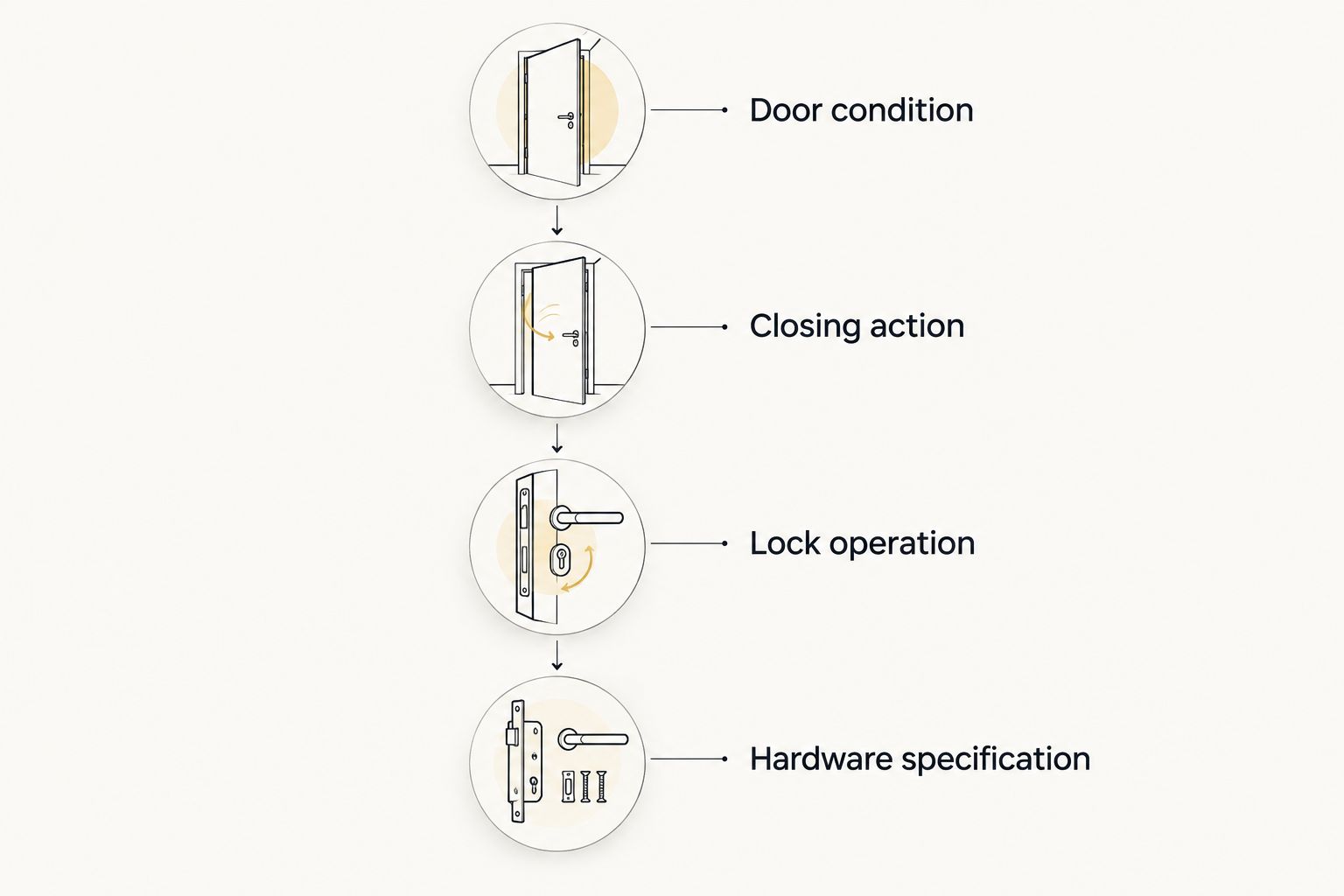
Inspect the opening before choosing a stronger cylinder.
How these configurations are ranked
This ranking uses door suitability, documented mechanical grade, separately documented cylinder security, and correct exit function. It does not assign invented service lives, failure rates, or laboratory results to unnamed products.
A manufacturer name alone is not enough to rank durability. Compare the exact model and configuration, including the lock function and approved cylinder. Likewise, a security certification should not be presented as a promise that the whole door will resist every attack.
Which commercial lock should you choose?
Start with a Grade 1 mortise assembly for a compatible high-use door; choose a Grade 1 cylindrical assembly when the existing preparation makes it the appropriate fit. Let storefront geometry or required exit hardware change that choice when necessary.
GO Locksmith is a mobile service option for businesses needing commercial mechanical lock repair, replacement, rekeying, push bars, or door closers. Discuss the actual opening before requesting a particular product; no specific high-security model or cylinder compatibility is promised here.
A rekey addresses who can use the keys. Replacement addresses unsuitable, damaged, or worn hardware. Neither decision should ignore the door's alignment or required exit function.
FAQ
What's the best commercial high-security lock for durability?
A documented Grade 1 mortise lock with a compatible high-security cylinder is the default recommendation for a suitable high-use commercial door. Existing preparation, storefront geometry, and required exit hardware can make another configuration the correct choice.
Does Grade 1 mean a commercial lock is high security?
No. The applicable ANSI/BHMA grade and a cylinder's high-security credentials address different parts of the hardware specification. Verify the complete lock's grade and the exact cylinder's documented security performance separately.
Is a mortise lock always more durable than a cylindrical lock?
No universal durability comparison applies to every mortise and cylindrical lock. Compare documented grades, the exact models, door compatibility, and the condition of the opening rather than relying on format alone.
Can I put a high-security cylinder in my existing commercial lock?
Compatibility depends on the existing lock and proposed cylinder. Confirm the cylinder format, mechanical interfaces, and approved configuration before ordering; do not assume a cylinder fits because it looks similar.
Will rekeying fix a commercial lock that keeps sticking?
Rekeying changes key access; it does not by itself correct every cause of sticking. Door alignment, damaged keys, cylinder condition, and the mechanical assembly need assessment before deciding between repair, rekeying, and replacement.
How much does a commercial high-security lock installation cost?
The estimate depends on the specific door, hardware, preparation, and work required. Call GO Locksmith at (239) 412-1101 for a job-specific estimate rather than relying on a general price.
Does GO Locksmith install electronic access-control systems?
No. GO Locksmith does not install or repair electronic access-control systems. Its confirmed commercial services include mechanical lock repair, replacement, rekeying, fresh installation, business and interior door lockouts, push bars, door closers, and broken key extraction.
One last thing: report when the lock binds
Tell the locksmith whether the key turns normally with the door open but sticks when the door is closed. That distinction helps explain the problem more clearly than calling the lock weak or worn out.
For help with commercial mechanical hardware, call (239) 412-1101 to check availability or request an estimate. Service hours are Sunday–Thursday, 7:00 AM–11:00 PM, and Friday, 7:00 AM–5:00 PM; Saturday is closed.