Blog ·
Best safes ranked by weight and portability 2026
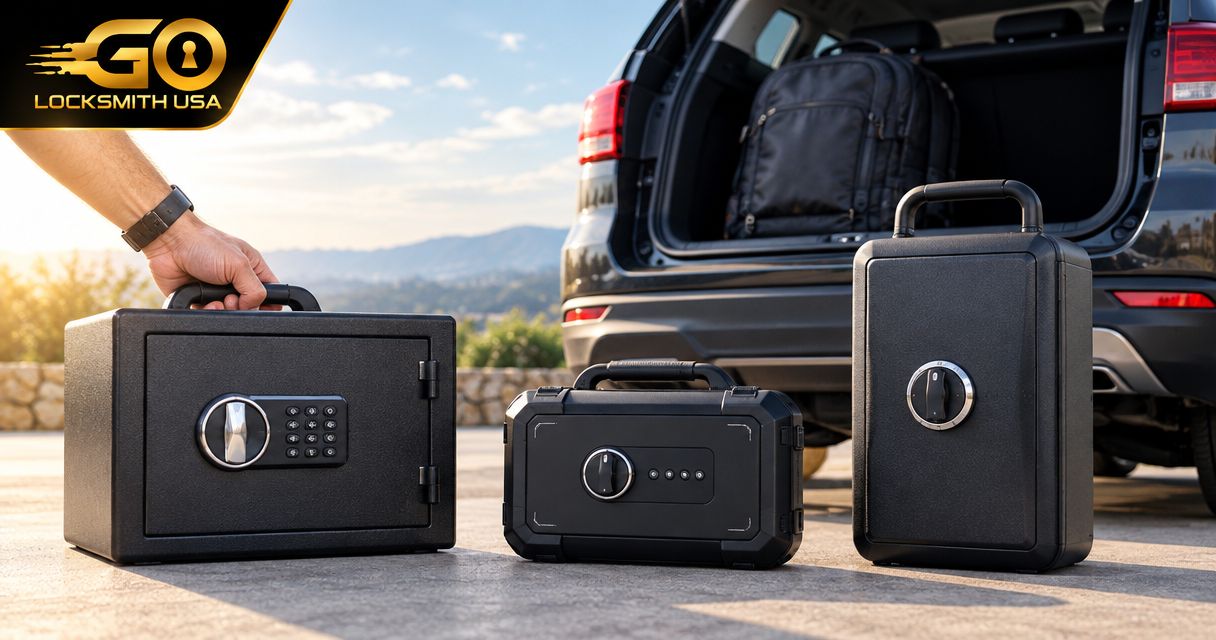
Best overall for fixed home storage: a compact safe with manufacturer-approved anchoring. Best for carrying documents: a handled document chest. Best for frequent travel: a compact travel lockbox. This guide to the best safes ranked by weight and portability compares safe types by how you will carry, position, and secure them—not by an unsupported lightest-to-heaviest model ranking.
TL;DR
- The best safes ranked by weight and portability depend on whether you need fixed storage or regular transport.
- Choose an anchorable compact safe for fixed home storage; verify its weight and approved installation method.
- Choose a handled document chest for carrying papers, but check its documented fire and water protection separately.
- Choose a travel lockbox for frequent transport, not as a substitute for a rated burglary-resistant safe.
- GO Locksmith provides safe service; call with the safe’s identifying details to discuss your specific need.
Why weight alone gives you the wrong answer
A safe that is convenient to carry is also convenient to remove unless its installation or securing method addresses that risk. A heavier safe creates a different problem: getting it through your home and into its intended position. Choose the storage job first, then compare weight within that category.
Portability has several parts. Empty weight, loaded weight, grip, shape, and the route through your property all affect whether moving a safe is practical. A handle does not tell you whether the safe protects documents against fire, and a substantial-looking door does not establish a burglary rating.
If your question concerns an existing safe rather than a purchase, GO Locksmith offers safe service. Keep the manufacturer and model details available when you call; the work required depends on the particular safe and problem.
What makes the best safe for weight and portability?
Use these criteria before comparing designs or model names:
- Loaded weight: Compare the manufacturer’s stated empty weight, then account for what you intend to store. Do not substitute shipping weight for the safe’s weight.
- Carrying design: Look at grip position, handle construction, overall shape, and whether the manufacturer intends the safe to be carried.
- Securing method: Check for an approved anchoring or tethering method. Follow the instructions for the exact model rather than improvising an attachment.
- Protection evidence: Look for documented fire, water, or burglary performance relevant to your contents. These are separate questions, not interchangeable promises.
- Usable space: Compare internal dimensions with your actual documents and valuables. External size does not establish usable capacity.
- Placement route: Check doorways, turns, stairs, and the final position before arranging movement. Confirm that the safe can be installed as instructed.
The useful comparison is between safes that meet the same storage need. If a model fails your protection or installation requirements, a lower weight does not rescue it.
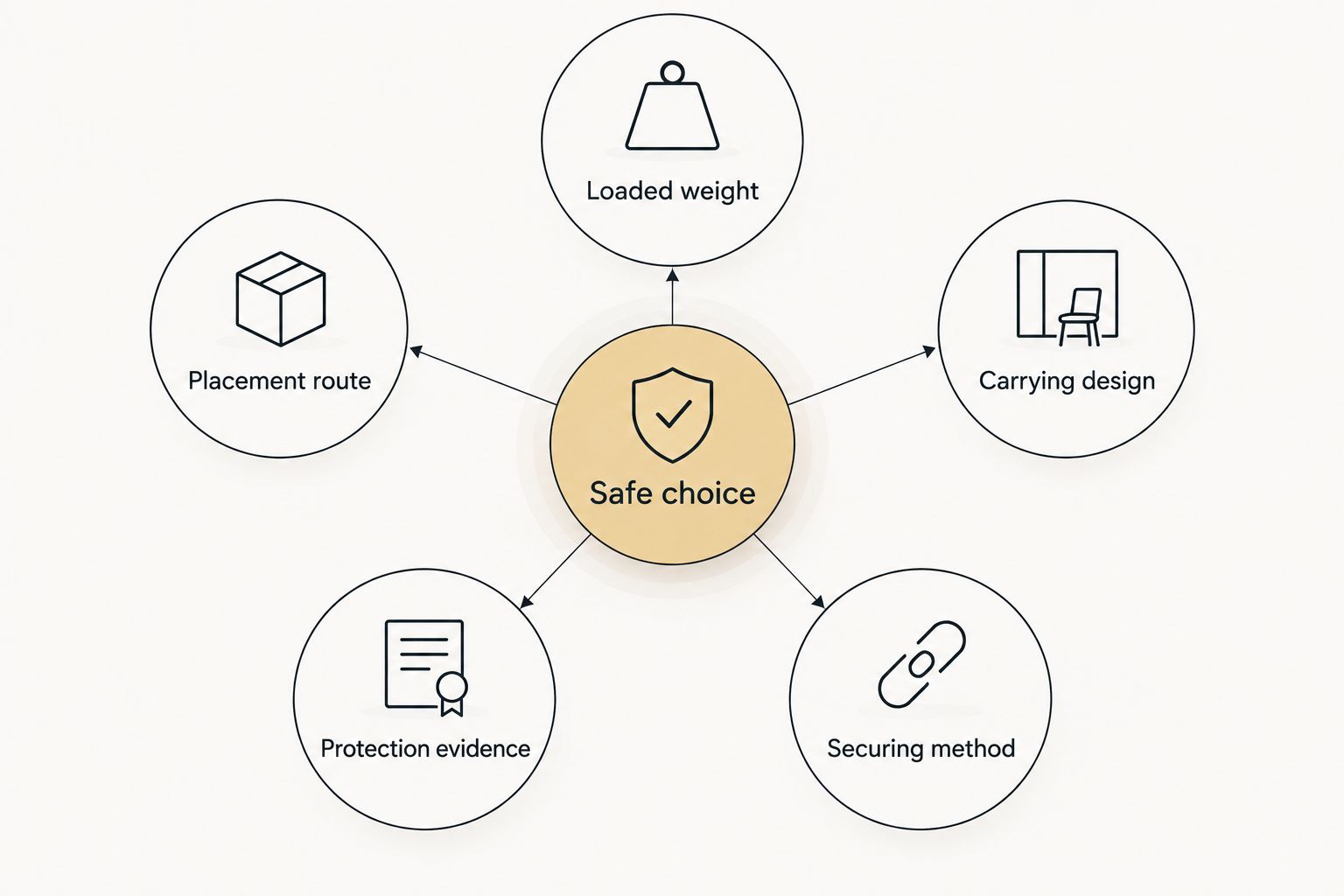
Portability is only one part of choosing a safe that fits your storage needs.
Safe types at a glance
This order ranks suitability for distinct uses, not measured product weights. Safes within each type vary; use the exact model’s specifications for a true weight comparison.
| Rank and safe type | Best for | Weight and portability check | Standout feature | Key limitation |
|---|---|---|---|---|
| 1. Compact anchorable home safe | Fixed home storage | Verify empty weight and the approved installation method | Can combine a modest footprint with fixed placement | Anchoring limits routine movement |
| 2. Handled document chest | Carrying important papers | Check loaded weight, grip, and document fit | Carrying handle on models designed for transport | A handle does not establish theft resistance |
| 3. Compact travel lockbox | Frequent transport of small items | Check carry size and any manufacturer-approved tether | Designed around portable storage | Portability is not evidence of burglary protection |
| 4. Full-size freestanding safe | Larger permanent storage needs | Plan the route and obtain model-specific moving advice | More room in models with larger interiors | Relocation can require specialist equipment and planning |
| 5. Wall safe | Recessed storage where installation permits | Assess wall compatibility rather than carrying convenience | Sits within a suitable wall opening | Installed portability is poor, and usable depth varies |
1. Compact anchorable home safe: best for fixed storage
A compact home safe with a manufacturer-approved anchoring method is the default choice when your valuables should stay in one place. Compare models with the protection evidence you need, then assess weight and installation. Compact does not automatically mean light.
This category suits someone who wants accessible storage at home without planning to carry the safe regularly. The approved attachment method matters more than finding the lightest model, because easy removal conflicts with the purpose of fixed storage.
Compact anchorable home safe pros:
- A modest footprint can fit a planned storage position.
- Approved anchoring addresses removal in a way weight alone cannot.
- Internal dimensions can be matched to your actual contents.
Compact anchorable home safe cons:
- Anchoring requires a suitable surface and correct installation.
- Moving an installed safe involves more than lifting it.
- Fire and burglary protection remain model-specific.
Best for: Homeowners who need fixed storage and can follow the safe’s installation requirements.
Before choosing, inspect the proposed location. Confirm that the door can open, that the safe does not obstruct access, and that the anchoring surface meets the manufacturer’s instructions. If you rent, check permission before making holes or altering the property.
Verdict: Buy for fixed home storage when the model’s protection and installation requirements fit your needs.
2. Handled document chest: best for carrying important papers
A handled document chest is a useful category when you need to move papers between storage locations. Choose a model with documented protection appropriate to those papers rather than relying on the words fireproof or waterproof in a listing.
The handle helps with carrying, but the loaded chest still needs to be manageable for you. Test document fit against the internal dimensions; folded papers, document sleeves, and folders take different amounts of space.
Handled document chest pros:
- A carrying handle supports the intended portable use.
- The chest format can suit documents stored flat.
- Models with documented fire or water protection can be compared on that evidence.
Handled document chest cons:
- A portable chest is easier to remove than a properly secured fixed safe.
- Papers and other contents add to its carrying weight.
- Protection claims do not automatically extend to every type of stored media.
Best for: People who need to carry important papers and have verified the specific chest’s protection claims.
Read the instructions for closure and storage. A protective seal or latch must be used as directed, and any stated testing conditions apply to that model—not to document chests as a whole.
Verdict: Buy for portable document storage; skip it as your only answer to theft risk unless its documented protection meets that need.
3. Compact travel lockbox: best for frequent transport
A compact travel lockbox prioritizes carrying convenience and limited storage space. It fits a different job from a permanently installed home safe: keeping a small set of items together in a locked container while you travel.
Assess the securing method as carefully as the box. If a model includes a tether, use it only in the way its manufacturer describes. A cable, handle, or lock does not establish an independent burglary-resistance rating.
Compact travel lockbox pros:
- A small format suits regular packing and transport.
- Limited capacity encourages carrying only the items you need.
- Some models provide a manufacturer-designed tethering method.
Compact travel lockbox cons:
- Small internal dimensions restrict what you can store.
- An unsecured portable box can be carried away.
- Fire, water, and burglary protection cannot be assumed.
Best for: Travelers who need portable locked storage for small items and understand its limits.
Check the actual dimensions against your bag and intended contents. Also decide where the box will go when you are not carrying it. Putting a portable lockbox out of sight does not turn it into a fixed safe.
Verdict: Buy for frequent transport; skip it when your main requirement is permanent protection for high-value contents.
4. Full-size freestanding safe: best for larger permanent storage
A full-size freestanding safe belongs on the shortlist when smaller interiors cannot accommodate your contents. Its size makes placement and relocation central to the purchase decision. Do not infer a particular weight, protection level, or floor requirement from the category name.
Obtain the exact model’s specifications before planning movement. The route includes more than the final room: entrances, thresholds, corners, stairs, and the space needed to turn the safe all matter.
Full-size freestanding safe pros:
- Larger interiors can accommodate contents that do not fit compact models.
- Shelves or compartments, where specified, can help organize storage.
- Permanent placement avoids the need for routine carrying.
Full-size freestanding safe cons:
- Movement can require specialist planning and equipment.
- The available room may not provide a workable delivery route.
- Size and weight alone do not establish burglary or fire performance.
Best for: Owners with larger storage requirements and a suitable permanent location.
Ask the manufacturer or an appropriate moving professional about transport and placement before attempting a move. Assess the supporting structure where required. This guide does not establish that a particular floor, staircase, or vehicle can carry a particular safe.
Verdict: Buy for larger permanent storage after confirming placement; hold if regular relocation is part of your plan.
5. Wall safe: best for recessed storage
A wall safe uses a suitable wall opening to provide recessed storage. Its appeal is placement, not portability. Once installed, removing or relocating it involves the safe’s attachment and the surrounding wall.
Check the model’s required opening and usable internal depth before choosing it. Do not assume that a concealed position provides fire protection, burglary resistance, or permission to modify the building.
Wall safe pros:
- Recessed placement reduces projection into the room.
- A suitable position can keep storage away from floor space.
- Internal dimensions can suit selected small items or documents.
Wall safe cons:
- Installation depends on wall construction and the model’s requirements.
- Available depth can restrict usable storage.
- Relocation involves building work rather than simple carrying.
Best for: Property owners who specifically need recessed storage and have confirmed installation suitability.
Check for building services and structural constraints before any opening is made. Follow the safe manufacturer’s requirements and obtain appropriate installation advice. Wall placement is not a reason to overlook the model’s documented protection.
Verdict: Buy for a confirmed recessed-storage need; skip it if portability is your priority.
How these choices are ranked
The ranking starts with a fixed-storage default, then separates document carrying, frequent travel, larger storage, and recessed installation. Each recommendation answers a different use case using the same criteria: loaded weight, carrying design, securing method, protection evidence, usable space, and placement route.
This is a category buying guide, not a product test or an exact-weight leaderboard. For a numerical ranking, compare manufacturer-stated empty weights for specific models with equivalent protection and capacity. Keep loaded carrying weight separate from that published specification.
Which safe should you choose?
Choose a compact anchorable home safe if you are undecided and expect your valuables to remain at home. Choose a handled document chest if carrying papers is the main task. Choose a travel lockbox only when regular transport matters more than permanent storage.
A full-size freestanding safe or wall safe needs a location-first decision. Confirm that the storage space, access route, and installation requirements work before committing to either category.
GO Locksmith is a safe-service option for Southwest Florida owners who need help with an existing safe. Buying advice and service needs are separate: record the safe’s identifying information before asking about a problem, and do not assume that every safe requires the same work.
FAQ
What’s the best safe if I need to move it regularly?
A handled document chest suits carrying papers, while a compact travel lockbox suits frequent transport of small items. Verify the exact model’s loaded carrying weight, internal dimensions, and protection claims before choosing.
Is a heavier safe always more secure?
No. Weight alone does not establish burglary resistance; assess documented protection and the manufacturer-approved securing method for the exact model.
How do I compare safe weights accurately?
Compare manufacturer-stated empty weights for specific models that meet the same protection and capacity needs. Keep shipping weight separate, and account for your contents when judging carrying practicality.
Does a carrying handle mean a safe is easy to carry?
No. A handle is only one part of carrying design; loaded weight, grip, shape, and your route determine whether transport is practical.
Can I bolt down a portable safe?
Use anchoring only if the manufacturer approves it for that exact model. Do not drill or modify a safe based on general advice, because modifications can affect its construction and protection.
Is a document chest suitable for digital storage devices?
Only if the exact model’s documented protection covers the media you intend to store. A rating for paper documents does not automatically establish suitable protection for digital media.
Can GO Locksmith help with an existing safe?
GO Locksmith offers safe service. Call (239) 412-1101 with the safe’s manufacturer, model if known, your location, and a description of the problem to discuss the job and check current availability.
One last thing: weigh the contents, too
The specification you compare is usually the empty safe. The object you carry includes everything inside it. Choose for the loaded safe, not just the number on the specification sheet, and plan where it will be secured between moves.
For help with an existing safe, call GO Locksmith at (239) 412-1101 to discuss your situation and check current availability. Hours are Sunday–Thursday 7:00 AM–11:00 PM and Friday 7:00 AM–5:00 PM; Saturday is closed.